HP CMO Pays Tribute to Indira Gandhi on Death Anniversary
Synopsis
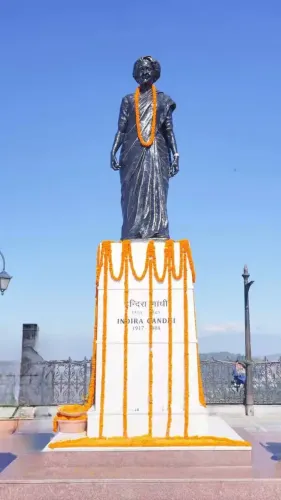
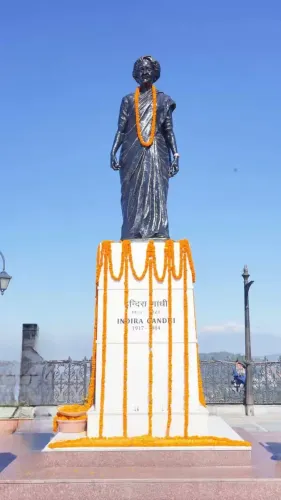
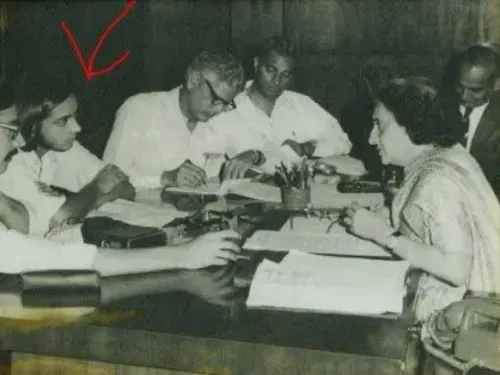
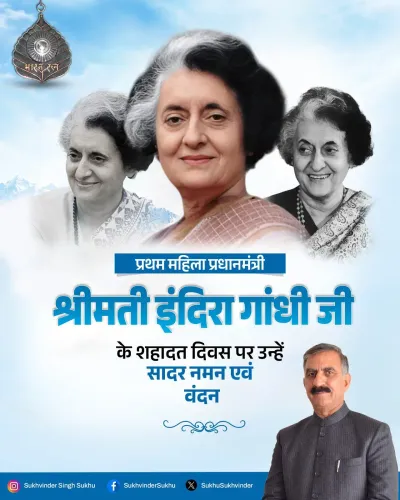
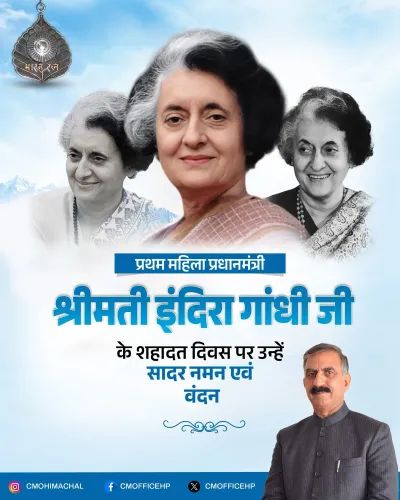
On Indira Gandhi's 42nd death anniversary, the Chief Minister's Office of Himachal Pradesh paid tribute to the former PM, highlighting her leadership in the 1971 war that resulted in the creation of Bangladesh.
Key Takeaways
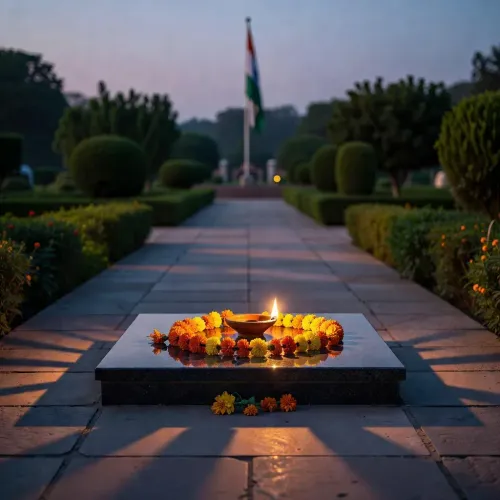
The Chief Minister's Office of Himachal Pradesh posted a tribute to Indira Gandhi on 31 October 2026 , her death anniversary.
The post describes Gandhi as a fearless leader who took 'decisive decisions in the national interest.' It specifically credits her with the 'historic decision to liberate Bangladesh' during the 1971 Indo-Pakistani War .
The war ended with the surrender of 93,000 Pakistani troops and the creation of Bangladesh on 16 December 1971 .
The Simla Agreement of 1972 followed as the diplomatic framework between India and Pakistan post-war.
Such tributes are a consistent feature of Congress-led state government communications on this date every year.
Forty-two years after her assassination, former Prime Minister Indira Gandhi is being remembered across the country — and the Chief Minister's Office of Himachal Pradesh marked 31 October 2026 with a tribute that puts her most consequential military decision front and centre.
The post, shared in Hindi, describes Gandhi as a fearless leader who never shied away from bold choices in the national interest. 'साहसी शख्सियत थीं। वह किसी से नहीं डरती थीं' — ('She was a courageous personality. She feared no one') — the tribute reads, before singling out the decision that, as the post puts it, 'changed the shape of Pakistan.'
The 1971 decision that redrew South Asia's map
The post centres squarely on the 1971 Indo-Pakistani War — specifically Gandhi's call to intervene militarily in support of the Bengali liberation movement in East Pakistan. Indian forces entered the conflict in December of that year, and within a fortnight, 93,000 Pakistani troops surrendered in one of the largest military capitulations since the Second World War. Bangladesh was born on 16 December 1971.
The tribute frames this as the defining act of Gandhi's leadership: a 'historic decision to liberate Bangladesh,' taken at enormous diplomatic and military risk, with the United States and China both tilting toward Islamabad at the time. The post's phrase — 'her one decision changed the shape of Pakistan' — is deliberately blunt, a reminder of just how irreversibly that war shifted South Asia's political geography.
October 31 and the Congress commemoration calendar
Indira Gandhi was assassinated on 31 October 1984 by her own bodyguards at her residence in New Delhi, in the tense aftermath of Operation Blue Star. Every year, Congress-affiliated governments and organisations mark the date with tributes that emphasise her national-security legacy — the 1971 war being the centrepiece of that narrative. The Himachal Pradesh CMO's post fits squarely within that pattern, amplifying the image of a leader who shaped borders, not just policies.
The Simla Agreement of 1972, signed by Gandhi and Pakistan's Zulfikar Ali Bhutto in the aftermath of the war, set the framework for bilateral relations that India and Pakistan have returned to — and argued over — for five decades since. That diplomatic epilogue is part of the same legacy the tribute implicitly invokes.
On an anniversary defined by grief and memory, the CMO's message lands less as ceremony and more as a statement of political heritage — one that the ruling dispensation in Shimla is plainly proud to claim.
Point of View
The post selectively curates a legacy of strength and decisiveness. In a broader context where border security and national sovereignty remain live electoral issues, invoking the Bangladesh liberation carries contemporary resonance well beyond mere commemoration. It is history deployed as political positioning.
NationPress
31 Oct 2026
Frequently Asked Questions
Why is 31 October significant for Indira Gandhi?
31 October 1984 is the date Indira Gandhi was assassinated at her New Delhi residence by two of her bodyguards, following the controversial Operation Blue Star at the Golden Temple in Amritsar. The day is observed as her death anniversary across India.
What was Indira Gandhi's role in the 1971 war?
As Prime Minister, Indira Gandhi took the decision to intervene militarily in the 1971 Indo-Pakistani War , supporting the Bengali liberation movement. The war ended with Pakistan's surrender and the creation of Bangladesh on 16 December 1971 .
How did the 1971 war change Pakistan?
The 1971 war led to the secession of East Pakistan, which became the independent nation of Bangladesh . Pakistan lost roughly half its population and significant territory, fundamentally altering its geographic and demographic character.
What was the Simla Agreement?
The Simla Agreement was signed in 1972 between Indira Gandhi and Pakistan's Prime Minister Zulfikar Ali Bhutto to normalise relations after the 1971 war. It remains a foundational reference point in India-Pakistan diplomacy.
Why do Congress-ruled states post tributes to Indira Gandhi on this date?
Congress-affiliated governments routinely mark 31 October as Indira Gandhi's death anniversary to honour her legacy, particularly her national-security decisions like the 1971 war . It is a consistent part of the party's political and historical narrative.