Jaishankar Pays Tribute to Sardar Patel on Rashtriya Ekta Divas
Synopsis
Union External Affairs Minister Dr. S. Jaishankar marked Rashtriya Ekta Divas on 31 October 2026 with a tribute to Sardar Vallabhbhai Patel, citing his visionary leadership in securing India's unity and his enduring legacy as a freedom fighter and administrator.
Key Takeaways
Jaishankar paid tributes to Sardar Vallabhbhai Patel on Rashtriya Ekta Divas, 31 October 2026 .
Patel served as India's first Deputy Prime Minister and Home Minister after independence in 1947 .
He oversaw the integration of more than 500 princely states into the Indian Union, defining the country's modern territorial boundaries.
Rashtriya Ekta Divas was instituted by the Government of India in 2014 to commemorate Patel's birth anniversary every 31 October .
Jaishankar honoured Patel's dual legacy as a freedom fighter and as a nation-building administrator .
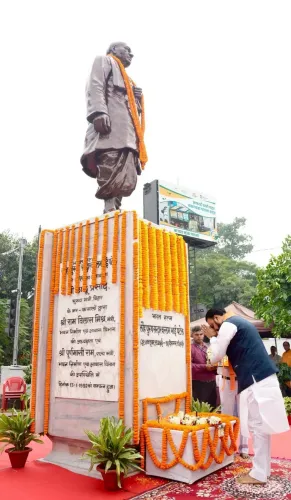
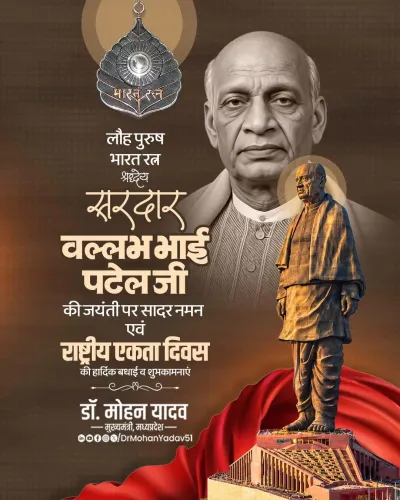
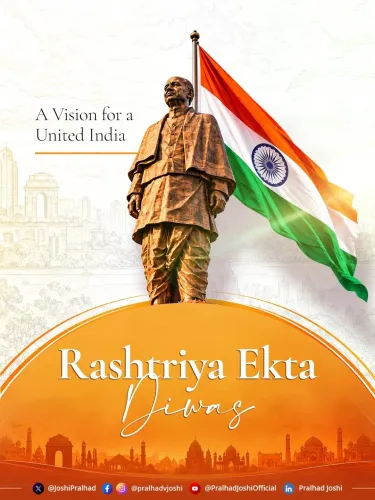
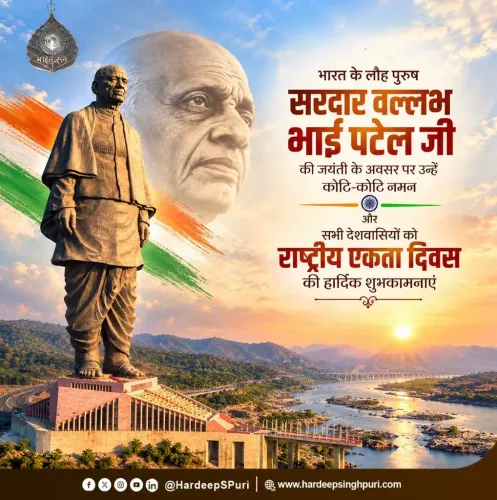
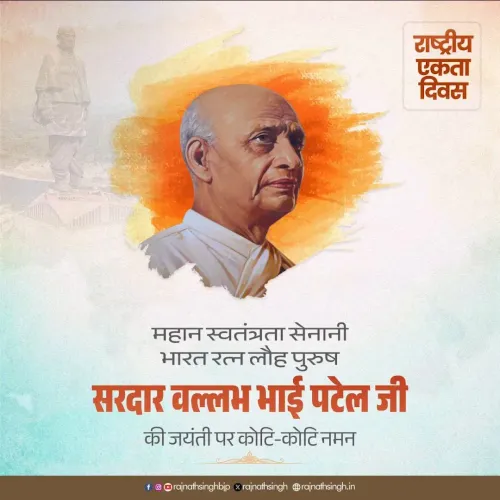
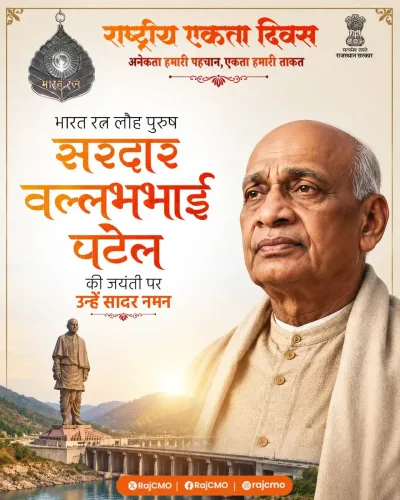
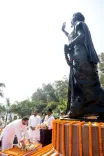
On the 131st birth anniversary of Sardar Vallabhbhai Patel, Union External Affairs Minister Dr. S. Jaishankar paid his tributes to the Iron Man of India on Rashtriya Ekta Divas, 31 October 2026, honouring the statesman whose singular achievement — integrating over 500 princely states into the Indian Union — defined the geographic shape of modern India.
Posting on X, Dr. Jaishankar wrote: 'On #RashtriyaEktaDivas, pay my tributes to Sardar Vallabhbhai Patel ji, whose visionary leadership played a key role in ensuring India's unity and integrity. Sardar Patel's legacy as a freedom fighter and administrator continues to inspire generations.'
The man who drew India's map
Sardar Vallabhbhai Patel served as India's first Deputy Prime Minister and Home Minister after independence in 1947. Faced with the imminent fragmentation of the subcontinent into hundreds of autonomous principalities, Patel — alongside his secretary V. P. Menon — executed one of the most consequential acts of statecraft of the twentieth century, persuading, cajoling, and when necessary pressuring the rulers of more than 500 princely states to accede to the Indian Union. The scale and speed of that integration remain without modern parallel.
His dual identity — as a frontline freedom fighter who organised the Bardoli Satyagraha of 1928 and as a hard-nosed administrator who built state institutions from scratch — is precisely what Dr. Jaishankar's tribute underlines: the rare combination of moral courage and executive will.
Rashtriya Ekta Divas: a decade of remembrance
The Government of India instituted Rashtriya Ekta Divas in 2014 to mark Patel's birth anniversary every 31 October and to anchor a national conversation about unity and territorial integrity. Each year, senior ministers, chief ministers, and officials across the country mark the day with run-for-unity events, pledges, and public tributes. Dr. Jaishankar's post fits within that established governmental rhythm — but the External Affairs portfolio adds a particular resonance: Patel's integration project was, in its essence, a feat of foreign-policy-adjacent coercive diplomacy directed inward.
For India's diplomatic community, Patel's legacy carries a specific charge — the idea that national unity is the precondition for credible external engagement, a principle that remains live in contemporary foreign-policy thinking.
Point of View
Invoking Patel carries added weight: the integration of the princely states was, at its core, an exercise in coercive statecraft that directly shaped India's sovereign borders — the very canvas on which contemporary foreign policy operates. The annual observance of Rashtriya Ekta Divas has, since 2014, served a dual purpose: honouring Patel and reinforcing the primacy of national unity as a political value. Senior ministers participating across portfolios signals that this is an all-of-government message, not merely a Home Ministry ritual.
NationPress
31 Oct 2026
Frequently Asked Questions
What is Rashtriya Ekta Divas and why is it observed on 31 October?
Rashtriya Ekta Divas, or National Unity Day, is observed on 31 October every year to mark the birth anniversary of Sardar Vallabhbhai Patel . The Government of India instituted it in 2014 to promote national unity and integrity and to honour Patel's role in integrating over 500 princely states into the Indian Union.
What did Dr. S. Jaishankar say about Sardar Patel on Rashtriya Ekta Divas 2026?
Dr. Jaishankar posted on X that Sardar Patel's 'visionary leadership played a key role in ensuring India's unity and integrity' and that his legacy as a 'freedom fighter and administrator continues to inspire generations.'
How many princely states did Sardar Patel integrate into India?
Sardar Vallabhbhai Patel, as India's first Home Minister, oversaw the accession of more than 500 princely states into the Indian Union after independence in 1947 , an achievement regarded as one of the most consequential acts of statecraft in modern history.
What positions did Sardar Vallabhbhai Patel hold after independence?
Sardar Patel served as India's first Deputy Prime Minister and Home Minister following independence in 1947. He is widely known as the 'Iron Man of India' for his role in the country's political and territorial integration.
When was Rashtriya Ekta Divas first observed in India?
Rashtriya Ekta Divas was first observed in 2014 , when the Government of India formally instituted the annual commemoration on 31 October , Sardar Vallabhbhai Patel's birth anniversary.