Jaishankar hails GSLV-F18 launch, NavIC gets NVS-03 boost
Synopsis
Union External Affairs Minister Dr. S. Jaishankar congratulated ISRO and industry partners on the successful GSLV-F18 launch of NVS-03, a second-generation satellite that strengthens India's homegrown NavIC navigation system — moving the country closer to full operational independence from foreign GPS platforms.
Key Takeaways
GSLV-F18 successfully launched the NVS-03 navigation satellite on 31 October 2026 .
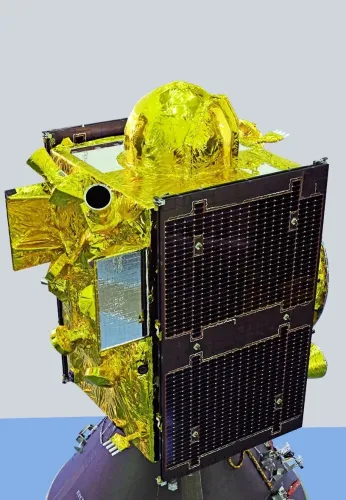
NVS-03 is a second-generation NavIC satellite, following NVS-01 launched in May 2023 .
NavIC is India's indigenous regional satellite navigation system, an alternative to GPS and GLONASS.
The programme began with IRNSS-1A in July 2013 and is building toward a full seven-satellite constellation.
Jaishankar acknowledged both ISRO and its industry partners , reflecting the growing role of India's private space sector.
Full NavIC integration into smartphones and defence platforms remains the key next milestone.
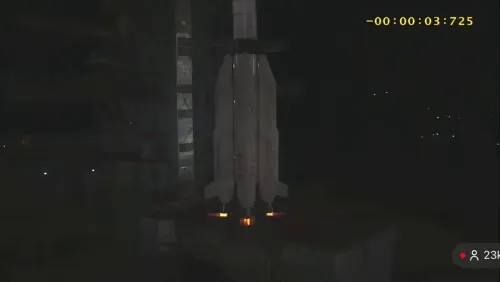
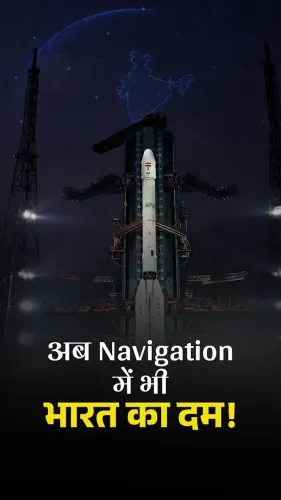
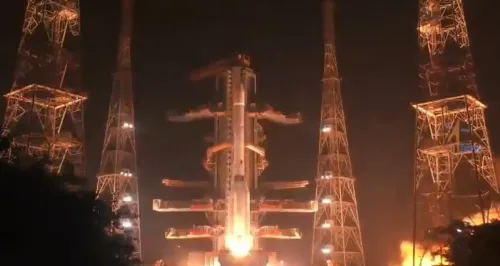
India's push for a homegrown alternative to GPS cleared another significant milestone on Saturday, 31 October 2026, as Union External Affairs Minister Dr. S. Jaishankar congratulated ISRO and its industry partners on the successful launch of GSLV-F18 carrying the NVS-03 navigation satellite — the latest addition to India's indigenous NavIC constellation.
In his post on X, Dr. Jaishankar wrote: 'The launch of NVS-03 will strengthen our indigenous satellite navigation system NavIC, enhancing positioning, navigation and timing capabilities across India and beyond. The dedication of our space scientists and engineers continues to make us proud.'
What NVS-03 adds to the NavIC constellation
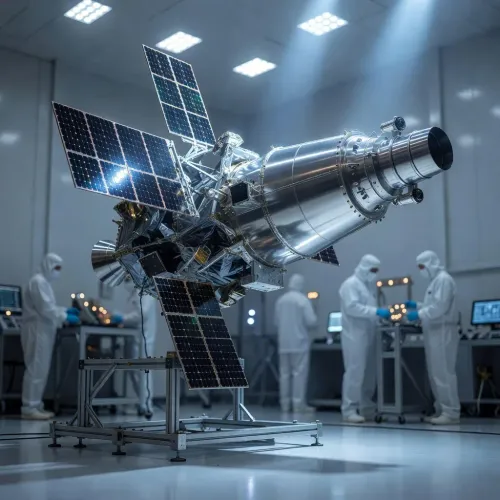
NavIC — Navigation with Indian Constellation — is India's regional satellite navigation system, built to provide precise positioning, navigation, and timing services independent of foreign platforms like the United States' GPS or Russia's GLONASS. The programme traces its origins to July 2013, when the first satellite, IRNSS-1A, lifted off to begin building the constellation. NVS-03 belongs to the second-generation NVS series, designed to replace and upgrade the older first-generation IRNSS satellites and expand both coverage and accuracy. The first of that new generation, NVS-01, flew aboard GSLV-F12 in May 2023. With NVS-03 now in orbit, the constellation moves closer to full operational capability — a state that would allow NavIC signals to be seamlessly integrated into smartphones, defence platforms, agriculture, maritime navigation, and civilian infrastructure.GSLV's proven role in India's navigation ambitions
The Geosynchronous Satellite Launch Vehicle (GSLV) has been ISRO's workhorse for placing heavier navigation satellites into geostationary and geosynchronous transfer orbits. Each successful GSLV mission in the NavIC programme is a compounding investment — every satellite added sharpens the system's geometry, reduces positioning error, and expands the coverage footprint 'across India and beyond,' as Dr. Jaishankar noted. India's drive for self-reliance in space technology carries both civilian and strategic dimensions. A fully independent navigation system insulates critical infrastructure — from precision agriculture to missile guidance — from the risk of signal denial by a foreign power.Scientists, engineers, and a long programme finally bearing fruit
Dr. Jaishankar's congratulations extended specifically to ISRO's industry partners, reflecting the growing role of India's private space sector under the liberalised framework introduced in recent years. The shout-out is more than ceremonial. Successive NavIC launches have drawn in domestic component manufacturers, system integrators, and launch-support firms — a supply chain that deepens with every mission. The next milestones to watch: completion of the full seven-satellite NavIC constellation and the mass-market integration of NavIC chips into Indian smartphones — a step that would put this homegrown system in the hands of hundreds of millions of users every day.Point of View
In theory, be switched off or degraded in a conflict scenario. Dr. Jaishankar's public congratulations are notable: the External Affairs Ministry rarely comments on domestic launch events, and his involvement signals that NavIC is viewed not merely as a technology programme but as an instrument of strategic autonomy and soft power. The reference to coverage 'beyond India' also hints at NavIC's potential to serve neighbouring countries, a dimension with clear diplomatic value in the Indo-Pacific. Each NVS-series launch incrementally raises the cost-benefit calculus for India's adversaries of any attempt to deny it space-based navigation.
NationPress
31 Oct 2026
Frequently Asked Questions
What is NavIC and how is it different from GPS?
NavIC (Navigation with Indian Constellation) is India's homegrown regional satellite navigation system, providing positioning, navigation, and timing services independently of foreign systems like the US GPS or Russia's GLONASS. It is designed to cover India and a region extending roughly 1,500 km beyond its borders.
What is NVS-03 and why does it matter?
NVS-03 is a second-generation NavIC navigation satellite launched aboard GSLV-F18. It is designed to upgrade and replace older first-generation IRNSS satellites, improving coverage, accuracy, and the overall performance of the NavIC constellation.
When did India first launch a NavIC satellite?
India launched its first NavIC satellite, IRNSS-1A, in July 2013 , beginning the gradual build-up of the indigenous navigation constellation.
What was the first second-generation NavIC satellite?
NVS-01 was the first second-generation NavIC satellite. It was launched aboard GSLV-F12 in May 2023 , initiating the modernisation of the constellation.
Will NavIC be available on Indian smartphones?
Integration of NavIC chips into smartphones is an active goal for the programme. Once the constellation is fully operational and chipset manufacturers are mandated or incentivised to include NavIC support, hundreds of millions of Indian smartphone users could access the homegrown navigation signal.