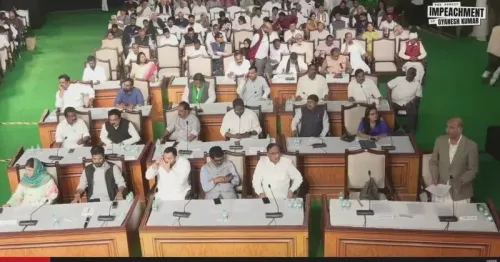
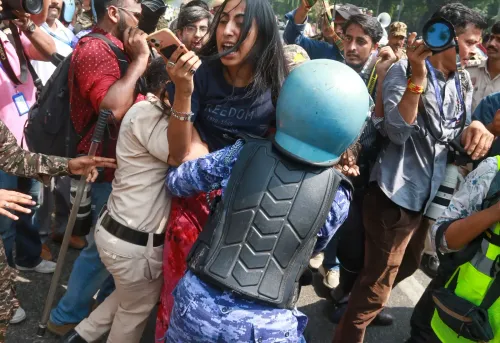
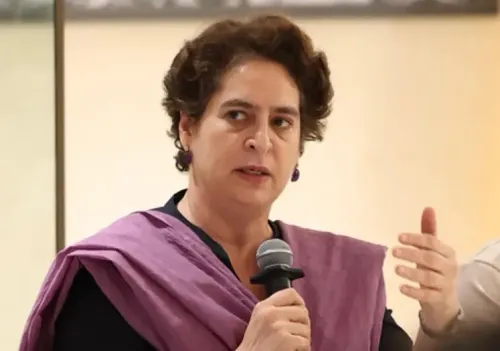
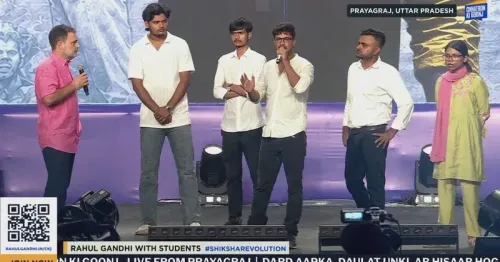
Priyanka Gandhi holds 'Public Impeachment' of Gyanesh Kumar in Delhi
Synopsis
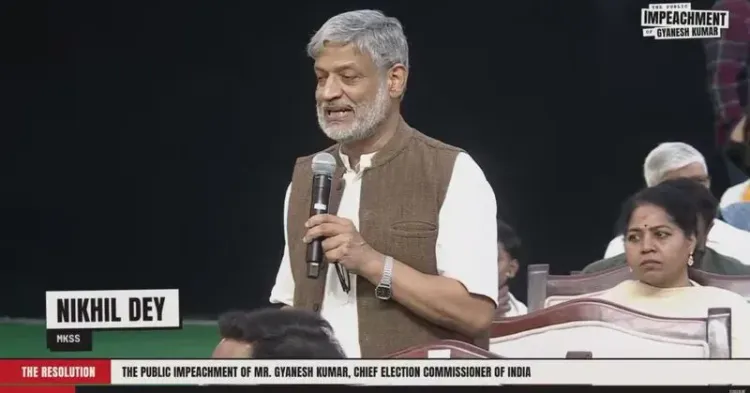
Congress general secretary Priyanka Gandhi Vadra staged a live 'Public Impeachment of Gyanesh Kumar' at 10 Rajaji Marg, New Delhi on 31 October 2026, streaming the accountability event directly on X as part of the opposition's public-pressure campaign.
Key Takeaways
Congress general secretary Priyanka Gandhi Vadra announced and livestreamed a 'Public Impeachment of Gyanesh Kumar' on 31 October 2026 .
The event was held at 10 Rajaji Marg, New Delhi — a historically significant political address in Lutyens' Delhi.
The livestream was broadcast directly on X , bypassing conventional media channels for maximum direct reach.
The term 'impeachment' is a calculated rhetorical escalation, invoking constitutional accountability language for a public opposition event.
No formal charges or specific allegations were detailed in the post; the specific grounds for the 'impeachment' were to emerge from the event itself.
Government or individual response, and any follow-up legal or parliamentary action, remains the key variable to watch.
A sharp political offensive landed at the heart of New Delhi on Saturday, 31 October 2026, as Congress general secretary Priyanka Gandhi Vadra announced a live, public event styled as the 'Public Impeachment of Gyanesh Kumar' — staged at 10 Rajaji Marg, one of the capital's most politically loaded addresses.
What unfolded at 10 Rajaji Marg
Priyanka Gandhi Vadra shared the livestream link directly on X, framing the event as a live, public accountability hearing — the phrase 'Public Impeachment' being a deliberate piece of political theatre designed to signal that the opposition intends to put Gyanesh Kumar before a citizen jury of public opinion. 10 Rajaji Marg, a prominent bungalow address in Lutyens' Delhi, has historically hosted high-profile political gatherings and press events, lending the venue a weight beyond an ordinary presser.
The choice of a livestreamed format is consistent with a broader opposition playbook — bypassing conventional media channels to reach audiences directly, in real time, and to generate a documentary record of proceedings.
Why 'Impeachment' — and why Gyanesh Kumar
The term 'impeachment' carries constitutional resonance in Indian political discourse, typically associated with the removal of high constitutional functionaries. Its use here as a descriptor for a public opposition event is a calculated rhetorical escalation — implying that the individual named has, in the Congress's view, committed acts grave enough to warrant formal public censure. The Congress, as a principal opposition force, has periodically deployed such high-visibility formats to press accountability demands that it argues are being blocked inside Parliament or by official institutions.
The specific charges or allegations placed before the gathering are not detailed in the post itself. What is clear is that the Congress chose to go public, go live, and go loud — all at once.
The opposition's accountability playbook
Opposition leaders in India have increasingly turned to public hearings, 'jan adalats' (people's courts), and livestreamed events to place pressure on individuals or institutions that, they argue, are insulated from parliamentary scrutiny. These events serve a dual purpose: building a political narrative for core supporters while simultaneously creating pressure for a formal government or judicial response. Whether a response materialises — from the government, from Gyanesh Kumar, or through any legal channel — will determine how far this moment travels beyond the day's headlines.
The clock is now on the other side of the room.
Point of View
Congress is signalling institutional gravity while bypassing conventional channels. The move fits a pattern of opposition parties using high-visibility symbolic events to compensate for limited parliamentary leverage. The government's silence or response in the coming hours will define whether this remains a one-day spectacle or ignites a sustained political controversy.
NationPress
31 Oct 2026
Frequently Asked Questions
What is the 'Public Impeachment of Gyanesh Kumar'?
It is a public accountability event organised by Congress general secretary Priyanka Gandhi Vadra at 10 Rajaji Marg, New Delhi on 31 October 2026, framed as a citizen-facing hearing to scrutinise Gyanesh Kumar on unspecified grounds.
Who is Gyanesh Kumar?
Specific verified details about Gyanesh Kumar's official role or the allegations against him were not confirmed in publicly available information at the time of this report.
Where is 10 Rajaji Marg in New Delhi?
10 Rajaji Marg is a prominent bungalow address in the Lutyens' Delhi zone, historically used for political gatherings, press conferences, and high-profile public meetings.
Why did Congress use the word 'impeachment' for this event?
'Impeachment' carries constitutional weight in India, typically linked to removing senior constitutional functionaries; its use by Congress here is a deliberate rhetorical move to signal the gravity of its accusations against Gyanesh Kumar.
What happens after the Public Impeachment event?
Any formal government response, reaction from Gyanesh Kumar, or follow-up parliamentary or legal action will determine the political and legal trajectory of the episode.