How Did India's Revised Consumption Survey Data Influence Global Poverty Calculations?
Synopsis
Discover how India's revised consumption survey data has played a pivotal role in reshaping global poverty assessments. With the extreme poverty rate witnessing a remarkable decline, this article highlights the government's initiatives and commitment to inclusive growth.
Key Takeaways
India's extreme poverty rate has dropped significantly.
The National Multidimensional Poverty Index (MPI) is a key tool for measuring poverty.
24.8 crore people have escaped multidimensional poverty.
The government prioritizes inclusive growth and social mobility.
Labor markets have recovered beyond pre-COVID levels.
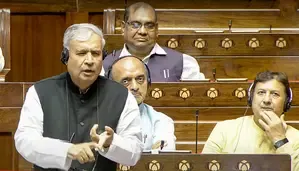
New Delhi, Dec 8 (NationPress) The World Bank has acknowledged that India's updated consumption survey data has played a crucial role in the recalibration of global poverty metrics, as reported to Parliament on Monday.
The World Bank indicates that the rise in international poverty figures is attributable to shifts in global prices along with enhancements in national data.
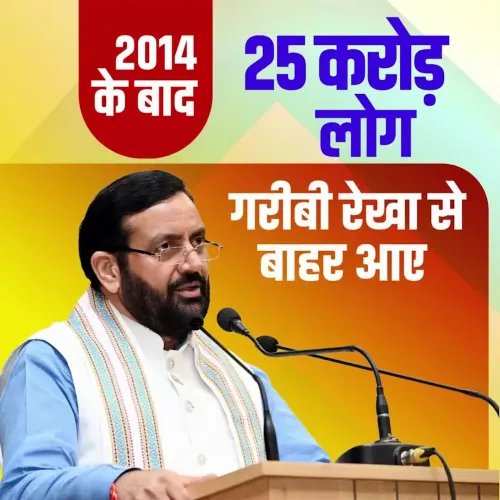
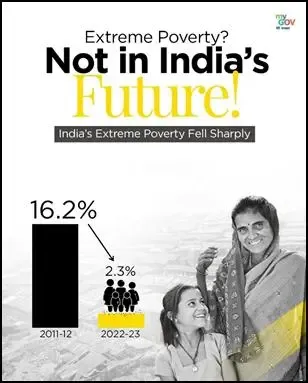
India's extreme poverty rate has dropped to 5.25 percent in 2022-23 from 27.12 percent in 2011-12. The population living in extreme poverty has decreased from 34.4 crore to 7.5 crore during this timeframe, as highlighted by the Union Minister of State for Finance, Pankaj Chaudhary, in the Lok Sabha.
The government has introduced a comprehensive index named the National Multidimensional Poverty Index (MPI) to assess poverty levels.
A discussion paper by NITI Aayog, titled ‘Multidimensional Poverty in India since 2005-06’, estimates that multidimensional poverty in India has fallen from 29.17 percent in 2013-14 to 11.28 percent in 2022-23, indicating that 24.8 crore individuals have emerged from poverty during this period, as per the minister's statement.
The government's primary policy goal is the development of all segments of society. Its emphasis on inclusive growth is embodied in the motto “Sabka Saath, Sabka Vikas”, aimed at alleviating poverty and inequality, enhancing social security, and creating income and livelihood opportunities, while improving the quality of life for vulnerable groups within the nation, the minister asserted.
To achieve these aims, the government is executing several targeted programs to foster self-reliance and provide social safety nets.
The minister also noted that the government has adopted a multi-faceted approach that tackles economic disparity, encourages social mobility, and guarantees equitable economic participation. Employment generation and enhancing employability have been prioritized.
The annual Periodic Labour Force Survey (PLFS) report indicates that labor markets have rebounded beyond pre-COVID levels in both urban and rural settings. The unemployment rate for individuals aged 15 and older has dropped from 5.8 percent in 2018-19 to 3.2 percent in 2023-24.
Additionally, the government is actively promoting the Skill India Mission (SIM) to provide skill development, re-skilling, and up-skilling training through an extensive network of skill development centers, schools, colleges, and institutions.
Point of View
The recent acknowledgment by the World Bank of India's updated consumption survey data underlines the nation's efforts to combat poverty effectively. The decline in extreme poverty rates and the introduction of the National Multidimensional Poverty Index are commendable steps towards inclusive development. These efforts reflect a commitment to ensuring that all citizens benefit from economic growth, aligning with the broader goal of national progress.
NationPress
19 Oct 2026
Frequently Asked Questions
What is the significance of India's revamped consumption survey data?
India's revamped consumption survey data has significantly influenced the revision of global poverty calculations, showcasing the country's progress in poverty reduction.
How has India's extreme poverty rate changed recently?
India's extreme poverty rate decreased from 27.12% in 2011-12 to 5.25% in 2022-23, highlighting substantial progress in poverty alleviation.
What is the National Multidimensional Poverty Index?
The National Multidimensional Poverty Index (MPI) is a comprehensive measure developed by the Indian government to assess poverty beyond income levels.
What initiatives is the Indian government implementing to reduce poverty?
The Indian government is implementing various targeted programs aimed at promoting self-reliance, enhancing social security, and improving the quality of life for vulnerable populations.
What impact has the Skill India Mission had?
The Skill India Mission (SIM) aims to provide skill development and training across various sectors, improving employability and supporting economic growth.