CM Saini: 25 Crore Indians Lifted Out of Poverty Since 2014
Synopsis
Haryana Chief Minister Nayab Singh Saini on June 12, 2026, cited that over 25 crore Indians have exited poverty since 2014, amplifying the BJP-led Union government's welfare narrative backed by NITI Aayog's Multidimensional Poverty Index data.
Key Takeaways
Haryana CM Nayab Singh Saini posted on June 12, 2026 , claiming more than 25 crore Indians have exited poverty since 2014 .
The claim aligns with the Union government's official narrative on poverty reduction under Prime Minister Narendra Modi 's tenure.
NITI Aayog 's National Multidimensional Poverty Index (MPI) , published since 2021 , is the primary official data source for such large-scale poverty reduction figures.
Flagship schemes including Ujjwala Yojana , Swachh Bharat Mission , Pradhan Mantri Awas Yojana , and Jal Jeevan Mission are cited as structural drivers of the reduction.
BJP state leaders routinely amplify national welfare claims to reinforce alignment with Union government policy priorities.
The next NITI Aayog MPI update is expected to provide revised figures that will likely feature in Union Budget and parliamentary discussions.
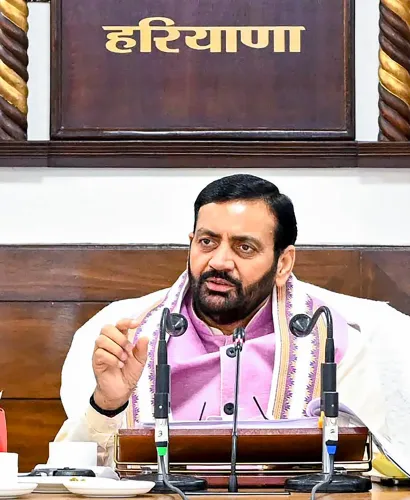
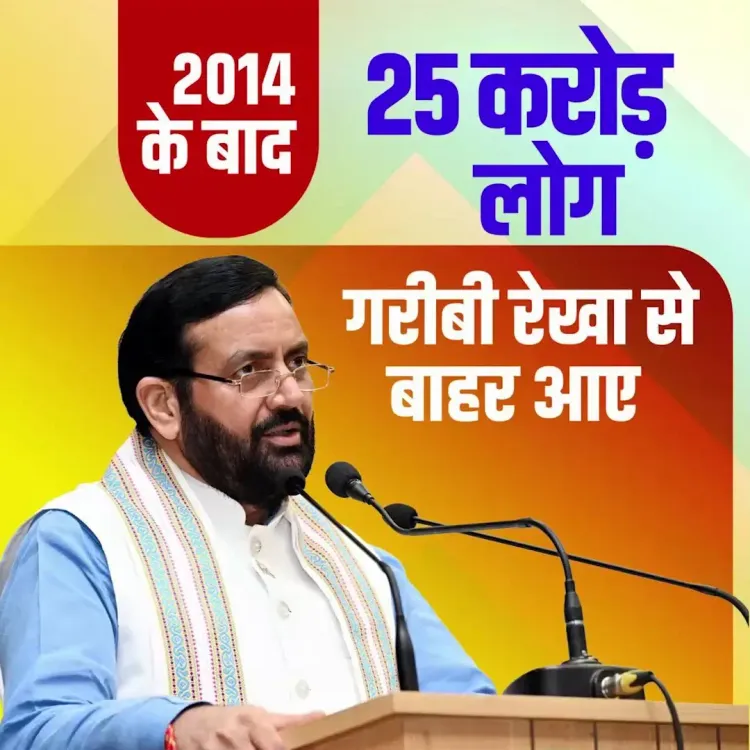
Haryana Chief Minister Nayab Singh Saini on Friday, June 12, 2026, shared a video on X citing that more than 25 crore Indians have moved out of poverty and joined the mainstream of development since 2014, attributing the achievement to policies under the current Union government.
Context
In his post, CM Saini wrote: '2014 ke baad desh ke 25 crore se adhik nagrik garibi rekha se bahar nikalkar vikas ki mukhyadhara se jude hain' ('After 2014, more than 25 crore citizens of the country have come out of the poverty line and joined the mainstream of development'). The statement echoes a broader narrative that the BJP-led Union government has consistently advanced regarding welfare delivery and poverty alleviation over the past decade.
BJP state leaders, including chief ministers, routinely amplify national-level welfare claims, particularly around milestones tied to Prime Minister Narendra Modi's tenure, which began in May 2014. The post was accompanied by a video, suggesting it may be part of a coordinated outreach or campaign communication effort.
Policy Backdrop
NITI Aayog, the Union government's principal policy think tank, began publishing the National Multidimensional Poverty Index (MPI) in 2021, drawing on data from the National Family Health Survey (NFHS). The MPI measures poverty across multiple dimensions including health, education, and living standards, going beyond income-based definitions.
Official MPI reports have been the primary data source cited in public communications for large-scale poverty reduction figures. The index tracks improvements in indicators such as access to clean cooking fuel, sanitation, drinking water, housing, nutrition, and schooling — areas where flagship schemes like Pradhan Mantri Awas Yojana, Ujjwala Yojana, Swachh Bharat Mission, and Jal Jeevan Mission have reported significant outreach since 2014.
The government has pointed to these welfare delivery programmes as the structural drivers behind the reduction in multidimensional poverty, particularly in rural India.
Stakeholders and Impact
The primary beneficiaries of the claimed poverty reduction are below-poverty-line (BPL) households, with the rural population representing the largest segment. States like Uttar Pradesh, Bihar, Madhya Pradesh, and Rajasthan have historically accounted for a disproportionate share of India's multidimensionally poor, and official MPI data has pointed to significant gains in these states.
For Haryana, CM Saini's amplification of this national figure serves to reinforce the state government's alignment with Union-level welfare priorities. It also signals to voters and party workers that the BJP's development agenda has produced measurable outcomes at the national scale.
Opposition parties have periodically contested the methodology and scope of MPI-based claims, arguing that income poverty and employment precarity remain significant challenges for large sections of the population.
What's Next
The next NITI Aayog MPI update is expected to provide revised poverty figures based on the latest available survey data, and will likely be referenced in upcoming Union Budget communications and parliamentary debates. Any upward revision to the poverty-reduction count could further fuel political messaging from ruling-party leaders ahead of state and national electoral cycles.
The sustained emphasis on welfare milestones by BJP leaders at the state level suggests that poverty reduction will remain a central plank of the party's governance narrative through the current political cycle.
Point of View
Drawn from NITI Aayog's MPI framework, has become a standard data point in BJP's development narrative, deployed consistently since the index gained official prominence. By amplifying it with a video, Saini signals both organisational discipline and an intent to keep welfare delivery central to Haryana BJP's public communication. The broader pattern points to poverty reduction statistics playing an increasingly prominent role in pre-election political messaging across BJP-governed states.
NationPress
23 Sept 2026
Frequently Asked Questions
How many Indians have come out of poverty since 2014 according to the government?
The Union government, citing NITI Aayog's National Multidimensional Poverty Index, has claimed that more than 25 crore Indians exited poverty after 2014 . Haryana CM Nayab Singh Saini reiterated this figure on June 12, 2026.
What is the NITI Aayog Multidimensional Poverty Index?
NITI Aayog 's National Multidimensional Poverty Index (MPI) measures poverty across dimensions including health, education, and living standards, drawing on National Family Health Survey data. It has been published since 2021 and is the primary official source for India's poverty reduction claims.
What schemes are credited for reducing poverty in India since 2014?
Government communications credit schemes such as Pradhan Mantri Awas Yojana , Ujjwala Yojana , Swachh Bharat Mission , and Jal Jeevan Mission as key drivers of multidimensional poverty reduction since 2014 .
Why did Haryana CM Nayab Singh Saini post about national poverty reduction?
BJP state leaders routinely amplify Union government welfare achievements to align state-level political messaging with the national party narrative, particularly around milestones tied to Prime Minister Narendra Modi 's governance record.
When will NITI Aayog release the next poverty index update?
The exact date of the next NITI Aayog MPI update has not been officially announced. The update is expected to reflect the latest available survey data and will likely be referenced in upcoming Union Budget presentations and parliamentary debates.