25 crore Indians exit multidimensional poverty in 12 years, govt data shows
Synopsis
India's multidimensional poverty rate more than halved in under a decade — from 29.17% to 11.28% — as government data credits flagship schemes on water, sanitation, food, and education for lifting nearly 25 crore people. The numbers, if independently verified, would represent one of the largest poverty-reduction episodes in modern Indian history.
Key Takeaways
Nearly 25 crore people have exited multidimensional poverty over the past 12 years , according to government data.
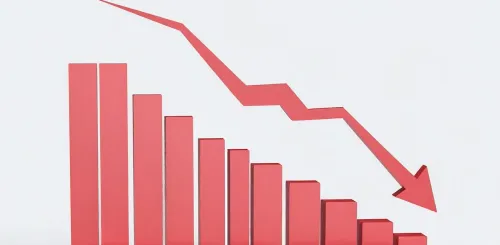
Multidimensional poverty fell from 29.17 per cent in 2013–14 to 11.28 per cent in 2022–23 — a 17.89 percentage-point drop.
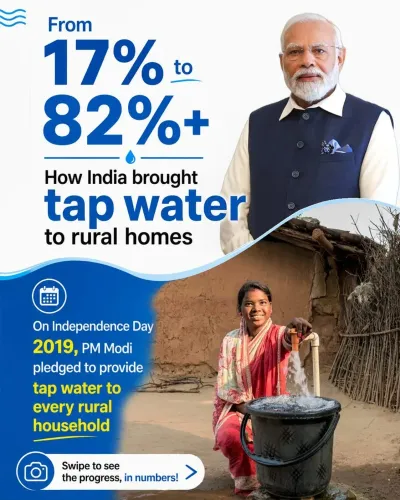
Rural tap water coverage rose from 3.23 crore to 15.84 crore households between August 2019 and May 2026 ; 2.77 lakh villages achieved 100% coverage.
PM Ujjwala Yojana distributed over 10.57 crore free LPG connections ; PMGKAY provided free food grains to over 81 crore beneficiaries .
Female primary school dropout rate fell from 4.6 per cent (2013–14) to 0.3 per cent (2024–25).
The sex ratio improved from 943 to 1,020 females per 1,000 males between the 2011 Census and 2021 .
Nearly 25 crore people have been lifted out of multidimensional poverty over the past 12 years, the Indian government said on Monday, 8 June, attributing the decline to expanded welfare delivery across water, sanitation, health, food security, and education. The announcement, backed by official data, marks one of the most cited social development milestones of the current administration.
Key Poverty Reduction Numbers
Multidimensional poverty fell sharply from 29.17 per cent in 2013–14 to 11.28 per cent in 2022–23 — a reduction of 17.89 percentage points over nine years, according to the government statement. Average inflation also eased, declining from 8.1 per cent during the 2004–2014 period to 5.1 per cent during 2014–2025, which the government said improved household purchasing power for low-income families.
Water and Sanitation Gains
Rural tap water coverage expanded from 3.23 crore households in August 2019 to 15.84 crore by May 2026, with 2.77 lakh villages achieving 100 per cent tap water coverage under the Har Ghar Jal campaign. Overall household coverage now stands at 81.87 per cent, according to the official statement.
The Jal Jeevan Mission (JJM), launched in 2019, received a fiscal allocation increase of approximately 488 per cent between 2020–21 and 2026–27, reaching ₹67,670 crore. On sanitation, over 12.11 crore household toilets were constructed, lifting rural sanitation coverage from 39 per cent in 2014 to near-universal levels, the government said.
Health, Food Security, and Clean Cooking
The PM Ujjwala Yojana distributed more than 10.57 crore free LPG connections, which the government said improved women's health and reduced indoor air pollution in rural households. Ayushman Bharat expanded affordable healthcare access for economically vulnerable families, while the Pradhan Mantri Garib Kalyan Anna Yojana (PMGKAY) ensured free food grains for over 81 crore beneficiaries. Digital governance reforms enabled Aadhaar-based ration delivery, the statement noted.
Education and Gender Indicators
Female primary school dropout rates declined from 4.6 per cent in 2013–14 to 0.3 per cent in 2024–25. Secondary school enrolment for girls rose from 75.51 per cent in 2014–15 to 80.2 per cent by 2024–25. The Beti Bachao Beti Padhao initiative, designed to address declining child sex ratios and gender-biased practices, is credited in part with improving the sex ratio from 943 females per 1,000 males at the 2011 Census to 1,020 by 2021.
Aspirational Districts and Tribal Outreach
Welfare delivery was also extended to Aspirational Districts and tribal regions through targeted water, sanitation, and livelihood interventions, the government said. This comes amid broader policy emphasis on closing the development gap between India's most advanced and most underserved geographies.
With several flagship schemes still in active rollout phase, the government is expected to present updated poverty metrics ahead of the next National Family Health Survey cycle.
Point of View
But they deserve scrutiny on methodology and timing — the 2022–23 baseline predates the latest NFHS cycle and relies on composite indicators that can move independently of income poverty. India's record on welfare delivery has genuinely improved, but the gap between scheme coverage and actual outcome quality — clean water that flows daily, rations that reach the last mile — remains a persistent blind spot in official data. The sex ratio improvement is real and measurable, yet female labour force participation has not kept pace with girls' enrolment gains, suggesting education access alone is not translating into economic agency. The 25-crore headline is politically significant; whether it holds up to independent audit is the question mainstream coverage rarely asks.
NationPress
24 Oct 2026
Frequently Asked Questions
How many people have escaped multidimensional poverty in India in the last 12 years?
According to the government, nearly 25 crore people have exited multidimensional poverty over the past 12 years. Multidimensional poverty declined from 29.17 per cent in 2013–14 to 11.28 per cent in 2022–23, a reduction of 17.89 percentage points.
What is the Jal Jeevan Mission and how has it performed?
The Jal Jeevan Mission (JJM) is a government scheme launched in 2019 to provide tap water connections to every rural household. By May 2026, coverage had risen from 3.23 crore to 15.84 crore households, with 2.77 lakh villages achieving 100 per cent coverage and overall household coverage reaching 81.87 per cent. Fiscal allocations for the scheme grew by approximately 488 per cent between 2020–21 and 2026–27, reaching ₹67,670 crore.
What is multidimensional poverty and how is it measured in India?
Multidimensional poverty measures deprivation across several dimensions simultaneously — including health, education, and living standards — rather than income alone. In India, the metric tracks indicators such as sanitation access, cooking fuel, clean water, school attendance, and nutrition, providing a broader picture of welfare than income poverty lines.
How has female education improved under government welfare schemes?
Female primary school dropout rates fell from 4.6 per cent in 2013–14 to 0.3 per cent in 2024–25, according to official data. Secondary school enrolment for girls also rose from 75.51 per cent in 2014–15 to 80.2 per cent by 2024–25, supported in part by the Beti Bachao Beti Padhao initiative.
How many beneficiaries does PMGKAY cover and what does it provide?
The Pradhan Mantri Garib Kalyan Anna Yojana (PMGKAY) provides free food grains to over 81 crore beneficiaries across India. The scheme is part of the government's food security framework for economically vulnerable households, with Aadhaar-based digital delivery introduced to reduce leakages.