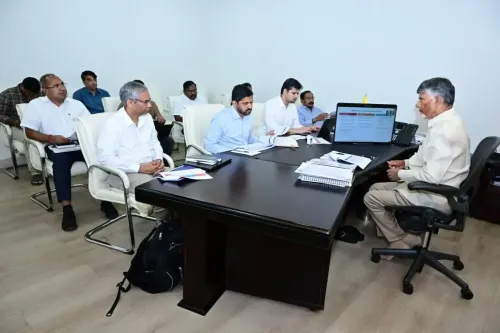
CM Chandrababu Reviews Cyclone Arnab Rehab, Warns of New Storm
Synopsis
CM Chandrababu Naidu chaired a review of Cyclone Arnab rehabilitation at the RTGS centre on October 31, as officials warned of a new Bay of Bengal low-pressure system likely to intensify into a cyclone by November 1, with heavy rain forecast for South Coastal Andhra and Rayalaseema on November 2-4.
Key Takeaways
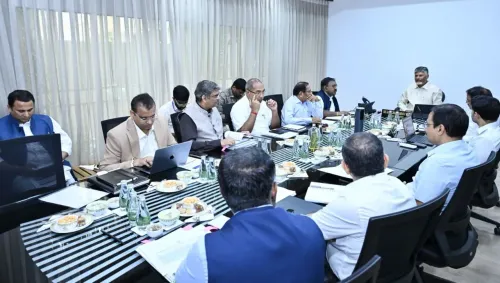
CM Nara Chandrababu Naidu reviewed Cyclone Arnab rehabilitation on October 31, 2026 at the RTGS centre in the Andhra Pradesh Secretariat.
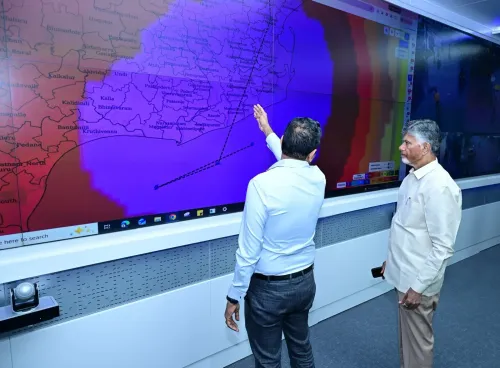
Officials briefed the CM on a new low-pressure system in the southeast Bay of Bengal that may strengthen into a cyclone by November 1 .
Moderate to heavy rainfall is expected in South Coastal Andhra from Guntur southward and in Rayalaseema on November 2, 3, and 4 .
IT Secretary Katamneni Bhaskar , electricity and disaster management officials, and telecom operator representatives attended the review meeting.
CM Naidu directed all departments to take advance precautionary measures ahead of the potential new cyclone.
The Real Time Governance Society model, strengthened after Cyclone Hudhud in 2014, is being used for continuous inter-departmental monitoring.
A new low-pressure system is forming in the southeast Bay of Bengal — and Andhra Pradesh Chief Minister Nara Chandrababu Naidu is not waiting for it to make landfall before acting. On Saturday, October 31, 2026, the Chief Minister's Office of Andhra Pradesh announced that CM Naidu chaired a high-level review of ongoing rehabilitation efforts from Cyclone Arnab, even as officials briefed him on the threat of a fresh cyclone taking shape offshore.
Fresh System in the Bay, 24 Hours to Watch
Officials at the meeting told the Chief Minister that the new low-pressure area in the southeast Bay of Bengal is likely to intensify into a cyclone by November 1. The projected impact zone covers South Coastal Andhra districts from Guntur downward, as well as the Rayalaseema region — areas that have already borne the brunt of Arnab's passage. Moderate to heavy rainfall is forecast across these zones on November 2, 3, and 4. CM Naidu directed all departments to initiate precautionary measures immediately, without waiting for the system to formally acquire cyclone status.
RTGS War Room at the Secretariat
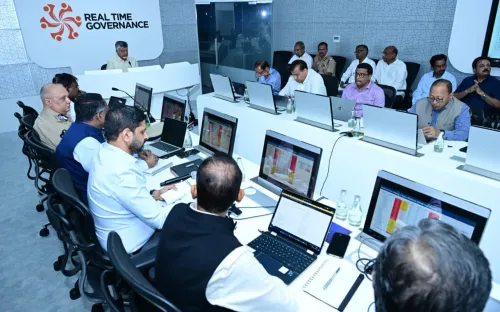
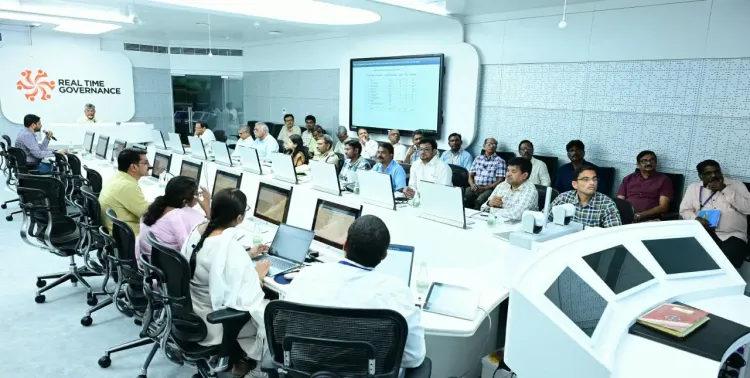
The review was held at the Real Time Governance Society (RTGS) centre inside the Andhra Pradesh Secretariat — the state's nerve centre for inter-departmental coordination during emergencies. Attending alongside the Chief Minister were IT Secretary Katamneni Bhaskar and representatives from the electricity department, the Disaster Management authority, and multiple telecom operators. The inclusion of telecom players is significant: last-mile communication blackouts during Cyclone Arnab likely exposed gaps in public alert and field coordination that the state now intends to close before the next hit.
The RTGS model, deepened after Cyclone Hudhud in 2014, allows live data feeds from district collectors and utility providers to be aggregated in one command view — enabling the Chief Minister to track restoration progress in near-real time rather than depending on periodic situation reports. Chandrababu Naidu, known for anchoring governance in technology dashboards, has consistently used this platform to compress the gap between ground reality and top-level decision-making.
Arnab's Shadow Still Looms
The review's dual mandate — looking back at Arnab rehabilitation and looking forward at a new threat — captures the compounding nature of cyclone season on the Bay of Bengal coast. Andhra Pradesh's coastline stretches over 974 kilometres, making it one of India's most cyclone-exposed states. Communities in Guntur and the districts further south, already dealing with damaged homes and disrupted power supply from Arnab, now face the possibility of fresh flooding before recovery work is complete.
With the state machinery already on alert posture and the RTGS centre running continuous monitoring, the administration's message to coastal residents is clear: take precautions now, before November 2 arrives.
Point of View
Which historically proves as critical as physical relief deployment. For a coastline that absorbs multiple cyclonic systems each year, institutionalising this cadence of pre-landfall reviews may be the single most cost-effective disaster-mitigation tool available.
NationPress
31 Oct 2026
Frequently Asked Questions
What is Cyclone Arnab and how did it affect Andhra Pradesh?
Cyclone Arnab struck Andhra Pradesh's coastline prior to October 31, 2026, prompting the state government to undertake rehabilitation work across affected districts. The exact districts and damage extent are being assessed through the Real Time Governance Society's monitoring system.
Is there a new cyclone coming to Andhra Pradesh in November 2026?
Officials briefed CM Chandrababu Naidu on October 31 that a new low-pressure area in the southeast Bay of Bengal is likely to intensify into a cyclone by November 1, with heavy rain forecast for South Coastal Andhra and Rayalaseema on November 2, 3, and 4.
Which districts will be affected by the new Bay of Bengal storm?
South Coastal Andhra districts from Guntur southward and districts in the Rayalaseema region are expected to receive moderate to heavy rainfall on November 2, 3, and 4, 2026.
What is the Real Time Governance Society of Andhra Pradesh?
The Real Time Governance Society (RTGS) is an Andhra Pradesh government body that aggregates live data from district administrations and utilities into a central command dashboard. It was strengthened after Cyclone Hudhud in 2014 and is the primary coordination hub during disaster events.
What precautions has the Andhra Pradesh government announced for the new storm?
CM Naidu directed all departments — including electricity, disaster management, and telecom operators — to take advance precautionary measures. A formal review meeting was convened at the Secretariat's RTGS centre on October 31 to coordinate the response.