President Murmu Performs Dhwajstambh Puja for Nashik Simhastha 2027
Synopsis
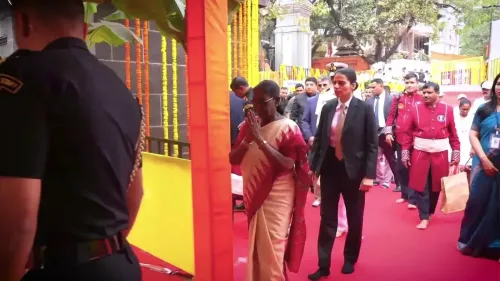
President Droupadi Murmu performed the ceremonial Dhwajstambh puja and Goda Aarti at Kushavart Tirtha, Trimbakeshwar on 31 October 2026, formally marking the spiritual start of preparations for the Nashik-Trimbakeshwar Simhastha Mahakumbh Mela 2027, flanked by Governor Jishnu Dev Varma, CM Devendra Fadnavis and both Deputy CMs.
Key Takeaways
President Droupadi Murmu performed the Dhwajstambh and Pavitra Dhwaj puja at Kushavart Tirtha, Trimbakeshwar on 31 October 2026 .
The ceremony formally inaugurates preparations for the Nashik-Trimbakeshwar Simhastha Mahakumbh Mela 2027 , a pilgrimage held every 12 years .
Governor Jishnu Dev Varma , CM Devendra Fadnavis , DCM Eknath Shinde and DCM Sunetra Ajit Pawar were all present.
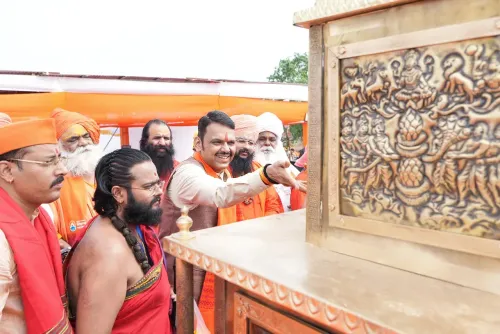
Sant-Mahants from various akharas attended, conferring religious legitimacy on the state-organised event.
The previous Simhastha Kumbh at Nashik-Trimbakeshwar was held in 2015 .
Maharashtra's trilingual announcement signals the mela's national — not merely regional — audience.
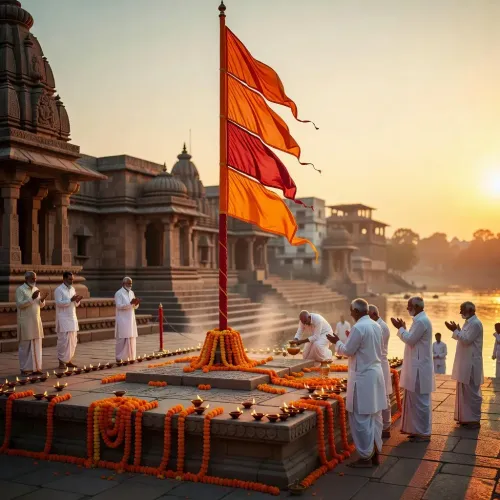
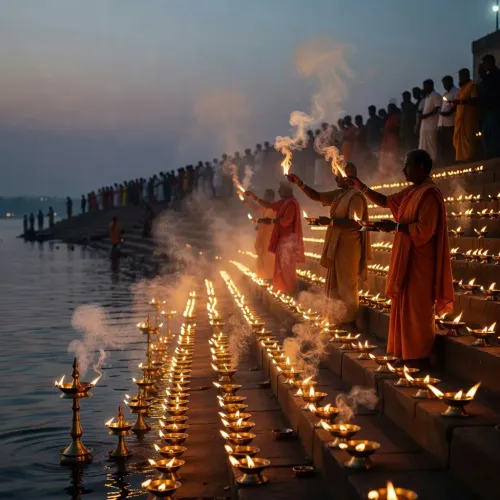
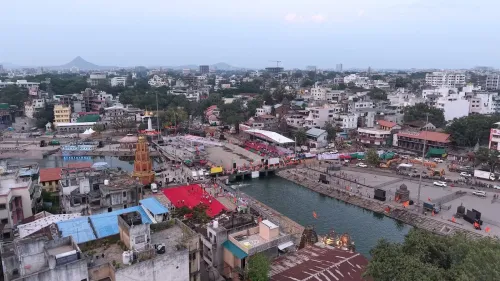
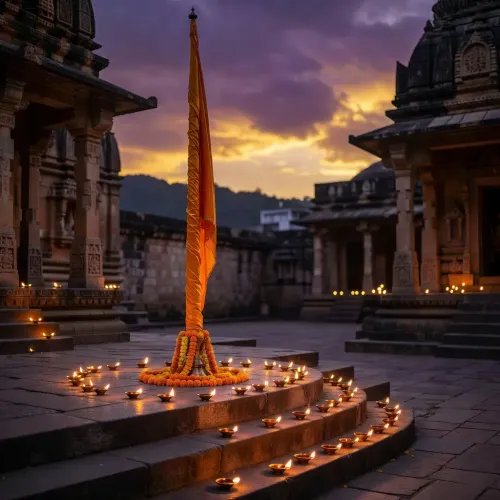
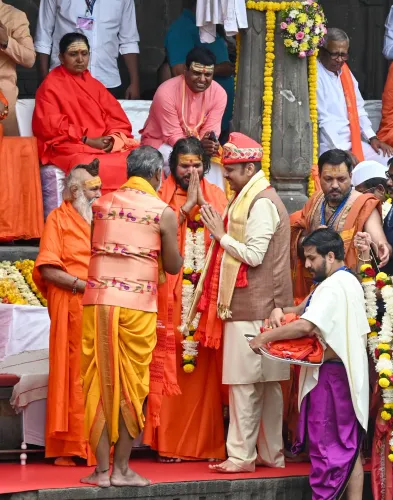
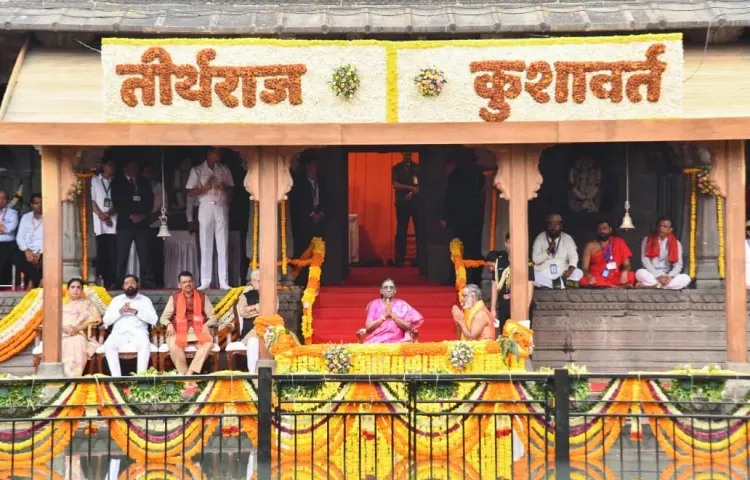
At the sacred banks of Kushavart Tirtha in Trimbakeshwar, President Droupadi Murmu on 31 October 2026 performed the ceremonial puja of the Dhwajstambh and Pavitra Dhwaj — the consecrated flagpole and holy flag — formally signalling the spiritual countdown to the Nashik-Trimbakeshwar Simhastha Mahakumbh Mela 2027. The President then led the Goda Aarti (evening prayer at the Godavari's source), with the full weight of Maharashtra's constitutional and elected leadership gathered beside her.
Who stood at Trimbakeshwar on Saturday
Governor Jishnu Dev Varma and Chief Minister Devendra Fadnavis flanked the President during the rituals. Deputy Chief Minister Eknath Shinde and Deputy Chief Minister Sunetra Ajit Pawar were also present, alongside Sant-Mahants from various akharas — the monastic orders whose participation defines the Kumbh's religious legitimacy — and other dignitaries. The convergence of the President, Governor, Chief Minister and both Deputies at a single ceremonial site underlines just how seriously the Maharashtra government is treating the 2027 edition.
Why the Dhwajstambh puja matters
The Simhastha Kumbh Mela at Nashik-Trimbakeshwar follows a strict 12-year cycle, rooted in the astronomical position of Jupiter (Simha Rashi — hence 'Simhastha'). The last edition was held in 2015. The consecration of the Dhwajstambh is traditionally the opening act — a public, sacred declaration that preparations have begun and that the site is spiritually activated. It is the moment the mela ceases to be an administrative plan and becomes a living pilgrimage event in the eyes of devotees and akharas alike.
The pattern behind the presidential presence
India's major Kumbh events — at Prayagraj, Haridwar, Ujjain and Nashik-Trimbakeshwar — have historically drawn high-level central government attention, but a sitting President personally performing the opening puja is a statement of national cultural endorsement. Maharashtra governments routinely coordinate with the Centre and religious bodies on logistics, security and infrastructure for these mega-gatherings, which draw millions of pilgrims. The Chief Minister's Office posting a trilingual announcement — in English, Marathi and Hindi — signals the mela's all-India audience, not merely a regional one.
What comes next for Nashik-Trimbakeshwar
With the Dhwajstambh puja now complete, attention turns to the hard infrastructure questions: crowd management plans, accommodation capacity, road and rail connectivity upgrades, and akhara coordination protocols — all of which the Maharashtra government will need to release in the months ahead. The 2027 mela is expected to draw millions of devotees to the narrow pilgrimage corridor between Nashik and Trimbakeshwar in the Nashik district of Maharashtra. Saturday's ceremony sets the spiritual clock ticking.
Point of View
Securing Presidential participation less than a year after assuming office reinforces its positioning as a steward of Maharashtra's Hindu cultural heritage, an alignment consistent with its broader political identity. The presence of both Deputy Chief Ministers alongside the Governor also projects coalition unity at a visible, spiritually resonant moment. How the government translates this ceremonial momentum into concrete infrastructure delivery for 2027 will be the real measure of the occasion.
NationPress
1 Nov 2026
Frequently Asked Questions
What is the Nashik-Trimbakeshwar Simhastha Kumbh Mela 2027?
It is a major Hindu pilgrimage event held every 12 years at Nashik and Trimbakeshwar in Maharashtra, drawing millions of devotees and monastic orders called akharas. The 2027 edition follows the previous one held in 2015.
What did President Droupadi Murmu do at Trimbakeshwar on 31 October 2026?
President Murmu performed the ceremonial puja of the Dhwajstambh (sacred flagpole) and Pavitra Dhwaj (holy flag) at Kushavart Tirtha, Trimbakeshwar, followed by the Goda Aarti, marking the formal spiritual start of Simhastha Kumbh Mela 2027 preparations.
What is Kushavart Tirtha in Trimbakeshwar?
Kushavart Tirtha is a sacred tank in Trimbakeshwar, Nashik district, considered the source of the Godavari river and one of the holiest sites of the Nashik-Trimbakeshwar Kumbh pilgrimage.
Who attended the Dhwajstambh puja at Trimbakeshwar?
Governor Jishnu Dev Varma, Chief Minister Devendra Fadnavis, Deputy Chief Ministers Eknath Shinde and Sunetra Ajit Pawar, along with Sant-Mahants from various akharas and other dignitaries, attended the ceremony alongside President Murmu.
How often is the Simhastha Kumbh Mela held at Nashik?
The Simhastha Kumbh Mela at Nashik-Trimbakeshwar is held once every 12 years, determined by the astronomical position of Jupiter in the Simha Rashi (Leo). The last edition was in 2015 and the next is scheduled for 2027.