CM Fadnavis, President Murmu launch Nashik Kumbh 2027 flag ceremony
Synopsis
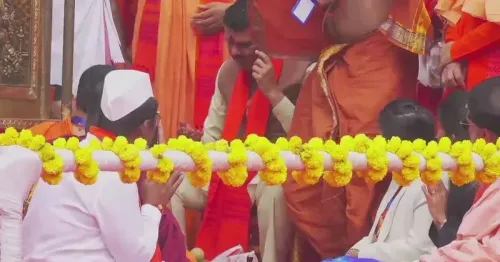
President Droupadi Murmu and Chief Minister Devendra Fadnavis presided over the flag-hoisting ceremony for the Nashik-Trimbakeshwar Simhastha Mahakumbh Mela 2027 on 31 October 2026, formally launching state preparations for the twelve-yearly pilgrimage that draws tens of millions of devotees.
Key Takeaways
President Droupadi Murmu and CM Devendra Fadnavis jointly led the flag-hoisting and flag-worship ceremony on 31 October 2026 .
The ceremony marks the official launch of preparations for the Nashik-Trimbakeshwar Simhastha Mahakumbh Mela 2027 .
The Simhastha Kumbh is held every 12 years at Nashik-Trimbakeshwar, triggered by Jupiter's transit into Leo.
Trimbakeshwar houses one of India's twelve Jyotirlingas, making this Kumbh site especially significant for Shaivite pilgrims.
The previous Simhastha at this location was held in 2015 ; the 2027 edition will require large-scale state infrastructure investment.
The President's presence elevates the event to a matter of national cultural importance, beyond a state-level religious function.
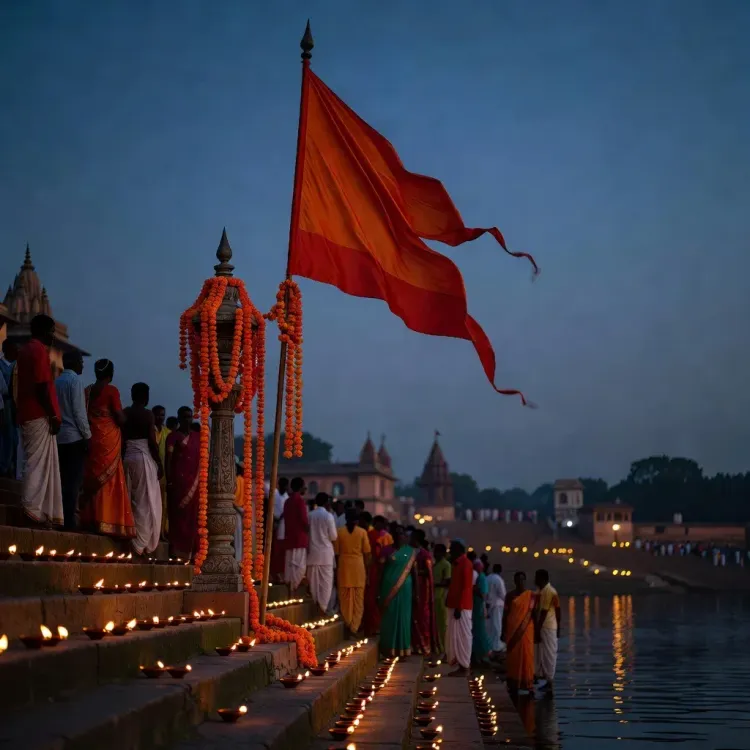
The countdown to one of Hinduism's most sacred pilgrimages began in earnest on Saturday, 31 October 2026, as President Droupadi Murmu and Chief Minister Devendra Fadnavis jointly presided over the flag-hoisting and flag-worship ceremony marking the formal launch of the Nashik-Trimbakeshwar Simhastha Mahakumbh Mela 2027 — signalling that the state machinery is now officially in motion for an event that draws tens of millions of pilgrims every twelve years.
What the flag ceremony sets in motion
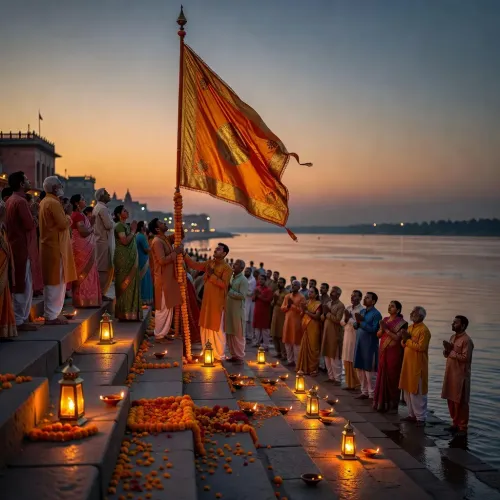
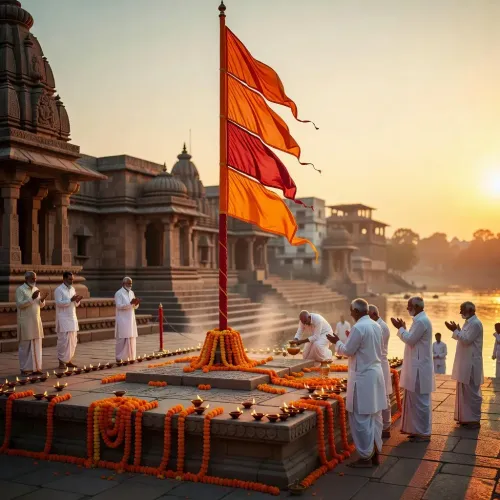
The dhwjarohan va dhwajapujan sohala — flag-hoisting and flag-worship ritual — is the traditional ceremonial opener that marks a Kumbh Mela's official announcement to the faithful. With the President of India in attendance alongside the Chief Minister, the Maharashtra government elevated the occasion to a national-level signal: preparations for the 2027 Simhastha are not aspirational, they are underway.
The Chief Minister's Office broadcast the event live on X, tagging both the Rashtrapati Bhavan handle and Devendra Fadnavis — a deliberate framing that places the Centre and the state as joint stakeholders in what will be a massive logistical and spiritual undertaking.
Nashik-Trimbakeshwar: the Kumbh that rotates to Maharashtra
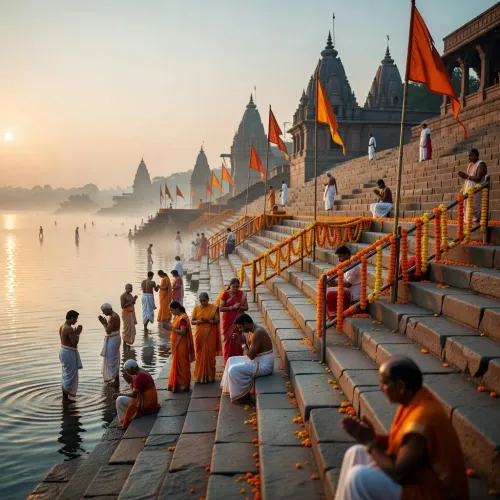
The Kumbh Mela cycle turns across four sacred sites — Prayagraj, Haridwar, Ujjain, and Nashik-Trimbakeshwar — each hosting the congregation once every twelve years when planetary alignments prescribed by ancient astronomy are met. At Nashik-Trimbakeshwar, the trigger is Jupiter's transit into Leo, the configuration that defines the Simhastha ('lion-standing') Mela.
Trimbakeshwar, a temple town nestled near Nashik, is home to one of India's twelve Jyotirlingas — shrines considered among the holiest in Shaivite tradition. That geography makes the Nashik-Trimbakeshwar Kumbh uniquely charged: pilgrims come not just for a ritual bath but to worship at a site of singular theological weight.
The last Simhastha at this location was held in 2015, when the Maharashtra state government coordinated extensive infrastructure, security, and sanitation arrangements. The 2027 edition will inherit that template — and is expected to scale it significantly.
President Murmu's presence and what it signals
Droupadi Murmu, who became India's President in July 2022 and is the first person from a tribal community to hold the office, lent the ceremony a constitutional weight that goes beyond protocol. Her participation underscores the event's status as a matter of national cultural heritage, not merely a state-level religious function.
For the Maharashtra government, having the President on the dais at the very first public ceremony is a statement of intent — that the Simhastha 2027 will be positioned as a landmark moment for the country, not just the state.
The infrastructure race that starts now
State governments bear primary responsibility for the enormous logistical footprint a Kumbh Mela demands: temporary ghats, access roads, pontoon bridges, medical camps, drinking water networks, and crowd-management systems capable of handling surges that can exceed the population of many Indian cities in a single day. With the flag now hoisted, the clock is ticking on tendering, land acquisition, and budget allocation — all of which must be locked in well before pilgrims begin arriving.
What the 2027 Simhastha ultimately looks like — in scale, in infrastructure investment, in central-state funding arrangements — will be determined in the months of planning that this ceremony has now formally set in motion.
A flag raised at Nashik today; a pilgrimage of tens of millions begins its long approach.
Point of View
A strategy that gained momentum after the Prayagraj Kumbh 2019. For CM Fadnavis, the optics serve a dual purpose: demonstrating administrative ambition ahead of a logistically complex event and signalling to Maharashtra's large pilgrim constituency that the government is invested in the Simhastha's success. The twelve-year cycle also means 2027 is a non-negotiable deadline — unlike most infrastructure projects, the Kumbh cannot be postponed.
NationPress
1 Nov 2026
Frequently Asked Questions
What is the Nashik-Trimbakeshwar Simhastha Kumbh Mela?
The Simhastha Kumbh Mela is a major Hindu pilgrimage held every 12 years at Nashik and Trimbakeshwar in Maharashtra when Jupiter is in the Leo zodiac sign. It is one of four rotating Kumbh Mela sites in India, alongside Prayagraj, Haridwar, and Ujjain.
When was the flag ceremony for Nashik Kumbh 2027 held?
The flag-hoisting and flag-worship ceremony was held on 31 October 2026 , presided over by President Droupadi Murmu and Chief Minister Devendra Fadnavis.
When was the last Simhastha Kumbh at Nashik-Trimbakeshwar?
The previous Simhastha Kumbh Mela at Nashik-Trimbakeshwar was held in 2015 , when the Maharashtra state government arranged extensive infrastructure, security, and sanitation for pilgrims.
Why is Trimbakeshwar significant for the Kumbh Mela?
Trimbakeshwar is home to one of India's twelve Jyotirlingas — among the holiest shrines in Shaivite Hinduism — making the Nashik-Trimbakeshwar Kumbh site especially sacred for devotees beyond the ritual bathing associated with all Kumbh Melas.
What preparations are expected for Simhastha 2027?
State governments are responsible for temporary ghats, roads, medical camps, water networks, and crowd-management systems for Kumbh Melas. Budget allocations, land acquisition, and infrastructure tendering for the 2027 Simhastha are expected to follow the flag ceremony.