Maharashtra CM flags off Nashik-Trimbakeshwar Simhastha Kumbh 2027
Synopsis
Maharashtra's CMO formally announced the Simhastha Mahakumbh 2027 flag-hoisting ceremony for 31 October 2026, held simultaneously at Ram Teertha in Nashik and Kushavarta Teertha in Trimbakeshwar, marking the official launch of preparations for the 12-yearly Hindu pilgrimage.
Key Takeaways
The Nashik-Trimbakeshwar Simhastha Mahakumbh Mela 2027 flag-hoisting ( Dhwajaarohan ) is scheduled for 31 October 2026 .
The ceremony will be held simultaneously at Ram Teertha, Nashik and Kushavarta Teertha, Trimbakeshwar .
The event tags Rashtrapati Bhavan , PM Narendra Modi , and CM Devendra Fadnavis , indicating national-level participation.
The Simhastha Mahakumbh follows a strict 12-year cycle ; the last Nashik edition was in 2015 .
The flag-hoisting formally initiates state and central government coordination on infrastructure, security, and logistics for the 2027 mela.
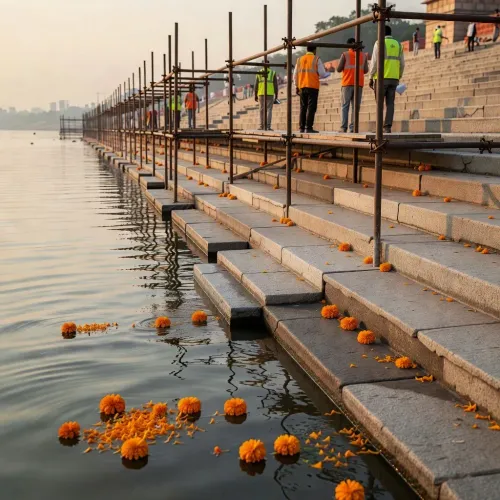
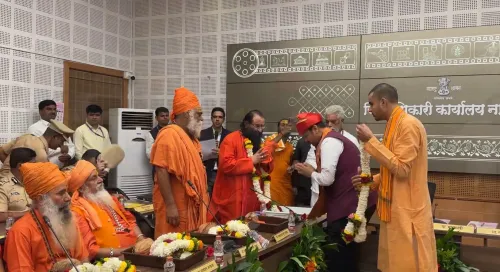
The countdown to one of Hinduism's most sacred gatherings has officially begun. The Chief Minister's Office of Maharashtra announced on Wednesday, 28 October 2026, that the formal flag-hoisting ceremony (ध्वजारोहण सोहळा) marking the start of preparations for the Nashik-Trimbakeshwar Simhastha Mahakumbh Mela 2027 will be held on 31 October 2026 — simultaneously at two sacred sites: Ram Teertha, Nashik, and Kushavarta Teertha, Trimbakeshwar.
The twin-city ritual that starts the Kumbh clock
Unlike the Prayagraj or Haridwar editions, the Nashik Kumbh is uniquely anchored across two locations: the banks of the Godavari at Nashik and the sacred Kushavarta Kund at Trimbakeshwar, the source of the Godavari. The simultaneous flag-hoisting at both sites is a ceremonial declaration to the country — and to millions of prospective pilgrims — that the state's machinery is now formally in motion.
The post tags Rashtrapati Bhavan, Prime Minister Narendra Modi, and Chief Minister Devendra Fadnavis, signalling the event's stature as a national-scale undertaking with both the Union government and the Presidency in the loop from day one.
A 12-year cycle returns to Nashik
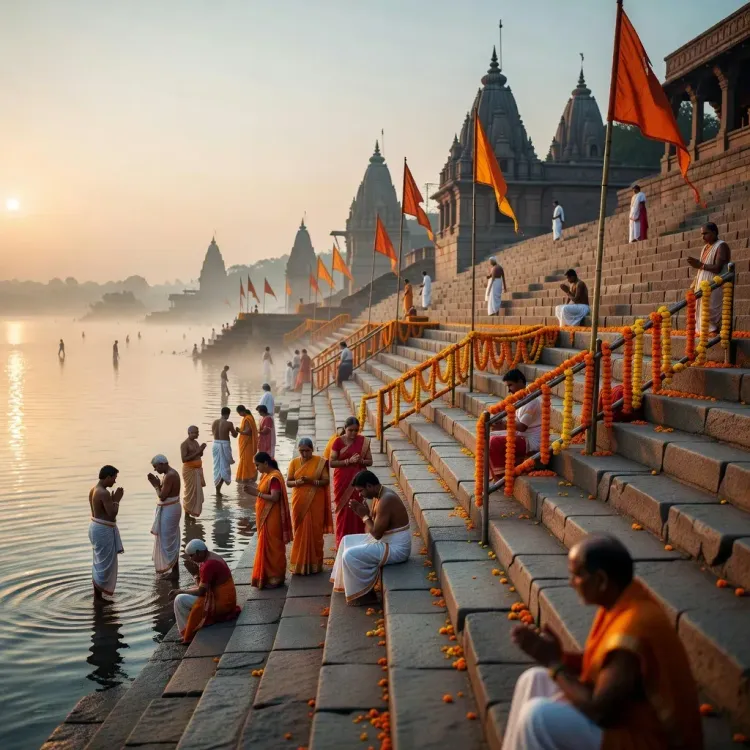
The Simhastha Mahakumbh follows an immovable astronomical rhythm: it returns to Nashik-Trimbakeshwar once every 12 years, timed to Jupiter's (Brihaspati's) transit into the Leo (Simha) zodiac sign — hence 'Simhastha.' The last edition at this venue was in 2015, when Nashik hosted millions of pilgrims over several weeks of major bathing dates (Shahi Snan). The 2027 edition now on the horizon is expected to draw a comparable or larger footfall.
State governments have historically run Nashik's Kumbh through inter-departmental committees coordinating with central agencies on crowd management, emergency response, riverbank infrastructure, and sanitation. The flag-hoisting marks the formal start of that multi-year coordination window.
What the October 31 ceremony sets in motion
With the Dhwajaarohan on 31 October 2026, Maharashtra's administrative machinery now has roughly a year to complete infrastructure upgrades along the Godavari ghats, expand road and rail connectivity to Nashik, and finalise security blueprints. Budget outlays, tender timelines, and central support packages are all expected to follow in the coming state government releases.
For the twin towns of Nashik and Trimbakeshwar, the Kumbh is not just a religious event — it is an economic and civic mobilisation of the first order, reshaping transport, hospitality, and civic infrastructure for years beyond the mela itself.
The flag has been raised; the pilgrimage economy of Maharashtra's spiritual heartland is now fully awake.
Point of View
When last-minute infrastructure crunches drew criticism. By tagging the President's office and the Prime Minister simultaneously, CM Fadnavis is visibly anchoring the event in the national consciousness and laying the groundwork for central funding support. For the BJP-led Maharashtra government, the Simhastha is also a high-visibility showcase of governance capability ahead of a politically sensitive period, making the 31 October ceremony as much an administrative signal as a religious one.
NationPress
28 Oct 2026
Frequently Asked Questions
When is the Nashik-Trimbakeshwar Simhastha Kumbh Mela 2027?
The Simhastha Mahakumbh Mela is scheduled for 2027 at Nashik and Trimbakeshwar. The formal flag-hoisting ceremony marking the start of preparations takes place on 31 October 2026.
What is the Simhastha Mahakumbh and why is it held at Nashik?
The Simhastha Mahakumbh is a 12-yearly Hindu pilgrimage held when Jupiter transits into the Leo zodiac sign. Nashik, on the banks of the Godavari river, and the nearby temple town of Trimbakeshwar together host this edition of the Kumbh Mela.
What happened at the Nashik Kumbh Mela flag-hoisting on 31 October 2026?
The Maharashtra government held a sacred flag-hoisting ceremony simultaneously at Ram Teertha in Nashik and Kushavarta Teertha in Trimbakeshwar on 31 October 2026, officially launching Simhastha Mahakumbh 2027 preparations.
When was the last Simhastha Kumbh held at Nashik?
The previous Simhastha Kumbh Mela at Nashik-Trimbakeshwar was held in 2015, following the established 12-year astronomical cycle.
Who is organising the Nashik Simhastha Mahakumbh 2027?
The Maharashtra state government, under Chief Minister Devendra Fadnavis, is organising the event in coordination with central government agencies. Rashtrapati Bhavan and Prime Minister Narendra Modi's office have also been tagged in official communications.