Maharashtra CM Fadnavis invites President Murmu to Simhastha Kumbh Mela on Oct 31
Synopsis
Maharashtra has raised the ceremonial stakes for the Simhastha Kumbh Mela by personally inviting President Droupadi Murmu to the flag-hoisting on 31 October — the first formal act of a gathering that runs through 2028 with a ₹1,100 crore infrastructure push behind it and a proposed Kumbh Mela Authority Act to govern it.
Key Takeaways
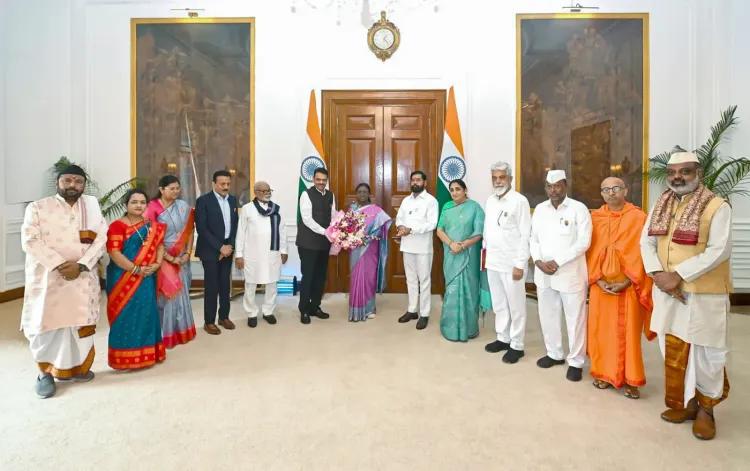
CM Devendra Fadnavis visited Rashtrapati Bhavan on 21 October 2026 to invite President Droupadi Murmu to the Simhastha Kumbh Mela flag-hoisting.
The ceremony is scheduled for 31 October 2026 at Nashik and Trimbakeshwar .
The delegation included Deputy CMs Eknath Shinde and Sunetra Pawar and senior cabinet ministers.
A ₹1,100 crore master plan has been deployed for Trimbakeshwar alone, covering ghats, roads, parking, and sanitation.
The Simhastha Kumbh Mela runs from October 2026 to July 2028 , with core sacred bathing rituals in 2027 .
Maharashtra is proposing a dedicated Kumbh Mela Authority Act to streamline administration of the event.
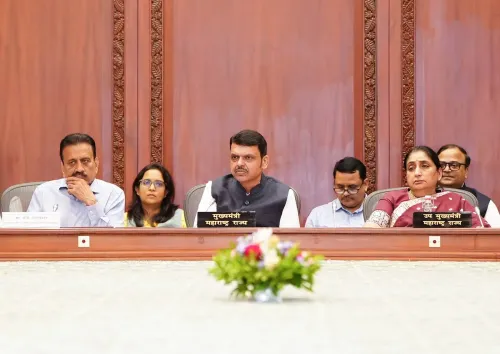
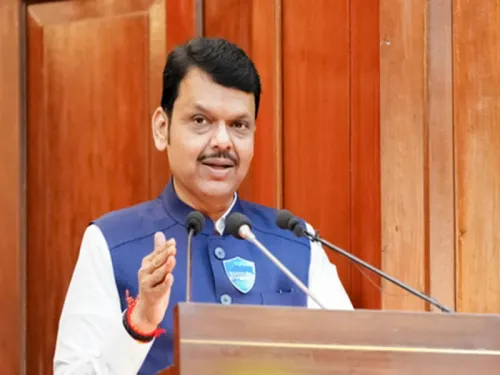
Maharashtra Chief Minister Devendra Fadnavis led a high-level state delegation to Rashtrapati Bhavan on Monday, 21 October 2026, formally inviting President Droupadi Murmu to the ceremonial flag-hoisting that will mark the official commencement of the Simhastha Kumbh Mela at Nashik and Trimbakeshwar on 31 October 2026. The invitation signals the state government's intent to give one of Hinduism's most sacred gatherings the highest constitutional imprimatur from its very first day.
Who Was in the Delegation
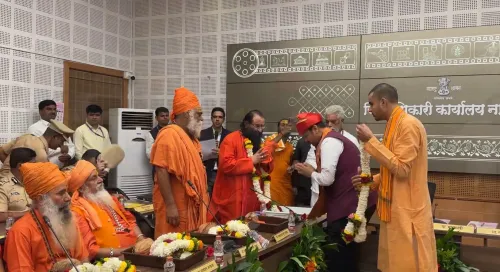
The Maharashtra contingent that called on President Murmu included Deputy Chief Ministers Eknath Shinde and Sunetra Pawar, alongside key cabinet ministers and senior administrative officials. Chief Minister Fadnavis presented President Murmu with a specially designed artistic invitation box and a curated gift hamper intended to showcase the state's spiritual heritage and artisanal traditions.
The hamper contained natural incense sticks, coarse-grain food products, Mahua flower products, handcrafted bamboo artefacts, and wild forest honey — highlighting tribal entrepreneurship and sustainable resource management. An authentic Yeola Paithani saree, representing Maharashtra's traditional weaving legacy, was also included, alongside regional agricultural specialities such as black raisins, cashews, traditional Nashik chivda, and dry fruits.
What the Inaugural Day Includes
Beyond the flag-hoisting, President Murmu was invited to participate in a series of launch events planned for 31 October. These include the grand Goda Aarti on the banks of the Godavari River, the launch of the official Nashik-Trimbakeshwar Kumbh Mela Authority portal, the release of the official Kumbh Mela Anthem, a commemorative Coffee Table Book, and a dedicated Kumbh Mela Postage Stamp, according to the state government's release.
Infrastructure Push Worth ₹1,100 Crore
Preparations for the Simhastha Kumbh Mela — scheduled to run from October 2026 through July 2028, with core sacred bathing rituals centred in 2027 — are already well under way. Chief Minister Fadnavis recently inspected critical sites across both temple towns and expressed satisfaction with construction progress, noting that ghat development, pilgrim pathways such as the Darshan Path, and road decongestion projects are advancing on schedule.
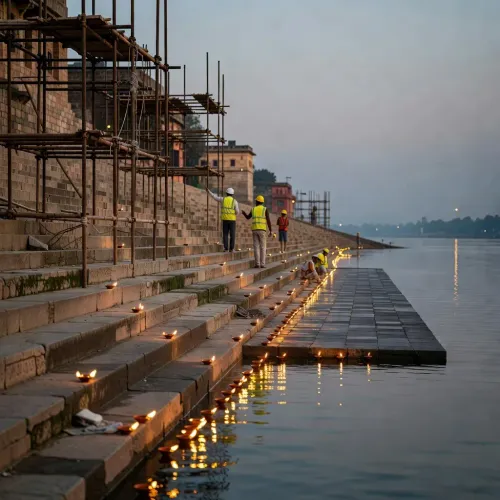
A comprehensive master plan worth ₹1,100 crore has been deployed specifically for Trimbakeshwar, covering restoration of holy water tanks (kunds) including Kushavarta, temple conservation, new road networks, parking complexes, and sanitation facilities. Key milestones include fast-tracking work at Dwarka Circle — with advanced drainage tests to prevent monsoon waterlogging — and the development of a dedicated Sadhugram space through land acquisition and town planning schemes.
Connectivity, Technology, and River Purification
To manage the massive pilgrim influx expected over the event's multi-year span, the state is facilitating expansion works at Ozar Airport, making arrangements at Shirdi Airport, and planning multiple helipads around Nashik to streamline VIP and tourist travel. Chief Minister Fadnavis emphasised making the event a blend of deep-rooted faith and modern technology, including virtual and augmented reality experiences for devotees worldwide who cannot physically attend the holy dips.
A major administrative priority is the comprehensive purification of the Godavari River and its tributaries, alongside advanced Sewage Treatment Plant setups. To ensure seamless crowd control and administrative clarity, the state government has proposed enacting a dedicated Kumbh Mela Authority Act that would vest core executive powers within a specialised administrative body — a governance model that draws from lessons of earlier large-scale Kumbh events held elsewhere in India.
With 31 October less than a fortnight away, all eyes will now be on whether President Murmu confirms her attendance, and how smoothly the ₹1,100-crore infrastructure blueprint holds up as pilgrims begin arriving.
Point of View
100 crore infrastructure outlay for Trimbakeshwar alone is substantial, but the real governance test lies in the proposed Kumbh Mela Authority Act: whether it genuinely streamlines administration or becomes another layer of bureaucratic complexity. The Godavari purification pledge echoes similar promises made ahead of earlier Kumbh events along the Ganga, where outcomes were mixed. How faithfully this blueprint converts into on-ground delivery — particularly river cleanliness — will define the Simhastha's legacy well beyond its ceremonial launch.
NationPress
21 Oct 2026
Frequently Asked Questions
What is the Simhastha Kumbh Mela and when is it?
The Simhastha Kumbh Mela is a major Hindu pilgrimage held at Nashik and Trimbakeshwar in Maharashtra. The current edition is scheduled to run from October 2026 through July 2028, with the core sacred bathing rituals centred in 2027 and the official commencement ceremony on 31 October 2026.
Why was President Droupadi Murmu invited to the Kumbh Mela?
Chief Minister Devendra Fadnavis led a delegation to Rashtrapati Bhavan on 21 October 2026 to formally invite President Murmu to grace the flag-hoisting ceremony on 31 October, which marks the official start of the Simhastha Kumbh Mela festivities. The invitation aims to lend the gathering the highest constitutional recognition.
What events are planned for the inaugural day on 31 October?
The inaugural day includes the flag-hoisting ceremony, the Goda Aarti on the Godavari River, launch of the official Kumbh Mela Authority portal, release of the Kumbh Mela Anthem, a commemorative Coffee Table Book, and the unveiling of a dedicated Kumbh Mela Postage Stamp, according to the state government.
How much is being spent on Kumbh Mela infrastructure?
A master plan worth ₹1,100 crore has been deployed specifically for Trimbakeshwar, covering restoration of holy water tanks, temple conservation, new road networks, parking complexes, and sanitation facilities. Separate infrastructure work is under way in Nashik, including ghat development, the Darshan Path, and road decongestion projects.
What is the Kumbh Mela Authority Act proposed by Maharashtra?
The Maharashtra government has proposed enacting a dedicated Kumbh Mela Authority Act to vest core executive powers within a specialised administrative body. The move is aimed at ensuring seamless crowd control, streamlined resource allocation, and clear administrative authority during the massive multi-year pilgrim influx.