CM Fadnavis Accelerates Nashik Kumbh 2027 Prep, Eyes ₹34,732 Cr Plan

Synopsis
Chief Minister Devendra Fadnavis chaired a review meeting in Mumbai on 7 August 2026 to accelerate preparations for the Nashik-Trimbakeshwar Simhastha Kumbh Mela 2027, directing departments to fast-track a ₹34,732 crore development plan for 12 crore pilgrims, with all key works due by March 2027.
Key Takeaways
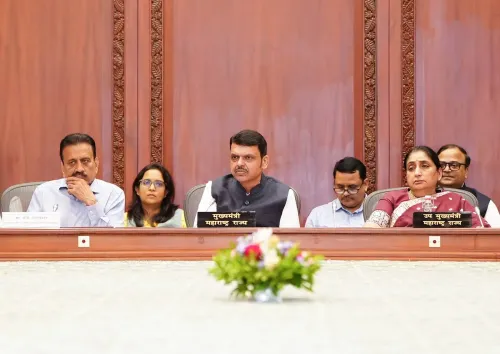
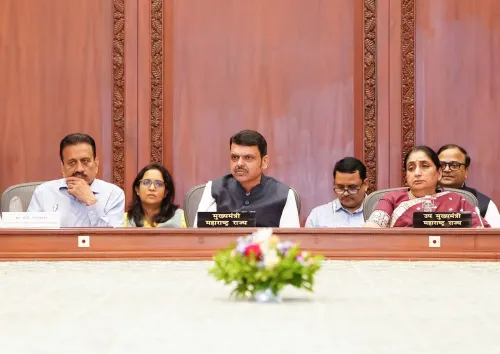
CM Devendra Fadnavis chaired a Kumbh 2027 review meeting at Sahyadri Guest House, Mumbai on 7 August 2026 .
A development plan worth ₹34,732 crore is underway for the Nashik-Trimbakeshwar Simhastha Kumbh Mela 2027 , expected to host 12 crore pilgrims .
Key infrastructure — Nashik Ring Road, Sadhugram, land acquisition — must be complete by March 2027 and operational by April 2027 .
4,500 special ST buses , railway station upgrades and large-scale parking facilities are part of the transport plan.
A 'Digital Kumbh' initiative will deploy AI, a 'Kumbhdoot' assistant, digital twin technology and an integrated Command and Control Centre for crowd and safety management.
Skill-development programmes will train thousands of Nashik youth in tourism, hospitality, healthcare and disaster management ahead of the event.
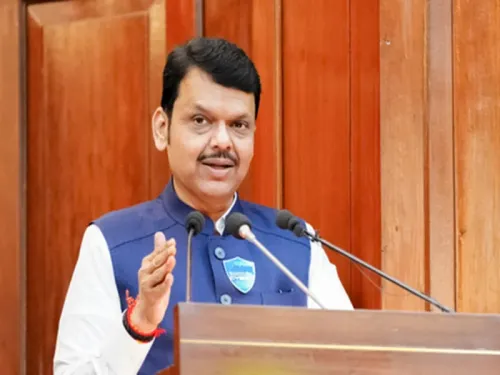
Twelve crore pilgrims. One fixed deadline. And a Chief Minister who wants measurable progress before the next review meeting even begins. Chief Minister Devendra Fadnavis chaired a high-level review meeting at Sahyadri Guest House, Mumbai, on Friday, 7 August 2026, issuing sharp directives to accelerate preparations for the Nashik-Trimbakeshwar Simhastha Kumbh Mela 2027 — one of Maharashtra's largest and most consequential public-logistics challenges in years.
A ₹34,732 crore blueprint on the clock
The state has drawn up a development plan worth ₹34,732 crore for the Kumbh, covering roads, sanitation, transport, housing for pilgrims and digital infrastructure. Fadnavis made clear that the scale of the budget demands matching urgency: all departments must complete their work 'on schedule, with quality and in a transparent manner,' he said. A follow-up review is set for one month from now, and the Chief Minister warned that 'qualitative and tangible progress' must be visible by then — not just paperwork.
Key physical infrastructure — including land acquisition, the Nashik Ring Road, Sadhugram construction and other civic facilities — must be completed by March 2027 and ready for operational use by April 2027, ahead of the event's start. Contractors who miss deadlines have been put on notice: penal action will follow.
Roads, buses and a city bracing for 12 crore visitors
The Nashik Municipal Corporation Commissioner was specifically directed to urgently fill potholes and complete pending road works — a pointed signal that ground-level civic readiness, not just grand projects, is under the scanner. Mahanagar Gas has been told to coordinate with the municipal corporation to clear a backlog of pending gas connections without delay.
Transport planning includes deploying 4,500 special ST buses, developing railway stations, building extensive parking facilities and constructing the Ring Road to manage the movement of crores of pilgrims. The meeting also reviewed detailed plans for accommodation, sanitation, disaster management and digital services.
'Digital Kumbh' — AI, smart parking and a lost-persons system
Perhaps the most forward-looking element of the plan is the 'Digital Kumbh' concept. Fadnavis directed officials to deploy artificial intelligence, an AI assistant named 'Kumbhdoot,' a digital twin of the event site, smart parking systems and a lost-persons search tool — all integrated through a single Command and Control Centre for real-time crowd and security management. The ambition is a Kumbh that is not just large, but legible — one where authorities can see and respond to pressure points as they develop.
Sanitation targets are equally ambitious: thousands of temporary toilets, waste bins, changing rooms and a large sanitation workforce will be deployed to keep the event clean, green and plastic-free.
Jobs for Nashik's youth, support for micro-entrepreneurs
The state is also using the Kumbh as a local economic lever. Skill-development programmes are being rolled out to train thousands of young people from the region in tourism, hospitality, healthcare and disaster management. Micro-entrepreneurs will receive support to grow their businesses around the event — an acknowledgement that a gathering of 12 crore people is also a once-in-twelve-years economic opportunity for the city.
The meeting was attended by Deputy Chief Minister Sunetra Ajit Pawar, ministers Girish Mahajan and Narhari Zirwal, legislators including Devyani Pharande, Seema Hiray, Adv. Rahul Dhikale, Saroj Ahire and Hiramaan Khoskar, Nashik Mayor Himgauri Aher-Adke, and senior officials.
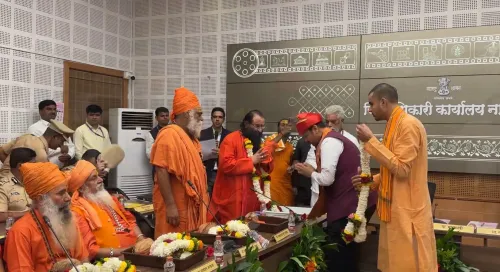
Fadnavis closed with a call to action that framed the stakes plainly: the Simhastha Kumbh Mela is 'a matter of the state's prestige,' and the central government, state government, Railways, the National Highways Authority and local administration must all work in coordination to make it safe, grand and memorable for every pilgrim who arrives.
The clock is running. The next review will show whether the machinery has found its pace.
Point of View
732 crore outlay and the tight March 2027 deadline signal that the Fadnavis government is treating the Simhastha as both a logistical test and a political showcase ahead of a crowded electoral calendar. The 'Digital Kumbh' push — AI crowd management, digital twins, integrated command centres — also positions Maharashtra as a benchmark for how India manages mass gatherings, a reputational stakes that goes well beyond Nashik. The one-month review cycle with explicit warnings to contractors is the clearest sign yet that the administration is aware the clock is tighter than the project register suggests.
NationPress
22 Sept 2026
Frequently Asked Questions
When is the Nashik Kumbh Mela 2027?
The Nashik-Trimbakeshwar Simhastha Kumbh Mela 2027 has fixed dates and the Maharashtra government is targeting all major infrastructure to be operational by April 2027 , with construction completed by March 2027 .
What is the budget for Nashik Kumbh Mela 2027 preparations?
The state has drawn up a development plan worth ₹34,732 crore covering roads, transport, sanitation, digital infrastructure and pilgrim facilities for the 2027 Kumbh.
How many pilgrims are expected at Nashik Kumbh 2027?
The Maharashtra government is planning for approximately 12 crore (120 million) pilgrims to attend the Nashik-Trimbakeshwar Simhastha Kumbh Mela 2027.
What is the 'Digital Kumbh' initiative for Nashik 2027?
'Digital Kumbh' is a Maharashtra government concept that will deploy artificial intelligence, a 'Kumbhdoot' AI assistant, a digital twin of the event site, smart parking and a lost-persons search system , all managed through an integrated Command and Control Centre.
What transport arrangements are planned for Nashik Kumbh 2027?
Plans include deploying 4,500 special ST buses , developing railway stations, building the Nashik Ring Road and creating extensive parking facilities to manage pilgrim movement during the event.