South Korea targets 30 million tourists with ₩1.76 trillion regional airport hubs
Synopsis
South Korea crossed its 2025 visitor record this week — and immediately raised the bar. With a 19% budget hike to 1.76 trillion won and five 'golden route' airport hubs, Seoul is trying to break its own concentration problem: over 80% of foreign tourists never leave the capital. The target is 30 million visitors a year, then 40 million, with AI platforms and K-pop itineraries as the lure for provincial Korea.
Key Takeaways
South Korea's cumulative inbound arrivals in 2026 surpassed the 2025 record of 18.94 million on Tuesday, 27 October .
The government targets 23 million visitors by year-end, 30 million annually in the medium term, and eventually 40 million .
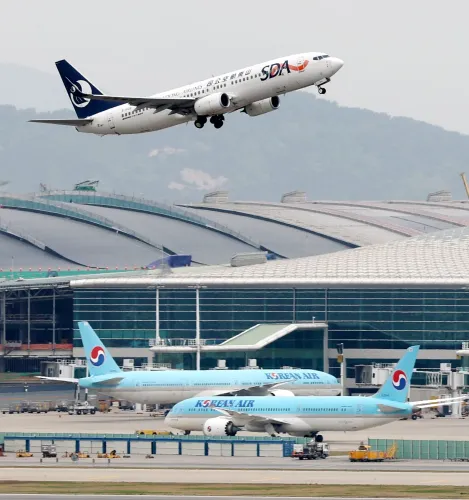
A 410 billion won 'golden routes' project will develop regional tourism zones around five provincial airports: Gimhae, Daegu, Cheongju, Muan and Yangyang .
The 2026 tourism budget is 1.76 trillion won (USD 1.31 billion) , a 19 per cent increase from 1.48 trillion won this year.
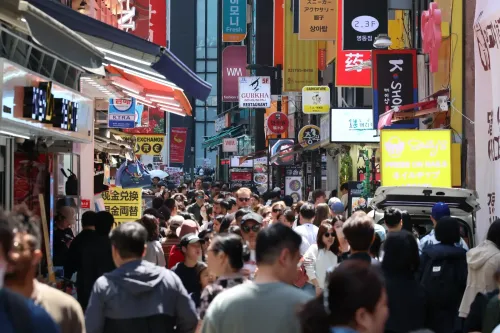
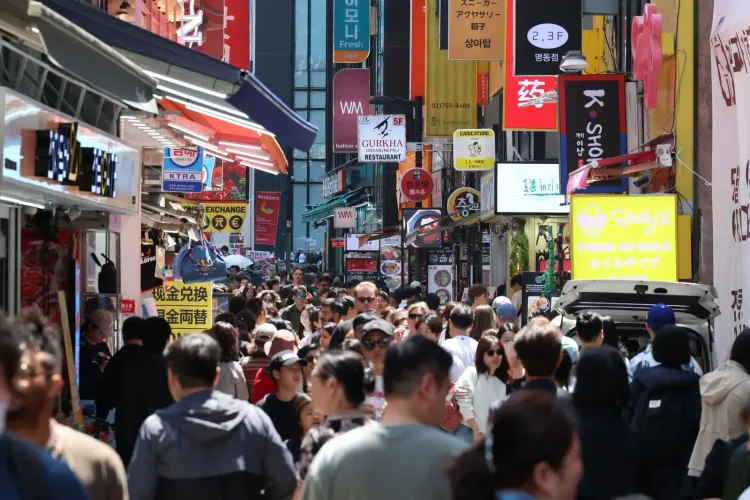
More than 80 per cent of current foreign visitors remain in the greater Seoul area — the structural imbalance the plan seeks to fix.
Major 2027 events including World Youth Day and the Chungcheong Summer World University Games will be used as tourism marketing platforms.
South Korea is committing 1.76 trillion won (approximately USD 1.31 billion) to a sweeping regional tourism overhaul, with Culture, Sports and Tourism Minister Chae Hwi-young announcing on Wednesday, 28 October 2026 a plan to draw 30 million — and eventually 40 million — foreign visitors annually by developing tourism corridors around five provincial airports. The announcement came as cumulative inbound arrivals this year surpassed 2025's record annual total of 18.94 million, a milestone crossed just one day earlier on Tuesday.
The Problem: Seoul's Tourism Monopoly
Minister Chae Hwi-young was pointed in his diagnosis: more than 80 per cent of inbound travellers currently remain within the greater Seoul metropolitan area, creating a structural bottleneck that limits the industry's long-term scalability. Speaking at a press conference in Seoul, Chae said revitalising regional tourism is 'the primary condition' for achieving the government's visitor targets. The government expects arrivals to cross 20 million in November and hit a year-end target of 23 million.
The 'Golden Routes' Plan
At the heart of the strategy is a 410 billion won pan-ministerial project to establish designated regional tourism zones — officially branded 'golden routes' — anchored around five provincial airports: Gimhae, Daegu, Cheongju, Muan and Yangyang. Each hub will be connected to nearby cultural and natural attractions, with the added incentive of regulatory exemptions and pilot programmes for artificial intelligence (AI) technology in tourism services. Tour programmes are planned around local cuisine, traditional markets, K-pop concerts, and television drama filming locations — experience categories that have already proven magnetic to international visitors.
Fixing Regional Infrastructure Gaps
To address what officials acknowledge as persistent barriers — accommodation shortages and inconvenient transport links in provincial areas — the government will build an integrated lodging platform and offer loans to support construction of high-end hotels in regional hubs. The 2026 tourism budget of 1.76 trillion won represents a 19 per cent increase from this year's allocation of 1.48 trillion won, signalling a multi-year fiscal commitment rather than a one-off push.
High-Value Business Travel and Major Events
The strategy also targets business tourism, with an AI-based platform planned specifically for international conferences. The government intends to leverage major international events scheduled for next year, including World Youth Day in Seoul and the Chungcheong Summer World University Games, as marketing springboards for broader tourism promotion. This dual push — leisure and MICE (Meetings, Incentives, Conferences, Exhibitions) — is designed to raise per-visitor spending, not just headline numbers.
Managing Growth Without Overtourism
'As an irreplaceable travel destination, South Korea is making thorough preparations to welcome 30 million and 40 million visitors a year,' Minister Chae said, adding that the government will 'manage qualitative growth alongside visitor numbers while actively responding to concerns about overtourism so that regional tourism can firmly drive local economies.' Notably, this framing reflects a broader lesson from cities like Barcelona and Kyoto, where unchecked visitor concentration has sparked resident backlash. South Korea's dispersal strategy is, in part, a pre-emptive policy response to that risk. How effectively the golden-route model redistributes visitor footfall across provinces will be the defining test of the plan's success.
Point of View
But the 80-per-cent Seoul concentration figure is the more important number in this announcement. Mass tourism that pools into a single megacity creates fragility — one geopolitical shock or viral reputation event and the entire sector wobbles together. The golden-routes model is sound in theory, but dispersal strategies have a poor track record globally unless transport connectivity is genuinely overhauled, not just mapped. The 410 billion won earmarked for provincial hubs will need to solve the last-mile problem — irregular flights and poor inter-city rail links — before K-pop itineraries and AI conference platforms can move the needle on provincial stays. The overtourism caveat from Minister Chae is a welcome signal, but qualitative metrics for 'sustainable growth' have not yet been defined publicly, which is where scrutiny should focus next.
NationPress
28 Oct 2026
Frequently Asked Questions
What is South Korea's new regional tourism plan?
South Korea has announced a 1.76 trillion won (approximately USD 1.31 billion) tourism strategy for 2026 aimed at dispersing foreign visitors beyond Seoul by developing 'golden route' tourism zones around five provincial airports. The plan targets 30 million annual inbound visitors in the medium term, rising to 40 million eventually.
Which five airports are at the centre of South Korea's golden routes project?
The 410 billion won pan-ministerial project centres on provincial airports in Gimhae, Daegu, Cheongju, Muan, and Yangyang. Each hub will be linked to nearby attractions with regulatory exemptions and AI technology pilots to improve the visitor experience.
How many foreign tourists has South Korea received in 2026?
Cumulative inbound arrivals in 2026 surpassed the 2025 full-year record of 18.94 million on 27 October. The government expects that figure to exceed 20 million in November and reach a year-end target of 23 million.
Why is South Korea trying to move tourists away from Seoul?
More than 80 per cent of foreign visitors currently stay within the greater Seoul area, which officials say makes sustainable industry growth difficult and risks overtourism in the capital. The regional dispersal strategy is designed to spread economic benefits to provincial communities and reduce concentration risk.
What major international events will South Korea use to boost tourism in 2027?
South Korea plans to leverage World Youth Day in Seoul and the Chungcheong Summer World University Games — both scheduled for 2027 — as marketing platforms to attract international visitors and promote high-value business and conference tourism alongside leisure travel.