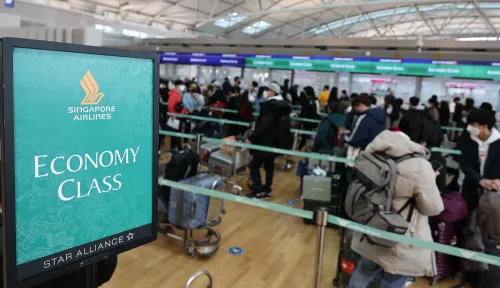
South Korea tourist arrivals smash annual record with 2+ months to spare
Synopsis
South Korea has shattered its all-time annual foreign tourist record more than two months before year-end, with arrivals crossing 18.91 million and spending up nearly 48%. With the government's 23-million target now 'within reach,' the Hallyu-fuelled tourism boom is reshaping not just headline numbers but where visitors go — and how much they spend when they get there.
Key Takeaways
South Korea set an all-time annual foreign tourist record on 27 October 2026 , with arrivals reaching approximately 18.91 million — surpassing the previous record of 18.94 million with over two months to spare.
The annual total is projected to cross 20 million for the first time in the third week of November 2026 .
The government's year-end target of 23 million visitors is now described as 'within reach' by Minister Chae Hwi-young .
Foreign visitor spending surged 47.7% year-on-year, led by shopping, accommodation, and medical and wellness services.
Growth is spreading beyond Seoul , with more tourists arriving via regional airports and ports.
South Korea's migrant-background population reached 2.81 million in 2025 , comprising 5.4% of the total population of 51.82 million .
South Korea has set an all-time annual record for foreign tourist arrivals — and it has done so with more than two months still left in 2026. Preliminary figures released by the country's Ministry of Culture, Sports and Tourism on Tuesday, 27 October showed total inbound arrivals reaching approximately 18.91 million through Monday, believed to have surpassed the previous annual record of 18.94 million set last year.
Record Broken Ahead of Schedule
The milestone is notable not just for the number itself, but for the speed at which it arrived. With November and December still to run, the government now expects a surge of roughly 1.94 million additional visitors next month alone if current momentum holds. That trajectory, according to the ministry, would push the annual total past 20 million for the first time — likely in the third week of November.
Culture, Sports and Tourism Minister Chae Hwi-young said the early record-breaking had brought the government's ambitious year-end target of 23 million foreign visitors 'within reach.' That figure, if achieved, would represent a near-22% jump over the previous record.
Where the Visitors Are Coming From
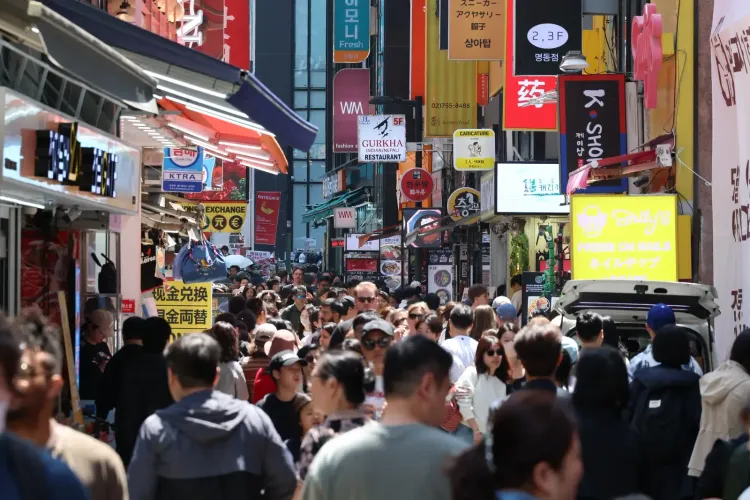
Visitor numbers rose across nearly all major source markets, including Chinese-speaking regions, Japan, Southeast Asia, Europe, and the Americas. Importantly, growth is not confined to the capital. More tourists are arriving through regional airports and ports and venturing beyond Seoul — a geographic diversification that Minister Chae described as 'very encouraging.'
The government credited the surge to the global reach of South Korean pop culture (K-pop, K-drama, and the broader Hallyu wave), innovation within the tourism industry, and what officials called public hospitality toward foreign visitors.
Tourism Spending Jumps 47.7%
The visitor boom is translating into significant economic impact. Foreign visitors' spending jumped 47.7% from a year earlier, driven primarily by shopping, accommodation, and medical and wellness services. This spending growth outpaces the volume increase, suggesting a higher-value visitor profile.
'We will focus not only on quantitative expansion but also on strengthening quality so that Korea can firmly establish itself as an irreplaceable travel destination in the global tourism market,' Minister Chae said in a press release.
A Shifting Demographic Landscape
Alongside the tourism data, separate figures from South Korea's Ministry of Data and Statistics revealed that the country's migrant-background population reached 2.81 million in 2025 — up from 2.71 million the previous year — representing 5.4% of the total population of 51.82 million. People in their 30s make up the largest share at 23.7% of the migrant-background group, while those in their 20s recorded the biggest year-on-year increase, rising by 36,000. Foreign nationals account for 75.1% of the migrant-background population, with 56% concentrated in the greater Seoul metropolitan area.
The convergence of record tourism inflows and a steadily growing migrant population points to South Korea's accelerating integration into global mobility networks — a dynamic that carries both economic opportunity and long-term social policy implications.
Point of View
Pointing to structural demand rather than a post-pandemic blip. The 47.7% spending surge, however, deserves scrutiny — if medical tourism and high-end shopping are driving the average up, mass-market accessibility questions remain. The geographic diversification beyond Seoul is genuinely promising, but regional infrastructure will determine whether it sustains. And the simultaneous rise in the migrant-background population to 5.4% frames a country quietly navigating a demographic identity shift that its tourism success both masks and accelerates.
NationPress
27 Oct 2026
Frequently Asked Questions
Has South Korea broken its all-time foreign tourist record in 2026?
Yes. Preliminary figures from South Korea's Ministry of Culture, Sports and Tourism show arrivals reached approximately 18.91 million through 27 October 2026, believed to have surpassed the previous annual record of 18.94 million set last year — with more than two months remaining in the year.
When is South Korea expected to reach 20 million tourist arrivals?
The government projects the annual total will cross 20 million for the first time in the third week of November 2026, assuming roughly 1.94 million visitors arrive in November at the current trend rate.
What is South Korea's tourism target for 2026?
The South Korean government has set an ambitious year-end target of 23 million foreign visitors for 2026. Culture Minister Chae Hwi-young said that breaking the annual record more than two months early has brought that target 'within reach.'
Why has South Korean tourism grown so strongly?
The government attributes the record numbers to the global popularity of South Korean pop culture — including K-pop and K-drama — innovation by the tourism industry, and public hospitality toward foreign visitors. Visitor spending also rose 47.7% year-on-year, driven by shopping, accommodation, and medical and wellness services.
What is South Korea's migrant-background population?
According to South Korea's Ministry of Data and Statistics, the country's migrant-background population stood at 2.81 million in 2025, representing 5.4% of the total population of 51.82 million. The category includes foreign nationals, naturalised citizens, and second-generation immigrants.