South Korea travel account surplus for 3rd month as foreign arrivals jump 19%

Synopsis
South Korea's travel account has swung from an $820 million deficit to a $220.5 million surplus in just one year — and it has done so for three months running. With foreign arrivals up nearly 20% on Korean Wave appeal and a weaker won, and South Koreans deterred by pricier airfares, the country's tourism balance is rewriting a 72-month losing streak. The NPS returning to KOSPI buying adds a second layer of institutional confidence to the story.
Key Takeaways
South Korea's travel account posted a surplus of $220.5 million in May 2025 , its third consecutive monthly surplus.
This ends a 72-month streak of travel deficits that began in March 2020 .
Travel income reached $2.58 billion , surpassing travel spending of $2.36 billion .
Foreign arrivals rose 19.4% year-on-year to 1.95 million ; outbound South Korean travellers fell 2.1% to 2.34 million .
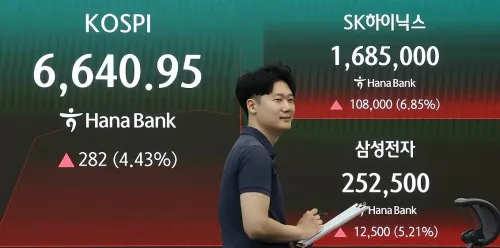
The National Pension Service (NPS) and other pension funds became net buyers on the KOSPI in July for the first time in 2025 , purchasing a net 68.4 billion won ($46.8 million).
South Korea's travel account recorded a surplus for the third consecutive month in May 2025, as a sharp rise in inbound foreign visitors pushed travel income well ahead of outbound spending, according to data from the Korea Tourism Organization. The turnaround marks a decisive break from a prolonged slump that had kept the account in deficit for over six years.
Key Figures
The travel account posted a surplus of $220.5 million in May, a dramatic reversal from a deficit of $820.2 million recorded in the same month a year earlier. Travel income reached $2.58 billion, outpacing travel spending of $2.36 billion. On average, each foreign visitor spent $1,324 inside South Korea, while each South Korean travelling abroad spent $1,007 overseas.
What Broke the Deficit Streak
The May surplus follows consecutive surpluses in March ($263.8 million) and April, collectively snapping a 72-month streak of deficits that began in March 2020 — coinciding with the onset of the COVID-19 pandemic. The streak's end signals a structural shift in South Korea's post-pandemic travel economy rather than a one-off blip.
Foreign visitor arrivals totalled 1.95 million in May, up 19.4% from a year earlier. Meanwhile, the number of South Koreans travelling abroad fell 2.1% year-on-year to 2.34 million, contributing to the favourable balance.
Why Visitors Are Coming — and Koreans Staying Home
'Foreign visitor numbers have risen sharply in recent months, driven by the growing popularity of the Korean Wave and the weakening won,' said Kim Nam-jo, a professor of tourism at Hanyang University. 'At the same time, higher airfares stemming from the Middle East conflict have discouraged South Koreans from travelling abroad.'
The dual dynamic — a softer won making South Korea an attractive destination and elevated international airfares dampening outbound demand — has created conditions that analysts say could sustain the surplus through the summer travel season, though risks remain if the currency strengthens or geopolitical pressures ease.
Pension Funds Return to Local Equities
Separately, pension funds including the National Pension Service (NPS) — one of South Korea's largest institutional investors — turned net buyers of domestic equities in July for the first time this year, according to data from the Korea Exchange. The funds collectively purchased a net 68.4 billion won (approximately US$46.8 million) worth of shares on the Korea Composite Stock Price Index (KOSPI) through the first 24 days of July.
This marks their first month of net buying after six consecutive months of net selling. Over the first 17 trading sessions of July, pension funds were net buyers on 11 days and net sellers on six — a signal that institutional confidence in domestic markets may be recovering alongside the broader economic uptick.
What to Watch Next
Whether South Korea can extend the travel surplus into a fourth month will depend on sustained inbound momentum and continued restraint in outbound travel. Analysts will also watch whether the NPS's return to net buying marks a durable shift in institutional positioning or a tactical, short-term move tied to valuation corrections on the KOSPI.
Point of View
But the simultaneous suppression of outbound travel by elevated airfares is a contingent factor, not a policy win. If Middle East tensions ease and fares normalise, the surplus arithmetic could reverse quickly. The more durable indicator may be the NPS returning to KOSPI buying: institutional funds turning net buyers after six months of selling suggests a recalibration of domestic risk appetite, which has broader implications for South Korean market stability than any single month of tourism data.
NationPress
25 Oct 2026
Frequently Asked Questions
Why did South Korea's travel account post a surplus in May 2025?
South Korea's travel account recorded a $220.5 million surplus in May 2025 because foreign visitor arrivals rose 19.4% year-on-year to 1.95 million, driven by Korean Wave popularity and a weaker won, while the number of South Koreans travelling abroad fell 2.1% partly due to higher international airfares linked to the Middle East conflict.
How long had South Korea's travel account been in deficit before this?
The travel account had been in deficit for 72 consecutive months, beginning in March 2020. The streak ended in March 2025, when the account recorded a surplus of $263.8 million, followed by further surpluses in April and May.
What role did the Korean Wave play in boosting tourism?
According to Hanyang University tourism professor Kim Nam-jo, the growing global popularity of the Korean Wave — encompassing K-pop, K-dramas, and Korean culture — has significantly increased South Korea's appeal as a travel destination. Combined with the weakening won making the country more affordable for foreign visitors, this has driven the sharp rise in inbound arrivals.
What happened with South Korea's pension funds and the KOSPI in July 2025?
The National Pension Service (NPS) and other pension funds became net buyers of domestic equities on the KOSPI in July 2025 for the first time this year, purchasing a net 68.4 billion won ($46.8 million) through the first 24 days of the month. This followed six consecutive months of net selling.
How much did foreign visitors spend compared to South Korean travellers abroad?
On average, each foreign visitor spent $1,324 inside South Korea in May 2025, while each South Korean travelling overseas spent $1,007 abroad — a spending gap that contributed to the positive travel balance.