CM Himanta Chairs Dibrugarh Meet to Secure Tribal Land Rights
Synopsis
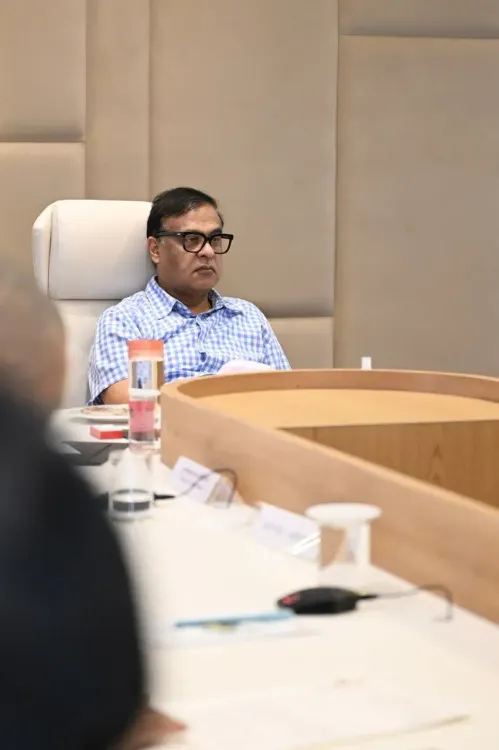
Chief Minister Himanta Biswa Sarma chaired a key meeting in Dibrugarh on tribal land rights during a two-day Upper Assam tour, reviewing Mission Basundhara implementation, allotments of up to 50 bighas per family, and pending cases under Mission Basundhara 4.0.
Key Takeaways
Himanta Biswa Sarma chaired a high-level meeting in Dibrugarh on October 28, 2026 focused on tribal land rights.
The meeting was part of a two-day tour covering both Dibrugarh and Tinsukia districts in Upper Assam.
Key discussions centred on implementing Mission Basundhara in tribal areas and allotting up to 50 bighas of land per family .
Pending cases under Mission Basundhara 4.0 were reviewed directly at the district level.
Mission Basundhara was launched in 2021 to provide formal land titles and resolve long-standing settlement disputes across Assam.
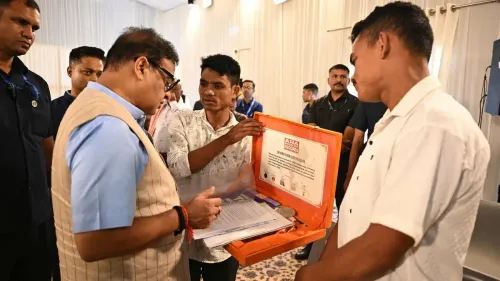
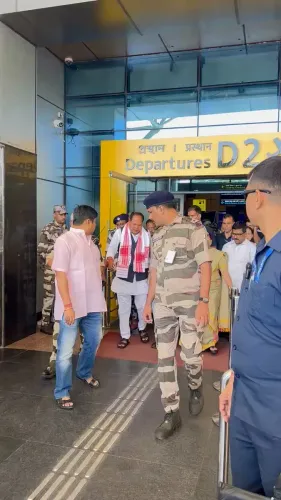
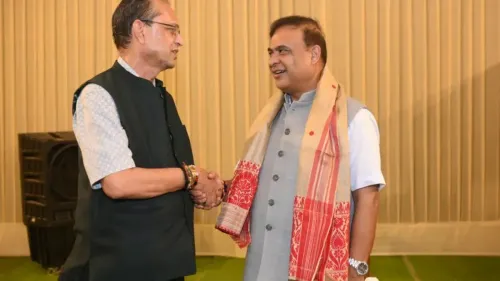
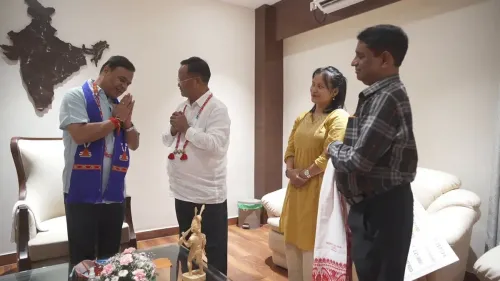
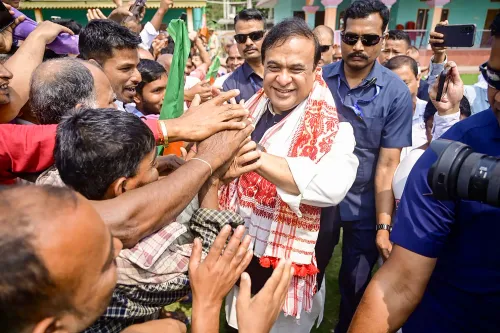
Tribal land rights in Upper Assam moved to the top of the state's agenda on Wednesday, October 28, 2026, as Chief Minister Dr. Himanta Biswa Sarma chaired a high-level review meeting in Dibrugarh — the first leg of a two-day tour spanning Dibrugarh and Tinsukia districts — to accelerate the formalisation of land ownership for indigenous families long caught in settlement limbo.
What was on the table in Dibrugarh
The meeting drilled into the mechanics of Mission Basundhara, the Assam government's flagship land-titling drive, with a specific focus on its tribal-belt provisions. Key items on the agenda included resolving outstanding land settlement disputes in tribal areas, reviewing the pipeline of pending cases under Mission Basundhara 4.0, and a notable commitment: allotting up to 50 bighas of land per family in eligible tribal zones. The Chief Minister's Office confirmed that implementation timelines and bottlenecks were directly examined at the session.
Mission Basundhara and the tribal land crisis in Upper Assam
Mission Basundhara was launched by the Sarma government in 2021 with a clear mandate — end decades of land insecurity by issuing formal land pattas and clearing a backlog of settlement disputes that had left generations of families without legal title to the land they occupy. Upper Assam's tribal belts and blocks have been a particular pressure point: historical encroachments, migration pressures, and bureaucratic delays have created a volatile mix of grievances among indigenous communities in districts like Dibrugarh and Tinsukia.
The phased structure of the mission — now in its fourth iteration — signals that earlier rounds left substantial unfinished business. Each phase has progressively targeted harder cases: disputed holdings in tribal areas, overlapping claims, and families that fell outside earlier allotment windows. The 50-bigha per family ceiling for tribal allotments, discussed at the Dibrugarh meeting, represents a significant ceiling designed to ensure meaningful landholdings rather than token parcels.
Why this two-district tour matters
Tinsukia, the second district on Dr. Sarma's itinerary, shares many of the same demographic fault lines — significant tribal populations, long-pending settlement cases, and communities that have watched land formalisation progress unevenly across the state. By conducting the review on-ground rather than from Dispur, the administration is signalling that district-level accountability — not just policy design — is now the focus. Pending cases don't resolve in conference rooms; they resolve when officials in the field are directly answerable to the Chief Minister.
The Assam government's broader push on land reform has been one of the more consequential domestic-policy threads of Dr. Sarma's tenure. Land — who owns it, who occupies it, and who the state recognises as its rightful holder — sits at the intersection of identity, economics, and political trust in this part of India's Northeast. Getting Mission Basundhara's tribal component right is not a bureaucratic exercise. It is a direct test of whether formal governance can deliver where informal arrangements have historically failed.
Point of View
The Chief Minister is positioning himself as the guarantor of indigenous land security in a region where tribal identity and land rights are deeply intertwined. The 50-bigha allotment ceiling is a substantive commitment, but the real measure will be how swiftly pending cases are cleared. In Upper Assam's tribal belts, the gap between policy announcement and patta-in-hand has historically been where political trust erodes.
NationPress
28 Oct 2026
Frequently Asked Questions
What is Mission Basundhara in Assam?
Mission Basundhara is the Assam government's land settlement initiative launched in 2021 to provide formal land titles (pattas) to residents, including tribal communities, and resolve long-standing land disputes across the state.
What is Mission Basundhara 4.0?
Mission Basundhara 4.0 is the latest phase of Assam's land-titling drive, focusing on harder pending cases — including disputed holdings in tribal areas — that were not resolved in earlier phases of the mission.
How much land can a tribal family get under Mission Basundhara?
Under the provisions discussed at the Dibrugarh meeting on October 28, 2026, tribal families in eligible areas can be allotted up to 50 bighas of land per family.
Why did CM Himanta Biswa Sarma visit Dibrugarh and Tinsukia?
Chief Minister Dr. Himanta Biswa Sarma undertook a two-day tour of Dibrugarh and Tinsukia to chair a key review meeting on tribal land rights and oversee on-ground implementation of Mission Basundhara in Upper Assam's tribal belts.
Which tribal areas in Assam are covered under Mission Basundhara?
Mission Basundhara covers designated tribal belts and blocks across Assam, with Upper Assam districts such as Dibrugarh and Tinsukia among the priority areas given their significant indigenous populations and pending land settlement cases.