Pakistan women violence: 3,172 GBV cases in 6 months, rights body condemns victim-blaming
Synopsis
Pakistan logged 3,172 gender-based violence cases in just the first six months of 2026 — including 644 murders and 132 honour killings — as rights body VOPM condemned a culture where victims are blamed and perpetrators shielded. With over half the cases occurring inside victims' homes and reporting rates believed to be far lower than reality, the crisis points to both a social and institutional failure demanding urgent reform.
Key Takeaways
Pakistan recorded 3,172 gender-based violence cases in the first six months of 2026 , according to VOPM .
Cases include 644 murders , 514 torture cases , 462 abductions , 363 suicides , 280 rapes , and 132 honour killings .
74% of cases were in Punjab and 17% in Sindh ; over half occurred inside victims' homes.
VOPM warned actual numbers are likely higher due to widespread underreporting driven by fear and distrust of police.
The rights body called on Pakistani authorities to shift accountability from survivors to perpetrators and reform law enforcement support systems.
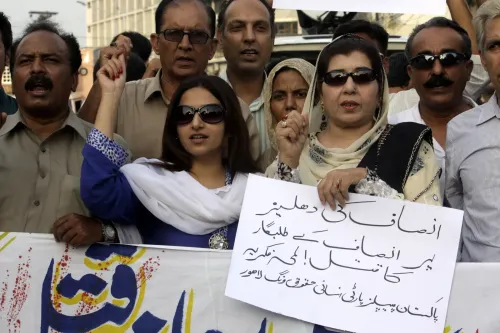
A leading minority rights organisation, Voice of Pakistan Minority (VOPM), has strongly condemned the escalating violence against women in Pakistan, pointing to a deeply entrenched culture of victim-blaming, harassment, and so-called 'honour' killings that continues to shield perpetrators while silencing survivors.
Scale of the Crisis
According to VOPM, Pakistan recorded 3,172 cases of gender-based violence in the first six months of 2026 alone. The breakdown is stark: 644 murders, 514 cases of torture, 462 abductions, 363 suicides, 280 rapes, and 132 honour killings. The rights body noted that 74 per cent of reported cases were concentrated in Punjab and 17 per cent in Sindh, with over half occurring within victims' own homes.
Critically, VOPM cautioned that the actual numbers are likely higher. 'Many women do not report violence. Fear, shame, family pressure, and distrust of police silence them,' the organisation stated.
The Culture of Victim-Blaming
VOPM's statement drew sharp attention to the social attitudes that enable such violence to persist. 'In Pakistan, a woman can be raped and still be asked what she did to cause it. She can be harassed over her clothes, location, or character. She can be murdered in the name of honour. Yet people still debate her choices instead of condemning the crime,' the rights body said.
The organisation was unequivocal in rejecting these narratives: 'A woman's clothes do not cause rape. Travelling at night does not justify assault. Trust does not equal consent. Rejecting a man does not give him the right to attack or kill.'
Honour Killings Called Out as Crimes
The rights body specifically denounced so-called 'honour' killings, asserting that these acts stem from control and a sense of entitlement over women's lives rather than any cultural or traditional justification. 'Honour killings are not traditions. They are crimes. They grow from control, entitlement, and the belief that a woman belongs to her family. No father, brother, husband, or relative owns a woman's life. There is no honour in murder,' VOPM declared.
Institutional Failures Under Scrutiny
Beyond social attitudes, VOPM highlighted systemic failures in Pakistan's law enforcement and justice delivery mechanisms. The organisation argued that violence against women extends into institutions themselves, noting that incidents occur 'at home, on the street, or inside a police station.' It called on Pakistani authorities to provide trained police officers, proper investigations, forensic support, safe complaint systems, shelters, and faster trials.
This comes amid longstanding concerns from international human rights observers about the inadequacy of legal protections for women in Pakistan, where conviction rates in gender-based violence cases remain critically low.
Demands for Accountability
VOPM stressed that the burden of safety must shift from women to the state and perpetrators. 'Women's safety is a right. Pakistan must stop teaching women how to survive violence and start teaching men not to commit it. Those who commit violence — and those who protect them — must face justice,' the organisation urged Pakistani authorities.
With nearly half a year's data already revealing over three thousand cases, advocates and rights groups are pushing for urgent legislative and institutional reforms before the numbers climb further.
Point of View
But it is almost certainly an undercount — in societies where police stations are themselves cited as sites of violence, the 'dark figure' of unreported crime is enormous. What is notable here is not just the scale but the geographic concentration: nearly three-quarters of cases in Punjab alone suggests a state-level governance failure, not merely a cultural one. Pakistan has passed domestic violence legislation before — the problem is consistent non-implementation and the absence of a forensic, prosecutorial infrastructure that treats women's testimony as credible. Until conviction rates move, legislation remains symbolic.
NationPress
25 Sept 2026
Frequently Asked Questions
How many gender-based violence cases were reported in Pakistan in 2026?
According to Voice of Pakistan Minority (VOPM), Pakistan recorded 3,172 cases of gender-based violence in the first six months of 2026. The cases include 644 murders, 280 rapes, 132 honour killings, 514 torture cases, and 462 abductions, among others.
What are 'honour killings' and why does VOPM call them crimes?
Honour killings refer to the murder of a person — typically a woman — by family members who claim her behaviour has brought dishonour to the family. VOPM categorically states these acts are crimes rooted in control and entitlement, not tradition, and that no family member has ownership over a woman's life.
Which provinces in Pakistan have the highest reported gender-based violence?
Punjab accounted for 74 per cent of reported cases, while Sindh accounted for 17 per cent, according to VOPM data for the first half of 2026. Over half of all incidents occurred inside the victims' own homes.
Why does VOPM believe the actual violence figures are higher than reported?
VOPM notes that many women in Pakistan do not report violence due to fear, shame, family pressure, and deep distrust of the police. The rights body stated that underreporting means official case counts significantly underestimate the true scale of gender-based violence in the country.
What institutional reforms is VOPM demanding from Pakistani authorities?
VOPM has called for trained police officers, proper investigations, forensic support, safe complaint systems, shelters, and faster trials for victims of gender-based violence. The organisation urged that perpetrators — and those who shield them — must face justice.