Pakistan logs 3,172 gender-based violence cases in first half of 2026: Sahil report
Synopsis
Pakistan's Sahil report logged 3,172 gender-based violence cases in just six months of 2026 — including 644 murders and 132 honour killings. Over half the incidents happened inside victims' own homes, and Punjab alone accounted for nearly three-quarters of all cases, underscoring how deep-rooted and geographically concentrated the crisis remains.
Key Takeaways
3,172 gender-based violence cases were reported in Pakistan in the first six months of 2026 , per Sahil's Cruel Numbers Report .
Cases included 644 murders , 280 rapes , 132 honour killings , 462 abductions , and 363 suicides .
54 per cent of incidents occurred in the victims' own homes ; Punjab accounted for 74 per cent of all cases.
18 cases involved transgender persons ; victim age data was missing in 71 per cent of cases.
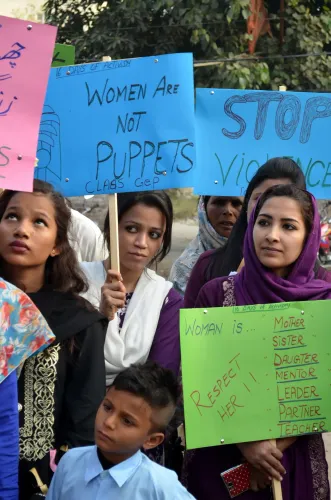
The Human Rights Council of Pakistan held a protest at Karachi Press Club on 5 July 2026 , demanding stronger law enforcement and accountability.
Pakistan recorded 3,172 cases of gender-based violence (GBV) in the first six months of 2026, including 18 cases involving transgender persons, according to Sahil's Six Months Cruel Numbers Report, as cited by Pakistani daily Dawn. The figures, released on 25 July 2026, paint a stark picture of violence against women and marginalised groups across the country.
Breakdown of Reported Cases
The report catalogues 644 murders, 514 cases of torture, 462 abductions, 363 suicides, 280 rapes, 175 injuries, and 132 honour killings in the six-month window. An additional 21 cases covered offences including harassment, gang rape, and pornography-related crimes.
On the age profile of victims, 334 fell in the 21–30 years bracket, 306 were aged between 11–20 years, and 120 were between 31–40 years. Notably, victim age data was absent in 71 per cent of the reported cases — a significant gap that rights groups say hampers effective policy response.
Where Violence Occurred and Who Perpetrated It
The data reveals that 54 per cent of all incidents took place in the victims' own homes, while 12 per cent occurred at the perpetrators' residences — making domestic spaces by far the most dangerous environment for women and girls in Pakistan. Among identified perpetrators, 27 per cent were acquaintances of the victims, 24 per cent were strangers, and 13 per cent were husbands. Perpetrator identity was not recorded in 20 per cent of cases.
Geographically, Punjab accounted for the largest share at 74 per cent of total cases, followed by Sindh at 17 per cent and Khyber Pakhtunkhwa at six per cent. The remaining three per cent came from Balochistan, the Islamabad Capital Territory (ICT), Pakistan-occupied Kashmir (PoK), and Pakistan-occupied Gilgit-Baltistan (PoGB) combined.
Police Registration and Reporting Gaps
Of the total cases, 76 per cent were formally lodged with the police. Registration status was not recorded in 23 per cent of cases, while one per cent remained officially unregistered. The report draws on information compiled from national and regional newspapers across Khyber Pakhtunkhwa, Punjab, Sindh, Balochistan, ICT, PoK, and PoGB.
Civil Society Response
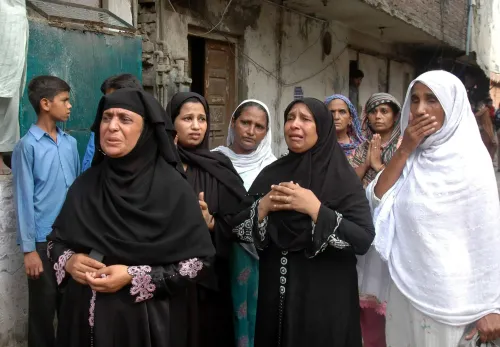
On 5 July 2026, the Human Rights Council (HRC) of Pakistan staged a protest at the Karachi Press Club, condemning what it described as an alarming rise in sexual harassment cases against women. The demonstration drew human rights defenders, women's rights activists, social workers, civil society representatives, and citizens from across the country.
Speakers at the protest called on the Government of Pakistan, law enforcement agencies, educational institutions, and workplaces to take 'practical and effective measures to prevent harassment, protect victims, and ensure accountability for offenders,' according to the HRC's statement. The HRC, alongside a women's organisation, reaffirmed its commitment to 'safeguarding women's rights, raising public awareness, and advocating for a Pakistan where every woman can live with safety, dignity, and respect.'
With the data covering only newspaper-sourced cases, rights groups argue the actual scale of gender-based violence in Pakistan is likely considerably higher — and pressure is mounting on Islamabad to enact stronger enforcement of existing protections.
Point of View
172 figure is almost certainly an undercount — it is drawn exclusively from newspaper coverage, a method that systematically misses rural cases, unreported domestic violence, and incidents where victims or families choose silence over stigma. The fact that victim age was unrecorded in 71 per cent of cases and perpetrator identity in 20 per cent points to a documentation crisis as much as a violence crisis. Punjab's outsized 74 per cent share deserves scrutiny: it may reflect better media coverage rather than a proportionally higher incidence, skewing national policy responses toward one province. Most critically, the 54 per cent home-as-crime-scene statistic — combined with the 13 per cent husband-as-perpetrator figure — signals that legislative gaps around marital violence remain Pakistan's most urgent and least addressed reform frontier.
NationPress
22 Oct 2026
Frequently Asked Questions
How many gender-based violence cases were reported in Pakistan in 2026?
According to Sahil's Six Months Cruel Numbers Report, 3,172 cases of gender-based violence were recorded in Pakistan in the first six months of 2026, including 18 cases involving transgender persons. The data was compiled from national and regional newspaper reports across all major provinces.
Which province had the most gender-based violence cases in Pakistan?
Punjab accounted for 74 per cent of all reported cases, followed by Sindh at 17 per cent and Khyber Pakhtunkhwa at six per cent. Balochistan, the Islamabad Capital Territory, PoK, and PoGB together made up the remaining three per cent.
Where did most gender-based violence incidents occur in Pakistan?
54 per cent of all reported incidents took place inside the victims' own homes , while 12 per cent occurred at perpetrators' residences. This makes domestic spaces the most common site of gender-based violence in Pakistan, according to the Sahil report.
Who are the most common perpetrators of gender-based violence in Pakistan?
According to the Sahil report, 27 per cent of identified perpetrators were acquaintances of the victims, 24 per cent were strangers, and 13 per cent were husbands. Perpetrator identity was not recorded in 20 per cent of cases.
What action has civil society taken on gender-based violence in Pakistan?
The Human Rights Council of Pakistan organised a protest at the Karachi Press Club on 5 July 2026 , demanding stronger enforcement of laws, swift justice for victims, and effective safety measures for women. Speakers called on the government, law enforcement, educational institutions, and workplaces to take concrete preventive action.