ISI seizes direct control of Lashkar, Jaish, Hizbul ops after Operation Sindoor
Synopsis
In a structural overhaul that intelligence officials attribute directly to Operation Sindoor, Pakistan's ISI has dissolved the independent command structures of Lashkar-e-Taiba, Jaish-e-Mohammed, and Hizbul Mujahideen — placing two named officers in unified control. With over 500 terrorists reportedly poised at the LoC and a new lone wolf pipeline being built through Africa and Afghanistan, India's counter-terror challenge has shifted in form, not scale.
Key Takeaways
Pakistan's ISI has placed Brigadier Iqbal and Colonel Owaiz in unified command of Lashkar-e-Taiba , Jaish-e-Mohammed , and Hizbul Mujahideen following Operation Sindoor .
Infiltration cells have been restructured from groups of 5-6 to cells of 3 , with one operative each from Jaish, Lashkar, and Hizbul Mujahideen per attempt.
Over 500 terrorists are reportedly waiting on the Pakistani side of the Line of Control to infiltrate India.
The ISI is using intermediaries in Afghanistan and Africa to recruit and radicalise youth for lone wolf attacks and IED operations inside Jammu and Kashmir .
India's revised security doctrine now treats any act of terror as an act of war , a shift officials say is driving Pakistan's deniability strategy.
Pakistan's Inter-Services Intelligence (ISI) has assumed direct operational command over three major terror outfits — Lashkar-e-Taiba (LeT), Jaish-e-Mohammed (JeM), and Hizbul Mujahideen — in a significant restructuring that intelligence officials say followed Operation Sindoor. The shift strips the groups' own leadership of autonomous decision-making and places two ISI officers, identified as Brigadier Iqbal and Colonel Owaiz, in charge of all three outfits' cross-border activities.
Key Developments
According to intelligence officials, no operational move by any of the three groups can proceed without clearance from Brigadier Iqbal or Colonel Owaiz. Previously, each outfit maintained separate command centres and independent operational heads overseeing infiltration into India. That structure has been dissolved.
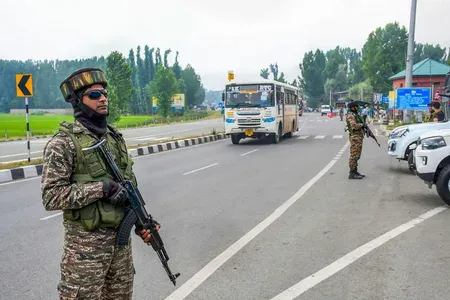
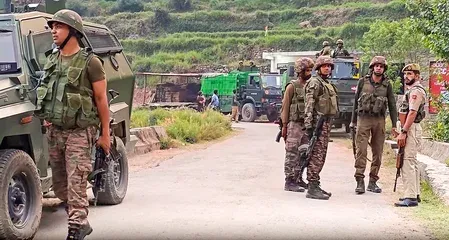
A notable tactical change has also emerged in infiltration patterns along the Line of Control (LoC). Where groups earlier sent five to six terrorists across together, the ISI has now capped infiltration cells at three operatives per attempt — one each from Jaish, Lashkar, and Hizbul Mujahideen, rather than a single-outfit team. Officials describe this as a deliberate move to enforce 'complete operational synergy.'
Why the ISI Restructured Now
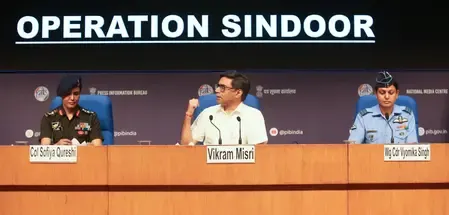
An Intelligence Bureau official said the restructuring reflects a recalibration triggered by Operation Sindoor, which altered the security calculus on both sides of the border. Dr. Abhinav Pandya, founder of the Usanas Foundation, told reporters that most of these groups are 'deliberately lying low as they are recalibrating.'
Notably, Hizbul Mujahideen has been largely unable to sustain operations since the abrogation of Article 370 in Jammu and Kashmir. Dr. Pandya said the ISI's takeover also serves to shield the identities of the outfits' top commanders, providing deniability in the event of an attack.
'Pakistan also will be very careful not to be caught anytime there is an act of terror. They will do everything to cover their trails and hence are trying to execute attacks in the hinterland through their proxies,' Dr. Pandya said.
The Lone Wolf and IED Threat
Beyond LoC infiltration, officials warn the ISI is expanding recruitment inside Jammu and Kashmir, though it is reportedly relying less on local scholars. Instead, it is using intermediaries based in Afghanistan and Africa to contact and radicalise youth remotely.
Once recruited, these individuals are to be trained in lone wolf attack tactics and in assembling Improvised Explosive Devices (IEDs) using locally sourced materials — a method designed to minimise traceable links back to Pakistan.
Officials note that intelligence agencies have reported over 500 terrorists waiting on the Pakistani side of the LoC, ready to attempt infiltration into India.
India's Hardened Security Doctrine
The restructuring comes against the backdrop of a fundamental shift in India's counter-terror posture. Officials confirmed that under the revised doctrine, any act of terror will no longer be treated merely as a cross-border strike but as an act of war against India.
Officials add that Pakistan is acutely aware of this change and is consequently seeking to maintain 'radio silence' while projecting a moderate international image — an effort reportedly aided by paid pressure groups and think-tanks. Any attack traced back to Islamabad risks both a military response and significant reputational damage internationally, officials noted.
How India's security agencies respond to this restructured threat architecture — particularly the lone wolf and IED pipeline — is expected to define the next phase of counter-insurgency strategy in Jammu and Kashmir.
Point of View
Which now treats terror attacks as acts of war. By stripping the outfits of autonomous decision-making, Islamabad gains plausible deniability while retaining operational control: a classic state-proxy manoeuvre dressed in new uniforms. The shift to three-man mixed-outfit cells and the Africa-Afghanistan recruitment corridor suggests Pakistan is preparing for a longer, lower-signature campaign that will be harder to attribute and harder to interdict. India's security establishment must now contend not just with the LoC pipeline, but with a radicalisation network that has deliberately moved off the subcontinent to avoid detection.
NationPress
26 Sept 2026
Frequently Asked Questions
What change did the ISI make to Lashkar, Jaish, and Hizbul operations after Operation Sindoor?
The ISI dissolved the separate command structures of Lashkar-e-Taiba, Jaish-e-Mohammed, and Hizbul Mujahideen and placed two officers — Brigadier Iqbal and Colonel Owaiz — in unified control of all three groups. No operational move by any outfit can now proceed without clearance from these two ISI officers.
Who are Brigadier Iqbal and Colonel Owaiz?
Brigadier Iqbal and Colonel Owaiz are ISI officers identified by Indian intelligence officials as the two individuals now overseeing the combined operations of Lashkar-e-Taiba, Jaish-e-Mohammed, and Hizbul Mujahideen. Their appointment marks the first time ISI officers have directly commanded all three outfits simultaneously, according to officials.
How has the infiltration pattern along the LoC changed?
Earlier, infiltration attempts involved groups of five to six terrorists from a single outfit. Under the new ISI directive, cells are capped at three operatives — one each from Jaish-e-Mohammed, Lashkar-e-Taiba, and Hizbul Mujahideen — to ensure cross-group operational synergy and reduce the risk of detection.
What is the lone wolf threat the ISI is building in Jammu and Kashmir?
According to officials, the ISI is recruiting youth through intermediaries in Afghanistan and Africa, training them remotely in lone wolf attack tactics and IED assembly using locally sourced materials. This approach is designed to minimise traceable links back to Pakistan in the event of an attack inside India.
How has India's security doctrine changed after Operation Sindoor?
India has revised its counter-terror doctrine to treat any act of terror not as a cross-border strike but as an act of war against the country. Officials say this shift is a key reason Pakistan is restructuring its proxy operations to maintain deniability and avoid direct attribution.