Akhilesh Yadav accuses BJP of selling India's 'gold standard'
Synopsis
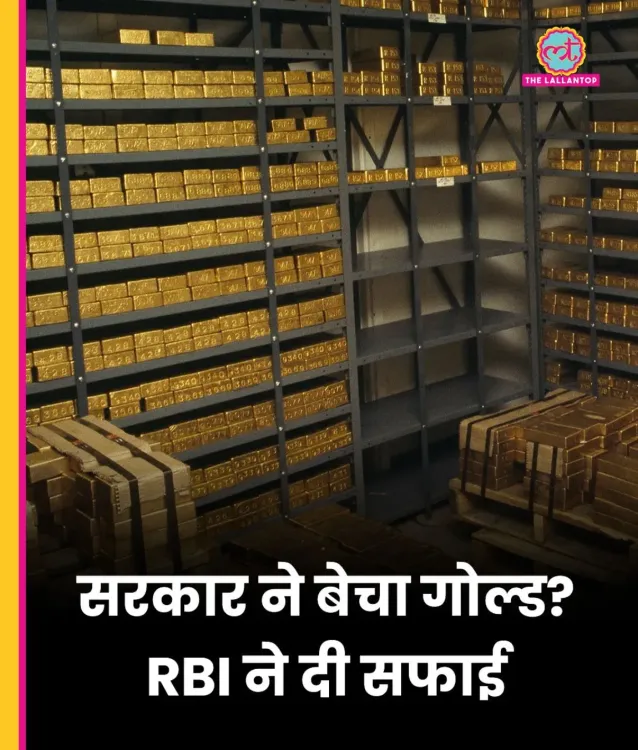
Samajwadi Party president Akhilesh Yadav accused the BJP-led Union government of selling India's 'gold standard' and said the $5 trillion economy promise has been exposed. In a Hindi post on X, the former Uttar Pradesh chief minister linked the claim to allegations of corruption and growing external dependence, urging citizens to question the ruling party's economic record.
Key Takeaways
Samajwadi Party president Akhilesh Yadav alleged the BJP has 'sold the country's gold standard'.
He said the $5 trillion economy promise stands exposed as a hollow slogan.
Yadav claimed citizens were rushing to check bank lockers after the development.
He linked the issue to allegations of corruption and foreign dependence.
The $5 trillion target was set by PM Narendra Modi around 2019 for 2024-25 .
Next RBI reserve disclosures and monsoon session questions will be closely watched.
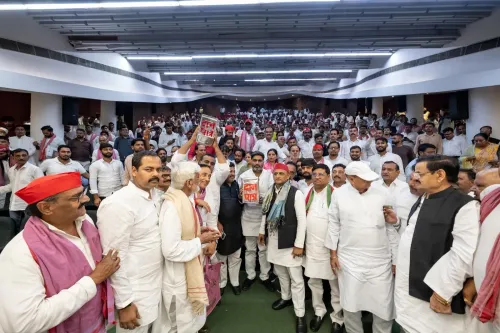
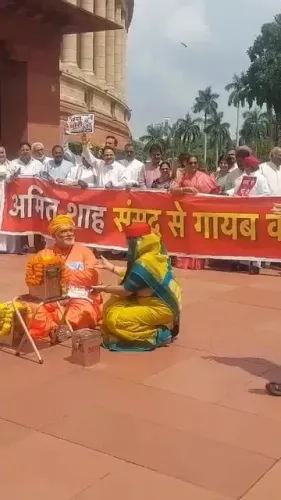
Samajwadi Party president and former Uttar Pradesh chief minister Akhilesh Yadav on Wednesday, 3 June 2026, launched a sharp attack on the Bharatiya Janata Party-led Union government, alleging that it has 'sold the country's gold standard' and that the $5 trillion economy promise has been exposed as a hollow slogan. In a post on X, the Lok Sabha MP linked the alleged move to broader claims of corruption and what he called India's deepening external dependence.
Context
Writing in Hindi, Yadav said: 'The BJP has sold the country's gold standard.' He added that people now understood 'bhajpa sarkar sona kharidne se mana kyon kar rahi thi' (why the BJP government was discouraging citizens from buying gold) — because, in his framing, 'if gold went into the hands of the public, how would they sell it?'
The Samajwadi Party chief argued that 'the golden layer of the 5 trillion dollar economy jumla has now peeled off' and that 'the BJP's Golden Curtain stands exposed.' He further claimed that after the news, ordinary citizens were anxiously visiting their bank lockers to check whether their valuables were still intact.
Policy backdrop
The $5 trillion economy target was publicly set by Prime Minister Narendra Modi around 2019, with an original horizon of 2024-25. The goal has since become a recurring reference point in political debate, with the opposition repeatedly questioning the gap between the headline target and actual GDP, reserves and currency outcomes.
India's official gold holdings are managed by the Reserve Bank of India as part of the country's foreign exchange reserves. Movements in these reserves are reported in the RBI's weekly statistical supplement and quarterly bulletins, and any change in composition typically draws political scrutiny, particularly during periods of rupee volatility.
Stakeholders and impact
Yadav's framing is aimed squarely at middle-class savers and bank depositors, for whom gold remains both a cultural store of value and a hedge against inflation. By invoking the image of citizens rushing to inspect their lockers, the Samajwadi Party president is seeking to convert a macroeconomic dispute into a household-level anxiety.
He also tied the allegation to a wider political charge, saying 'BJP corruption has completely hollowed out the country's economy' and questioning why, in his words, the ruling party and its 'travelling companions' were 'prostrate before foreign powers.' The post did not name any specific country or transaction.
The Bharatiya Janata Party has not, in the post itself, been quoted in response. The ruling party has historically defended its macroeconomic record by pointing to GDP rankings, digital public infrastructure and record foreign exchange reserves.
What's next
Attention is likely to turn to the next Reserve Bank of India quarterly disclosures on gold and forex reserves, which will offer the clearest official picture of any change in the central bank's gold position. Parliamentary questions on reserve management are also expected when the monsoon session convenes.
For the Samajwadi Party, the post fits a wider opposition strategy of contesting the BJP's economic narrative on terms — reserves, rupee, external dependence — that resonate with savers rather than only with markets. Whether the 'gold standard' line gains traction will depend on how quickly the government and the central bank clarify the underlying facts.
Point of View
He is building a single, sticky narrative of broken promises rather than a one-day attack. The framing also signals that the Samajwadi Party intends to contest the BJP not just on identity but on macroeconomic credibility — a space the ruling party has long treated as its strongest turf.
NationPress
19 Sept 2026
Frequently Asked Questions
What did Akhilesh Yadav say about gold and the BJP?
Akhilesh Yadav alleged that the BJP-led Union government has 'sold the country's gold standard' and said the $5 trillion economy promise has been exposed. He made the claim in a Hindi post on X on 3 June 2026.
What is the $5 trillion economy target?
The $5 trillion economy target was announced by Prime Minister Narendra Modi around 2019, with an original horizon of 2024-25. It has since become a recurring reference point in political debate over India's growth trajectory.
Who manages India's gold reserves?
India's official gold holdings are managed by the Reserve Bank of India as part of the country's foreign exchange reserves. Changes in composition are reported through the RBI's weekly and quarterly disclosures.
Did Akhilesh Yadav name a specific transaction?
No. The post did not name any specific transaction, country or counterparty. It framed the allegation in political terms and linked it to wider claims of corruption and external dependence.
What happens next on this issue?
The next Reserve Bank of India quarterly disclosures on gold and forex reserves will be closely watched. Parliamentary questions on reserve management are also likely when the monsoon session convenes.