Akhilesh Yadav accuses BJP of dividing families, society
Synopsis
Samajwadi Party president Akhilesh Yadav on 22 July 2026 accused the BJP of systematically dividing Indian society from national harmony down to parent-child bonds, while alleging a donation-theft scandal at the Ayodhya Ram Temple and violence against protesters in Delhi, and predicted the party's permanent electoral defeat.
Key Takeaways
Akhilesh Yadav posted on 22 July 2026 outlining what he called BJP's 'social-political criminology chronology' of dividing the nation, communities, families and children from parents.
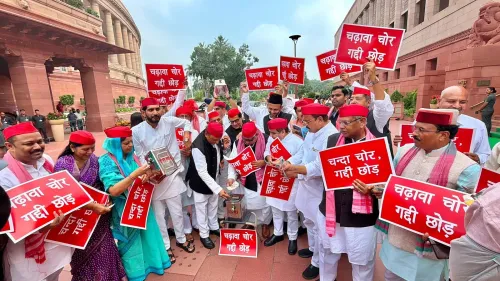
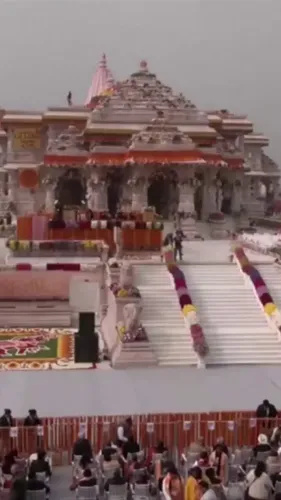
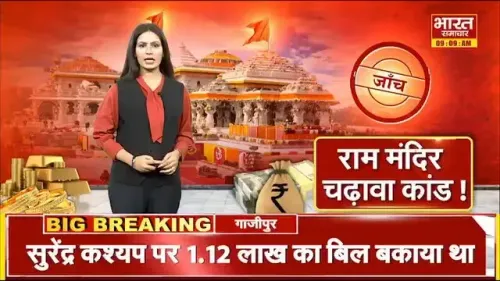
He alleged a 'charhawa-chanda-daan chhori kand' — a donation and offering theft scandal — involving corrupt BJP members and unregistered associates at the Ayodhya Ram Temple .
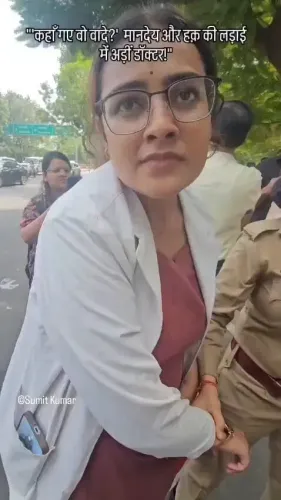
He referred to alleged violent action in Delhi against children, parents, doctors, journalists and protest supporters, describing it as 'inhuman.' Yadav claimed that even hardcore BJP supporters are now ashamed, with some removing party flags from vehicles, homes and shops.
He framed the public reaction as a 'happy change' driven by citizens' concern for their children's future and national unity.
He concluded with a direct prediction: 'Now the BJP will go, and will never come back.'
Samajwadi Party president Akhilesh Yadav launched a sweeping political attack on the Bharatiya Janata Party on Wednesday, 22 July 2026, accusing it of systematically fracturing national harmony, political institutions, communities, families and now even the bond between parents and children — while asserting that the ruling party had finally failed in that last attempt.
Context
In a Hindi-language post on X, Yadav laid out what he called a 'social-political criminology chronology' of the BJP, listing a sequence of alleged divisions: 'भाजपा ने देश के सौहार्द को बाँटा' ('BJP divided the nation's harmony'), then political parties, then community brotherhoods within states, then local societies, then friends and relatives, then joint families — and finally, he said, children and their parents. He argued that this last attempt had not succeeded because 'bonds of the heart cannot be broken by anyone's divisive efforts.'
Yadav then pivoted to two specific allegations. First, he accused BJP functionaries of corruption at the Ram Temple in Ayodhya, describing them as 'भगवान के मंदिर तक को लूटनेवाले भ्रष्ट भाजपाई' — 'corrupt BJP people who plundered even the Lord's temple' — and their alleged unregistered associates in what he termed a 'donation and offering theft scandal.' Second, he referred to alleged violent action in Delhi against children, parents, doctors, journalists and others who had joined or supported a protest movement.
Policy Backdrop
The Ram Temple in Ayodhya was consecrated in January 2024 following a Supreme Court verdict, and the event was framed by the BJP as the fulfillment of a decades-long cultural and political pledge. The temple and its management have since become a contested site, with opposition parties raising questions about the administration of donations and public funds associated with it. Yadav's reference to a 'charhawa-chanda-daan chhori kand' — a 'theft of offerings, donations and charity scandal' — follows that line of attack, though the specific 2026 incidents he cites have not been independently confirmed.
The Samajwadi Party has consistently anchored its political identity in Uttar Pradesh around themes of social unity, anti-corruption and resistance to what it describes as BJP's communal and caste-based polarisation. This framing was central to the party's 2022 UP assembly election campaign and has been a recurring motif in Akhilesh Yadav's messaging since 2014.
Stakeholders and Impact
Yadav's post directly addresses BJP supporters, claiming that even the party's most committed members — 'कट्टर-से-कट्टर भाजपाई', 'the most hardcore BJP supporters' — are now deeply ashamed of the alleged temple fund irregularities and the reported violence against protesters in Delhi. He described an observable shift: some BJP members have removed party flags from their vehicles, homes and shops, either in open opposition or out of fear of public anger.
The reference to violence against 'girls, children, mothers and fathers, doctors, journalists and every good Indian who came out in support of the movement' signals that Yadav is tying his critique to a broader protest episode, the details of which remain unverified in the public record. The framing is aimed at consolidating opposition sentiment across multiple social groups ahead of any forthcoming electoral contest in Uttar Pradesh.
What's Next
Yadav closed with a declarative prediction: 'अब भाजपा जाएगी, फिर कभी नहीं आएगी!' — 'Now the BJP will go, and will never come back!' Whether this signals a specific electoral campaign launch or broader political mobilisation, the statement sets a combative tone for the Samajwadi Party heading into any upcoming Uttar Pradesh by-elections or assembly contests. Formal investigations into the Ayodhya donation management controversy and the Delhi protest incidents, if initiated, could significantly shape the political environment Yadav is seeking to define.
Point of View
Before anchoring abstract political grievance in two concrete, emotive controversies: alleged temple fund theft in Ayodhya and alleged state violence against protesters in Delhi. The rhetorical move of claiming that even BJP's own supporters are removing party flags is a classic pre-election signal aimed at accelerating defection and demoralising the ruling party's ground machinery. The closing prediction of permanent BJP defeat suggests the Samajwadi Party is framing the current political moment as a historic inflection point, not merely a routine protest cycle. Whether the specific allegations around Ayodhya donations and Delhi violence acquire formal legal or investigative traction will determine how much political weight this narrative ultimately carries.
NationPress
21 Oct 2026
Frequently Asked Questions
What did Akhilesh Yadav say about BJP on 22 July 2026?
Akhilesh Yadav accused the BJP of systematically dividing Indian society at every level — from national harmony down to joint families and parent-child bonds — and alleged corruption at the Ayodhya Ram Temple as well as violent action against protesters in Delhi.
What is the Ayodhya Ram Temple donation scandal Akhilesh Yadav referred to?
Yadav alleged that corrupt BJP functionaries and their unregistered associates were involved in stealing offerings, donations and charity at the Ayodhya Ram Temple. The specific 2026 incidents he referenced have not been independently verified.
Why did Akhilesh Yadav say BJP supporters are removing party flags?
Yadav claimed that even the most committed BJP supporters are deeply ashamed of the alleged temple fund irregularities and Delhi protest violence, with some removing party flags from vehicles, homes and shops either in protest or out of fear of public anger.
What did Akhilesh Yadav predict for the BJP?
Yadav ended his post with the declaration that 'Now the BJP will go, and will never come back,' signalling an aggressive opposition posture ahead of upcoming electoral contests in Uttar Pradesh.
What is the Samajwadi Party's political position on BJP and social division?
The Samajwadi Party, led by Akhilesh Yadav, has consistently argued since 2014 that BJP's political strategy relies on polarising communities, castes and families along religious lines, and has built its own messaging around themes of social unity and anti-corruption, especially in Uttar Pradesh.