China fentanyl supply chain under fire at US Congress hearing
Synopsis
A US congressional hearing titled 'Beijing's Poison Pipeline' put China's fentanyl supply chain under the sharpest legislative scrutiny in years — with one witness calling it a national security emergency and another drawing a critical distinction between deliberate state policy and systemic governance failure. The gap between those two positions will define how hard Washington pushes Beijing next.
Key Takeaways
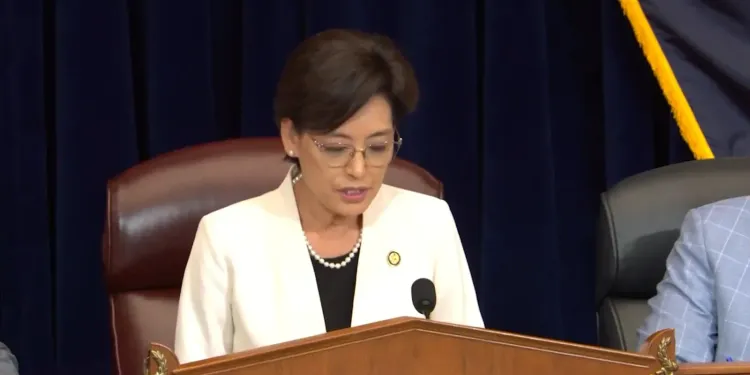
The House Foreign Affairs Subcommittee on East Asia and the Pacific held a hearing on 5 June titled 'Beijing's Poison Pipeline: The CCP's Role in the Fentanyl Crisis.' Representative Young Kim accused Beijing of being 'the primary enabler' of the fentanyl epidemic, which she said kills tens of thousands of Americans annually.
Steve Yates of the Heritage Foundation , whose daughter died from fentanyl-laced pills in 2023 , called the crisis a 'national security emergency' and urged stronger sanctions.
David Luckey , an adviser to the 2026 National Drug Control Strategy , identified China as the primary source of precursor chemicals and called for multilateral cooperation.
Analyst Zongyuan Zoe Liu said there was no evidence Beijing deliberately directs fentanyl shipments to the US, describing it instead as a 'serious supply chain governance failure.' Lawmakers are expected to advance targeted fentanyl-related legislation in the coming weeks.
The US House Foreign Affairs Subcommittee on East Asia and the Pacific convened a pointed hearing on Thursday, 5 June to examine China's alleged role in the global fentanyl supply chain, with Republican lawmakers accusing Beijing of enabling the precursor chemical networks that fuel America's opioid crisis. The session, titled 'Beijing's Poison Pipeline: The CCP's Role in the Fentanyl Crisis', drew testimony from policy experts, a national drug strategy adviser, and a bereaved father — each offering sharply different assessments of how culpable China's government actually is.
Key Accusations from Lawmakers
Subcommittee chair Representative Young Kim opened proceedings by declaring that the People's Republic of China remains 'the primary enabler of the fentanyl epidemic that kills tens of thousands of Americans every year.' Kim argued that while Mexican cartels manufacture and traffic the final drug, the supply chain originates in China. She also alleged that Beijing had declined to act against individuals and companies named in US indictments and sanctions, stating: 'Why does Beijing allow these factories of death to remain open? Because the Chinese Communist Party sees strategic value in Americans suffering.'
Ranking member Representative Ami Bera, a physician by training, urged a wider lens on the crisis. While backing supply-chain disruption efforts, Bera stressed that prevention, education, and treatment were equally critical. 'This is not a partisan issue. It's an issue that is impacting tens of thousands of Americans' lives every day,' he said.
What Witnesses Told the Subcommittee
Steve Yates of the Heritage Foundation, whose daughter died after consuming fentanyl-laced pills in 2023, described the crisis as 'a national security emergency.' He told lawmakers that 'the PRC remains the primary global source of precursors and pill pressing equipment for the Mexican cartels,' and called on Congress to strengthen sanctions and reduce US dependence on Chinese pharmaceutical supply chains. Yates contended that Beijing had taken only limited steps while allowing precursor chemicals and related financial networks to continue operating.
David Luckey, who helped inform the 2026 National Drug Control Strategy, echoed that assessment, identifying China as 'the primary source of precursor chemicals' in the global synthetic opioid supply chain. He called for greater bilateral and multilateral cooperation, improved monitoring of chemical exports, and stronger action against money laundering networks tied to drug trafficking.
A More Nuanced View
Zongyuan Zoe Liu offered a contrasting perspective, stating there was no evidence that Beijing deliberately directs illicit fentanyl shipments into the United States. She characterised the problem instead as 'a serious supply chain governance failure in China.' Liu argued: 'The point is not that China created American demand. The problem is that China-linked chemical, logistics and financial networks help make illicit fentanyl easier to produce, cheaper to scale, and harder to stop.' Her testimony introduced a meaningful distinction between deliberate state policy and systemic regulatory failure — a distinction that could shape future diplomatic and legislative responses.
Broader Context and What Comes Next
The hearing comes amid sustained US-China tensions over trade, technology, and security, with fentanyl increasingly featuring as a flashpoint in bilateral negotiations. The Biden administration had previously secured limited Chinese cooperation on fentanyl in late 2023, but enforcement gaps have persisted, according to officials. This is not the first time Congress has spotlighted Beijing's precursor chemical exports — similar hearings were held in 2019 and 2022 — but the current session reflects a sharper legislative appetite for sanctions and supply-chain decoupling. Lawmakers are expected to advance targeted legislation in the coming weeks.
Point of View
The response is confrontational decoupling; if it is a regulatory gap, it is negotiable. Congress has historically conflated the two, which has produced loud hearings and limited enforcement outcomes. With the 2026 National Drug Control Strategy now in play and bilateral tensions already elevated, the risk is that legislative momentum produces sanctions that satisfy domestic politics without actually closing the precursor pipeline.
NationPress
19 Sept 2026
Frequently Asked Questions
What was the US congressional hearing on China and fentanyl about?
The hearing, titled 'Beijing's Poison Pipeline: The CCP's Role in the Fentanyl Crisis,' was convened by the House Foreign Affairs Subcommittee on East Asia and the Pacific on 5 June to examine China's alleged role in supplying precursor chemicals used by Mexican cartels to manufacture fentanyl. Lawmakers, policy experts, and a drug strategy adviser testified on enforcement gaps, sanctions, and diplomatic options.
What did Representative Young Kim say about China's role in the opioid crisis?
Representative Young Kim, chair of the subcommittee, said China remains 'the primary enabler of the fentanyl epidemic that kills tens of thousands of Americans every year.' She alleged that Beijing had failed to act against individuals and companies named in US indictments despite ongoing sanctions.
Did witnesses agree that China is deliberately fuelling the fentanyl crisis?
No. While Steve Yates of the Heritage Foundation and David Luckey described China as the primary source of precursor chemicals, analyst Zongyuan Zoe Liu said there was no evidence Beijing deliberately directs illicit fentanyl shipments to the US. She characterised it as 'a serious supply chain governance failure in China' rather than deliberate state policy.
What actions did lawmakers and witnesses call for?
Witnesses called for stronger US sanctions against Chinese chemical suppliers, reduced dependence on Chinese pharmaceutical supply chains, improved monitoring of chemical exports, and greater multilateral cooperation to disrupt money laundering networks linked to drug trafficking.
What happens next after the hearing?
Lawmakers are expected to advance targeted fentanyl-related legislation in the coming weeks. The hearing also feeds into the 2026 National Drug Control Strategy, which identifies China as the primary source of synthetic opioid precursors and calls for enhanced bilateral and multilateral enforcement cooperation.