CM Bhajanlal Calls for Soil Testing to Guide Fertiliser Use in Rajasthan
Synopsis
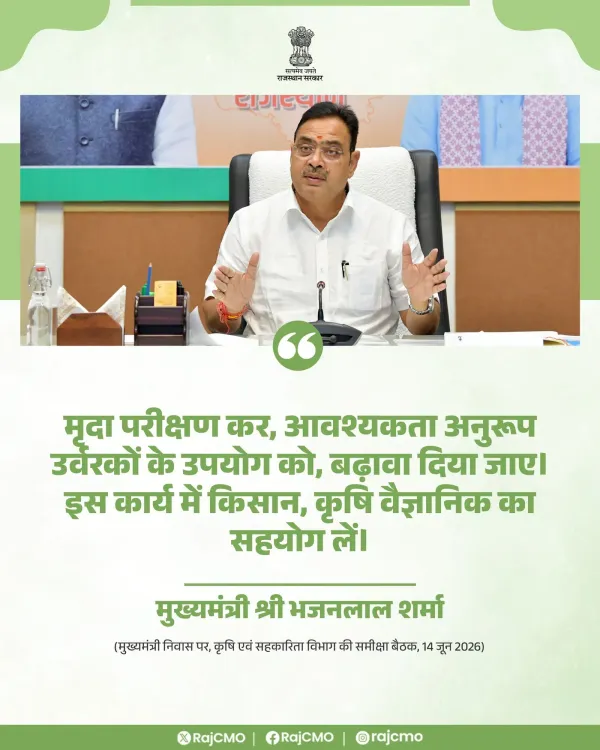
The Chief Minister's Office of Rajasthan on 15 June 2026 directed that soil testing be conducted and fertiliser use be promoted strictly as per soil requirements — a push for sustainable, cost-efficient farming aligned with India's Soil Health Card Scheme.
Key Takeaways
The Chief Minister's Office of Rajasthan issued a directive on 15 June 2026 calling for soil testing and need-based fertiliser application.
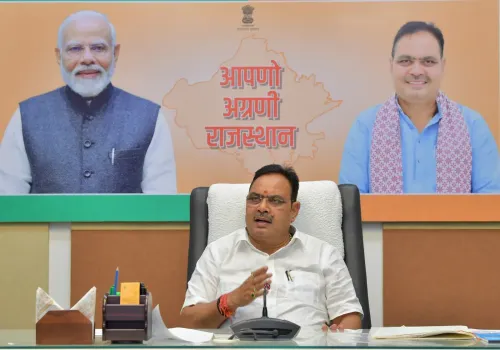
The instruction was addressed to Chief Minister Bhajan Lal Sharma and shared under the campaign hashtag #आपणो_अग्रणी_राजस्थान .
The move aligns with the Soil Health Card Scheme , launched by the Government of India in February 2015 , which promotes soil-nutrient-based fertiliser recommendations.
Rajasthan's semi-arid soils are particularly vulnerable to degradation from indiscriminate chemical fertiliser use.
Expanded soil-testing labs, mobile advisory tools, and stronger agricultural extension linkages are among the likely next steps.
Farmers across Rajasthan stand to benefit through lower input costs and improved long-term soil productivity.
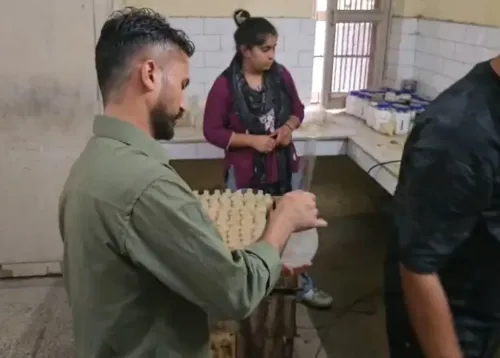
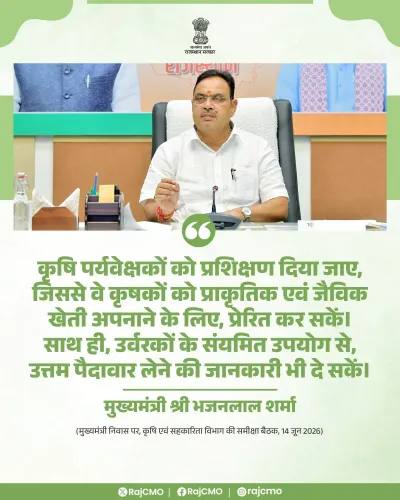
The Chief Minister's Office of Rajasthan on Monday, 15 June 2026, shared a directive from Chief Minister Bhajan Lal Sharma urging that soil testing be conducted and fertiliser use be promoted in accordance with actual soil needs — a push aimed at sustainable agriculture across the state's vast agrarian landscape.
Context
The post, shared under the hashtag #आपणो_अग्रणी_राजस्थान ('Our Leading Rajasthan'), carries a pointed message: 'मृदा परीक्षण कर, आवश्यकता अनुरूप उर्वरकों के उपयोग को, बढ़ावा दिया जाए' — meaning, 'Soil testing should be conducted and the use of fertilisers as per requirement should be promoted.' The directive is addressed directly to Chief Minister Bhajan Lal Sharma, signalling an internal policy instruction or a public accountability statement from his office.
Rajasthan is a predominantly agrarian state with semi-arid soils spread across its western and central regions. Indiscriminate or excessive fertiliser application has long been a concern, contributing to soil degradation, rising input costs for farmers, and declining crop productivity over successive seasons.
Policy Backdrop
The call aligns closely with the Soil Health Card Scheme, launched by the Government of India in February 2015, which mandates periodic soil nutrient testing and issues crop-specific fertiliser recommendations to farmers. The scheme was designed precisely to shift farming practice from blanket chemical application to need-based nutrient management.
Indian states, including Rajasthan, have periodically aligned state-level agricultural extension campaigns with this central initiative. Balanced fertiliser use not only lowers per-acre input costs for farmers but also slows the depletion of macro and micro-nutrients in soil over time — a concern particularly acute in semi-arid geographies where soil recovery is slow.
Stakeholders and Impact
Rajasthan's farmers — who depend on both rain-fed and irrigated cropping — stand as the primary beneficiaries of any expanded soil-testing infrastructure. Targeted fertiliser application, guided by soil health data, can reduce wasteful spending on urea and other inputs while improving yields and long-term soil viability.
Agricultural extension workers, Krishi Vigyan Kendras, and state-run soil-testing laboratories would be key implementation nodes. Wider access to mobile-based fertiliser advisory tools could also play a role in reaching farmers in remote districts of the state.
What's Next
The directive points toward potential expansion of soil-testing laboratories across Rajasthan, stronger linkages between soil health data and state agricultural extension budgets, and possible integration with digital advisory platforms. The coming cropping seasons will test whether the instruction translates into measurable increases in soil testing coverage and a corresponding reduction in indiscriminate fertiliser use across the state.
Point of View
The BJP government is reinforcing its agrarian credentials ahead of a period when rural distress narratives tend to sharpen. The emphasis on need-based fertiliser use also feeds into a broader national push to rationalise fertiliser subsidies by reducing blanket consumption. Whether this translates into ground-level infrastructure — more labs, trained extension workers, digital advisories — will determine if it moves beyond messaging.
NationPress
14 Sept 2026
Frequently Asked Questions
What did Rajasthan CM Bhajan Lal Sharma say about soil testing?
The Chief Minister's Office of Rajasthan directed on 15 June 2026 that soil testing should be conducted and fertiliser use should be promoted strictly as per soil requirements, rather than through blanket application.
What is the Soil Health Card Scheme in India?
The Soil Health Card Scheme was launched by the Government of India in February 2015 to provide farmers with soil nutrient reports and crop-specific fertiliser recommendations, encouraging balanced and need-based chemical use.
Why is soil testing important for Rajasthan farmers?
Rajasthan has semi-arid soils that degrade quickly under excessive chemical fertiliser use. Soil testing helps farmers apply only what their land needs, reducing input costs and preserving long-term soil health.
How does need-based fertiliser use help farmers?
Need-based fertiliser application lowers per-acre spending on inputs such as urea, improves crop yields by matching nutrients to actual soil deficiencies, and slows the long-term depletion of soil quality.
What is the 'Aapno Agrani Rajasthan' campaign?
'Aapno Agrani Rajasthan' — meaning 'Our Leading Rajasthan' — is a branding campaign used by the Rajasthan government under Chief Minister Bhajan Lal Sharma to highlight state development and governance initiatives.