Karnataka cabinet vows to protect voting rights amid SIR concerns
Synopsis
The Karnataka cabinet has put the Election Commission's Special Intensive Revision process squarely in its crosshairs — alleging it wiped out voting rights of 27 lakh people in West Bengal and warning it could move the Supreme Court. With a state government openly threatening judicial intervention over a national electoral exercise, this is a significant escalation in the Centre-state friction over voter rolls.
Key Takeaways
Karnataka cabinet discussed the Special Intensive Revision (SIR) of electoral rolls on 21 May 2026 , raising concerns over transparency.
Patil alleged the SIR process deleted voting rights of nearly 27 lakh people in states including West Bengal .
The state government is reportedly considering approaching the Supreme Court over the issue.
Cabinet approved a ₹100 crore super-speciality hospital at Karwar Institute of Medical Sciences and ₹802 crore for higher education infrastructure.
Retired judge Justice P.N.
Desai appointed Chairperson of the Karnataka Human Rights Commission .
A ₹15 crore scheme will provide NEET/JEE/CET coaching to 500 backward class students from government schools.
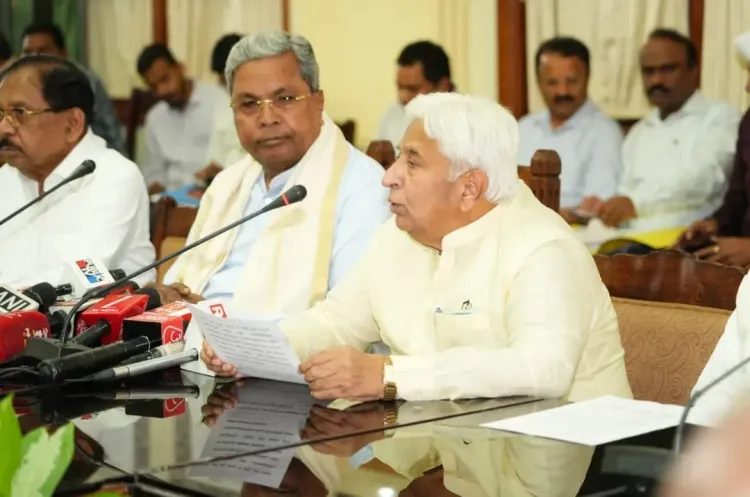
Karnataka Law and Tourism Minister H.K. Patil on 21 May 2026 said the state government would take every possible measure to safeguard citizens' voting rights if the Special Intensive Revision (SIR) of electoral rolls was found to deprive them of their franchise. The minister made the remarks while briefing reporters after the Karnataka cabinet meeting held in Bengaluru.
Cabinet's Stand on the SIR Process
Patil alleged that the SIR exercise had led to the deletion of voting rights of nearly 27 lakh people in states such as West Bengal, raising serious concerns over the transparency and implementation of the process. He said the cabinet held extensive discussions on alleged irregularities, shortcomings, and objections surrounding the SIR.
"If any process unnecessarily deprives a citizen of his or her voting rights, the government will consider taking all possible measures to safeguard that right," Patil said. He added that more detailed deliberations were needed on the final electoral roll and the SIR's transparency, with a decision expected shortly.
Notably, the state government is also reportedly considering approaching the Supreme Court over the issue — a move that would mark a direct constitutional challenge to the electoral roll revision process.
Key Cabinet Decisions on Infrastructure and Education
Beyond the electoral roll debate, the cabinet cleared several significant spending proposals. Administrative approval was granted for the construction of a new 200-bed super-speciality hospital at the Karwar Institute of Medical Sciences campus at an estimated cost of ₹100 crore.
Under the Integrated Child Development Scheme (ICDS), the cabinet approved the procurement of pre-school education kits for 69,922 anganwadi centres at a unit cost of ₹3,000, with a total estimated outlay of ₹20.98 crore.
Under the Karnataka State Higher Education Transformation (KSHET) project, assisted by the Asian Development Bank, advance procurement of materials worth ₹802 crore was approved for 53 government degree colleges, polytechnics, 14 government centres of excellence, and the Project Management Unit, in line with the Union Finance Ministry's Department of Economic Affairs loan norms.
Coaching Support for Backward Class Students
The cabinet also cleared a ₹15 crore programme to provide 500 backward class students with two years of residential pre-university science education along with NEET/JEE/CET coaching. Students will be selected from government schools based on their Class 10 board exam scores in mathematics and science, with 15 students chosen per district.
Human Rights Commission Chair Appointed
In a separate development, retired High Court judge Justice P.N. Desai was selected as Chairperson of the Karnataka Human Rights Commission. The appointment decision was taken at a meeting chaired by Chief Minister Siddaramaiah, attended by Legislative Council Chairman Basavaraj Horatti, Assembly Speaker U.T. Khader, Leader of Opposition R. Ashoka, Legislative Council Opposition Leader Chalavadi Narayanaswamy, and the Home Minister.
Additionally, the cabinet decided to place before it — after legal scrutiny — a proposal to consider the promotion of KAS officer Sushilamma N. and three others to the IAS cadre, in accordance with a Central Administrative Tribunal order dated 16 March 2026. Minister Patil clarified that no discussion took place regarding the upcoming monsoon session of the legislature.
Point of View
If verified, would be a serious indictment of the SIR's safeguards. What is missing from the cabinet's position is a concrete legal timeline and specific evidence beyond the allegation — without which the Supreme Court threat risks being posturing rather than action. The broader pattern is clear: Centre-state friction over electoral administration is intensifying ahead of the next electoral cycle.
NationPress
9 Oct 2026
Frequently Asked Questions
What is the Special Intensive Revision (SIR) of electoral rolls?
The Special Intensive Revision (SIR) is an exercise conducted to update and clean up voter rolls by verifying, adding, and removing entries. Karnataka's cabinet has raised concerns that the process has led to the deletion of voting rights of nearly 27 lakh people in states such as West Bengal, and has questioned its transparency.
Why is the Karnataka government concerned about the SIR process?
The Karnataka cabinet alleges the SIR process has resulted in large-scale deletion of voter registrations — reportedly affecting around 27 lakh people in West Bengal alone — raising concerns about disenfranchisement and lack of transparency. The state government has vowed to protect citizens' voting rights and is considering a Supreme Court challenge.
Is Karnataka planning to approach the Supreme Court over the SIR?
Yes, according to Law Minister H.K. Patil, the Karnataka government is considering approaching the Supreme Court over the SIR process. A final decision is expected shortly after more detailed internal discussions on the electoral roll and SIR transparency.
What other decisions did the Karnataka cabinet take on 21 May 2026?
The cabinet approved a ₹100 crore super-speciality hospital at Karwar Institute of Medical Sciences, ₹802 crore for higher education infrastructure under the KSHET-ADB project, a ₹15 crore NEET/JEE/CET coaching scheme for 500 backward class students, and pre-school kits for nearly 70,000 anganwadi centres.
Who was appointed Chairperson of the Karnataka Human Rights Commission?
Retired High Court judge Justice P.N. Desai was selected as the Chairperson of the Karnataka Human Rights Commission. The appointment was decided at a meeting chaired by Chief Minister Siddaramaiah with key legislative and opposition leaders present.