Macron backs Canada-EU rapprochement, associate membership bid
Synopsis
France has thrown its full weight behind Canada joining the EU as an associate member — a move that could rewrite Western economic alliances. With Macron endorsing the 'agenda of rapprochement' and von der Leyen's associate membership proposal already on the table, Trump's tariff threats may only harden the resolve of both sides to deepen ties.
Key Takeaways
French President Emmanuel Macron backed Canada's potential status as an associate member of the EU at a summit in Saint-Pierre on Sunday .
It was the first official visit by a Canadian prime minister to the French overseas territory of Saint-Pierre and Miquelon .
EU Commission President Ursula von der Leyen proposed the associate membership in her State of the Union address on Wednesday in Strasbourg .
The proposed 'Alliance for the Future' would upgrade CETA to cover manufacturing, defence, energy, AI and critical minerals.
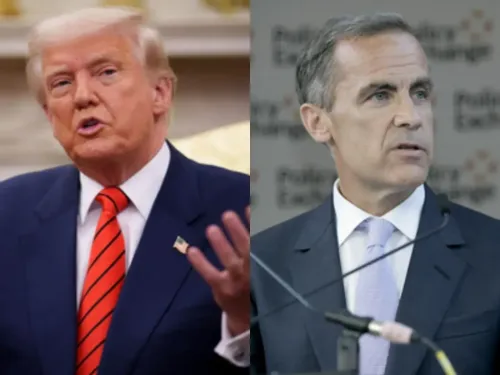
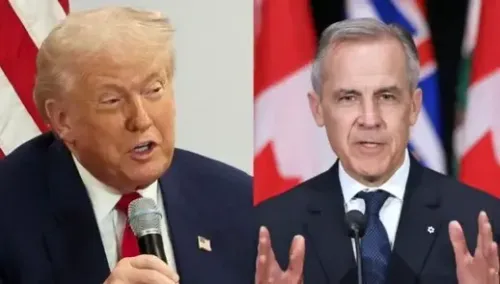
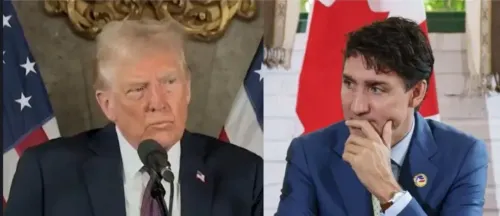
US President Donald Trump called the move a potential 'hostile act' and threatened heavy tariffs on Europe.
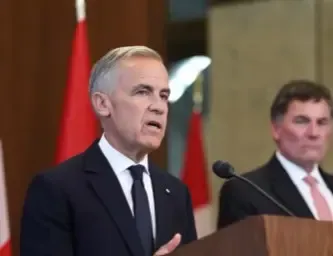
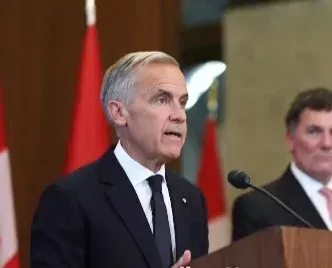
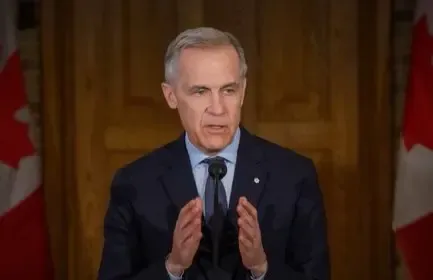
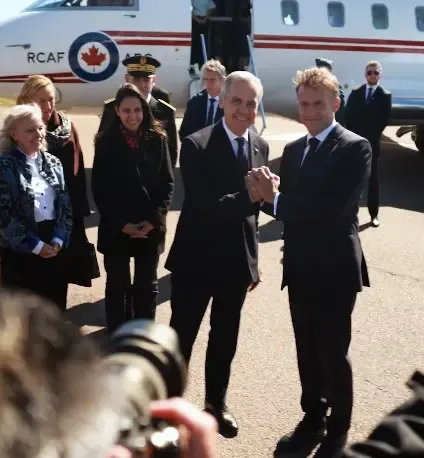
French President Emmanuel Macron has declared that France strongly supports the push for closer ties between Canada and the European Union (EU), including Canada's potential status as an associate member of the bloc. Macron made the remarks on Sunday at a joint press conference with visiting Canadian Prime Minister Mark Carney in Saint-Pierre, the capital of the French overseas territory of Saint-Pierre and Miquelon — marking the first official visit by a Canadian prime minister to the territory.
What Macron and Carney Agreed On
Macron said France 'very much' supports the 'agenda of rapprochement' between the EU and Canada, explicitly backing Canada's bid for associate membership of the bloc. The two leaders agreed to strengthen bilateral cooperation across fisheries, security, and energy — sectors of strategic relevance given the territory's proximity to Canada's Newfoundland, roughly 20 km away.
For his part, Carney said Canada and Europe would build an 'Alliance for the Future' to strengthen their collective resilience — a framing that signals both economic and geopolitical ambition.
Von der Leyen's Associate Membership Proposal
The Saint-Pierre meeting follows a landmark proposal by European Commission President Ursula von der Leyen, who on Wednesday proposed opening the door for Canada to become the EU's first-ever associate member. Speaking in her annual State of the Union address to the European Parliament in Strasbourg, von der Leyen said the two sides would seek to upgrade their relationship beyond the existing Comprehensive Economic and Trade Agreement (CETA) to a broader 'Alliance for the Future' — spanning manufacturing, technology, defence, the Arctic, energy, critical minerals, and artificial intelligence (AI).
Trump's Warning and Tariff Threat
The proposal has already drawn a sharp response from US President Donald Trump, who on Wednesday warned that Canada becoming an associate member of the EU could be considered a 'hostile act' and threatened to impose heavy tariffs on Europe. The warning underscores the transatlantic tensions that have been building as both Canada and the EU seek to reduce economic dependence on Washington.
Notably, this is not the first time Trump has used tariff threats to signal displeasure at deepening EU-linked partnerships. Critics argue that such pressure may accelerate rather than deter the Canada-EU alignment.
Broader Geopolitical Dimensions
Beyond trade and membership talks, Macron and Carney also addressed major geopolitical issues — including the war in Ukraine, European and transatlantic security, the Middle East, and Arctic affairs. The leaders agreed to cooperate on energy security, with Canada positioning itself as a major supplier of both clean and conventional energy to European partners at a time when the continent is still recalibrating after Russia's invasion disrupted traditional supply chains.
The outcome of the Canada-EU associate membership process will likely be closely watched by other G7 partners and could reshape the architecture of Western economic alliances heading into the late 2020s.
Point of View
Driven partly by anxiety about US unpredictability under Trump. Macron's endorsement in Saint-Pierre is symbolically potent: a French overseas territory sitting 20 km off Canadian shores signals that geography and history are being consciously mobilised for geopolitical realignment. The critical question is whether 'associate membership' has any legal substance under EU treaties, or whether it remains a political statement dressed in institutional language. Trump's tariff threat, while aggressive, may paradoxically accelerate Ottawa and Brussels's urgency to conclude a framework before the next US election cycle reshuffles the deck again.
NationPress
21 Sept 2026
Frequently Asked Questions
What is Canada's proposed associate membership of the EU?
It is a new category of EU partnership proposed by European Commission President Ursula von der Leyen on Wednesday, which would make Canada the first-ever associate member of the EU. The arrangement would upgrade existing CETA ties to cover manufacturing, defence, energy, critical minerals, and AI under an 'Alliance for the Future' framework.
What did Macron say about Canada and the EU?
French President Emmanuel Macron said at a joint press conference with Canadian Prime Minister Mark Carney in Saint-Pierre on Sunday that France 'very much' supports the 'agenda of rapprochement' between the EU and Canada, including Canada's potential status as an associate member.
How has the United States responded to the Canada-EU proposal?
US President Donald Trump called Canada's potential associate membership of the EU a possible 'hostile act' on Wednesday and threatened to impose heavy tariffs on Europe. The warning reflects broader US concern about deepening transatlantic economic alliances that could dilute US leverage.
What was agreed at the Saint-Pierre summit between Macron and Carney?
The two leaders agreed to strengthen cooperation in fisheries, security, and energy. They also discussed the war in Ukraine, transatlantic security, the Middle East, the Arctic, and energy supply security, with Canada accelerating its role as a supplier of both clean and conventional energy.
What is CETA and how does the new proposal differ?
CETA, the Comprehensive Economic and Trade Agreement, is the existing trade pact between Canada and the EU. The proposed 'Alliance for the Future' would go significantly further, adding cooperation on defence, AI, critical minerals, Arctic affairs, and technology — areas not covered under CETA.