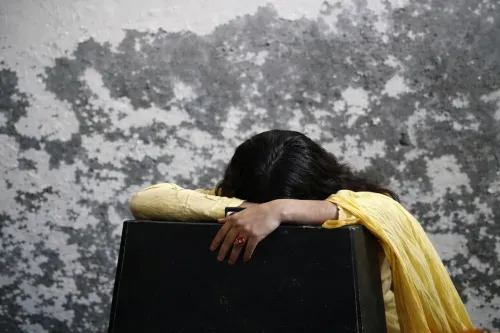
Bihar rape victim bypasses panchayat compromise bid, files FIR in Araria

Synopsis
A rape survivor in Bihar's Araria district had to endure three days of panchayat-brokered pressure before she could file an FIR — a stark reminder that informal community bodies continue to act as barriers to justice for assault victims in rural India, despite explicit Supreme Court rulings against such compromise attempts.
Key Takeaways
A 20-year-old woman was allegedly raped at her home in Araria district, Bihar , on 1 November .
The accused has been identified as Dinesh Vishwas of Nandkar village .
Village panchayat representatives allegedly attempted to settle the matter outside the law over three consecutive days .
The victim and her sister filed a formal complaint at Raniganj police station after the compromise bid failed.
SHO Dharmendra Kumar confirmed the accused has been summoned for questioning; a medical examination has been conducted.
Panchayat-led settlements in rape cases are legally void and have been repeatedly struck down by Indian courts.
A 20-year-old woman in Araria district, Bihar, filed a police complaint on 5 November 2026 after a village panchayat allegedly spent three days attempting to broker a compromise between her and the man accused of raping her — a practice that is illegal under Indian law. The case has drawn attention to the persistent use of informal community bodies to suppress serious criminal complaints in rural Bihar.
How the Incident Unfolded
The alleged rape occurred around 2 pm on 1 November at the victim's home in a village under the jurisdiction of Raniganj police station. According to the victim's sister, the family operates a grocery shop from their residence. The victim was sweeping the premises when the accused, identified as Dinesh Vishwas, a resident of Nandkar village, allegedly parked his vehicle outside, entered the house, gagged her with a piece of cloth, and raped her.
At the time of the alleged assault, the victim's father was away from home and her mother, who works as a daily-wage labourer, had gone to work in the village, leaving the young woman alone.
Three Days of Panchayat Pressure
After the victim informed her family, the matter was raised with local residents. The victim's sister alleged that both former and current panchayat representatives, along with residents from the accused's village, intervened and pushed for an out-of-court settlement. For three consecutive days, panchayat meetings were held with the aim of negotiating a compromise — an approach that has no legal standing in rape cases under the Indian Penal Code and is explicitly discouraged by courts.
When those efforts failed, the victim and her sister proceeded to Raniganj police station and formally lodged a complaint against Dinesh Vishwas.
Police Response and Next Steps
Raniganj Station House Officer (SHO) Dharmendra Kumar confirmed that the accused had been summoned to the police station for questioning following receipt of the complaint. He added that further legal action would follow once the victim's written application was received. The victim has since undergone a mandatory medical examination, and police have launched a formal investigation into the allegations.
A Wider Pattern in Bihar
This is not an isolated case. Rights groups and legal observers have repeatedly documented the use of village panchayats to pressure rape survivors into silence across Bihar and other states, particularly when the accused has community backing. Such interventions delay FIR registration, compromise evidence, and expose survivors to secondary trauma. Notably, the Supreme Court of India has in multiple rulings categorically held that rape cannot be compounded or settled through mediation, making panchayat-led compromise attempts not only legally void but potentially obstructive to justice.
Authorities are expected to press charges once the investigation, including medical and witness evidence, is complete. All eyes will now be on whether the state administration follows through with swift action against the accused — and whether those who allegedly facilitated the compromise attempts face scrutiny.
Point of View
But for the three-day institutional delay that preceded the FIR. Village panchayats intervening in rape cases are not a legal grey zone — they are acting against settled Supreme Court law — yet they continue to operate with apparent impunity. The more important question here is accountability: will the panchayat members who allegedly facilitated the compromise attempt face any scrutiny, or will the investigation narrow solely to the accused? Bihar's record on protecting rape survivors from secondary victimisation by community actors remains poor, and this case will test whether that is changing.
NationPress
5 Nov 2026
Frequently Asked Questions
What happened in the Araria rape case in Bihar?
A 20-year-old woman was allegedly raped at her home in Araria district, Bihar, on 1 November by a man identified as Dinesh Vishwas. Following the incident, village panchayat members allegedly pressured the family to settle the matter informally before the victim filed a police complaint on 5 November.
Why did the victim wait three days before approaching police?
According to the victim's sister, former and current panchayat representatives, along with residents from the accused's village, intervened and held meetings for three consecutive days in an attempt to broker a compromise. The victim approached Raniganj police station only after those efforts failed.
Is it legal for a panchayat to settle a rape case?
No. Indian courts, including the Supreme Court, have categorically held that rape cannot be compounded or mediated outside the legal process. Panchayat-led compromise attempts in rape cases are legally void and can amount to obstruction of justice.
What action has police taken so far?
Raniganj SHO Dharmendra Kumar confirmed that the accused, Dinesh Vishwas, has been summoned for questioning. The victim has undergone a medical examination, and police have initiated a formal investigation. Further legal action is expected after the victim's written application is received.
Who is the accused in the Araria rape case?
The accused has been identified as Dinesh Vishwas, a resident of Nandkar village in Araria district, Bihar. He allegedly entered the victim's home while she was alone and committed the assault.