CM Himanta flags road upgrades for Upper Assam tea gardens

Synopsis
Assam Chief Minister Himanta Biswa Sarma on 5 November 2026 highlighted road upgrades in Upper Assam's tea estates, saying the government owes safer travel and emergency access to communities that have driven the state's growth.
Key Takeaways
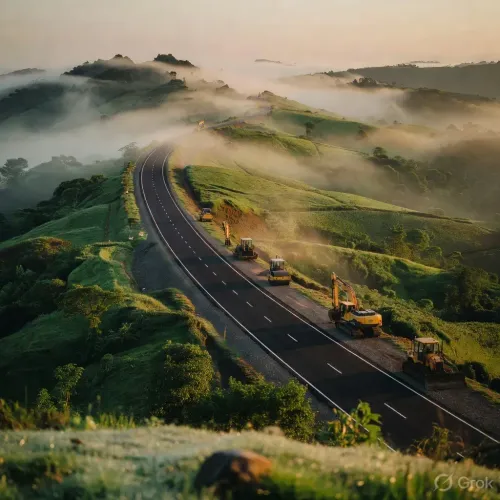
CM Himanta Biswa Sarma announced on 5 November 2026 that paved roads are replacing muddy paths across Upper Assam 's tea estates.
The post specifically highlights three benefits : safer journeys, quicker access to emergency care, and easier daily travel for tea garden families.
Upper Assam — covering districts such as Dibrugarh , Tinsukia , Jorhat and Golaghat — is India's core tea-producing belt.
Tea-garden communities have historically faced poor road connectivity despite the estates generating significant state revenue.
The BJP -led Assam government has maintained a focus on tea-tribe welfare and habitation infrastructure since CM Sarma took office in May 2021 .
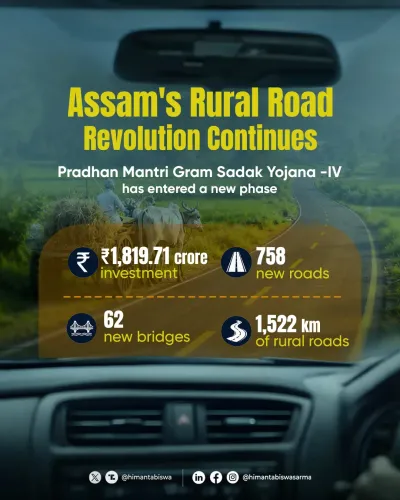
Specific project details, budget allocations and timelines are expected to become clearer at upcoming Assam Assembly sessions.
Roads that once turned to mud with every monsoon shower are being replaced with paved surfaces across Upper Assam's sprawling tea estates — and Assam Chief Minister Himanta Biswa Sarma is making clear who this is for. On Thursday, 5 November 2026, the Chief Minister posted a pointed message on X, framing the connectivity push as a matter of dignity and debt owed to the communities that built Assam's most iconic industry.
Writing directly to the moment, CM Sarma said: 'From muddy paths to paved roads, change is reaching Upper Assam's tea gardens. Our tea garden families deserve safer journeys, quicker access to emergency care and easier daily travel. They have powered Assam's progress. Their well-being is our responsibility.'
Why Upper Assam's tea corridors matter beyond the cup
Upper Assam — the eastern arc of the state encompassing districts like Dibrugarh, Tinsukia, Jorhat and Golaghat — is the heartland of India's tea economy. The workers and their families living inside these estates have, for generations, existed in a kind of geographic isolation: physically on private plantation land, often far from public roads, hospitals, and markets. A broken axle on a cart track has historically been the difference between a child reaching a clinic in time and not reaching it at all. That is the lived reality the Chief Minister is addressing. Assam governments across administrations have periodically announced road improvement schemes for tea-estate habitations, acknowledging that the same estates generating substantial state revenue were leaving their resident populations with substandard mobility. The current BJP-led government under Sarma, who took office in May 2021, has continued and in some cases accelerated this focus through state-level infrastructure and tea-tribe welfare programmes.The three promises packed into one post
Sarma's framing is deliberate and layered. He names three specific gains that better roads deliver: safer daily journeys, faster access to emergency care, and easier everyday travel. Each speaks to a different constituency within the same community — the daily commuter, the family rushing a sick relative to hospital, the worker trying to reach a market or a school. It is infrastructure policy translated into human consequence, and it signals that the administration views tea-tribe well-being as a political and moral priority, not just a line item. Tea-garden communities — the tea-tribe workers and their dependants — have long been a critical electoral bloc in Assam. Sarma, who also convenes the North-East Democratic Alliance (NEDA), understands the political arithmetic of these constituencies as well as anyone in the region. The concrete details of which road projects are under way, what budgets have been allocated, and what timelines have been set will be the real measure of this commitment — and those specifics will likely surface in the next Assam Assembly session. Until then, the direction of travel, at least, is unmistakable.Point of View
The administration elevates infrastructure spend into a rights narrative, a rhetorical shift that has gained traction in tribal and marginalised-community politics across India. The emphasis on emergency healthcare access is particularly pointed: it acknowledges a long-standing criticism that tea estates, despite their economic weight, have functioned as welfare deserts. Whether concrete project timelines follow this post will determine how the message lands beyond the news cycle.
NationPress
5 Nov 2026
Frequently Asked Questions
What road work is Himanta Biswa Sarma doing in Assam tea gardens?
CM Sarma announced on 5 November 2026 that paved roads are replacing muddy paths in Upper Assam's tea estates, aimed at improving daily travel and emergency access for tea garden communities. Specific project details have not yet been officially released.
Which districts in Upper Assam have tea gardens?
Upper Assam's major tea-producing districts include Dibrugarh, Tinsukia, Jorhat and Golaghat, which together form the heartland of India's tea industry.
What is the condition of roads in Assam tea estates?
Historically, roads inside and connecting Assam's tea estates have been poorly maintained, leaving residents — particularly in Upper Assam — with limited mobility and difficult access to hospitals and markets.
Who are Assam's tea tribe communities?
Assam's tea-tribe communities are the descendants of labourers brought to work the state's tea plantations, primarily resident within estate boundaries. They form a significant electoral and demographic group across Upper Assam districts.
Is Himanta Biswa Sarma BJP or Congress?
Himanta Biswa Sarma is a senior BJP leader. He became Chief Minister of Assam in May 2021 and also serves as convenor of the North-East Democratic Alliance (NEDA).