Sachin Pilot attacks BJP and AAP over broken Punjab promises
Synopsis
Congress general secretary Sachin Pilot has attacked both BJP and AAP for failing Punjab — citing unrepaid farmer struggles during the farm-laws agitation and AAP's unfulfilled pledges on jobs, health, drugs and clean governance since taking power in 2022.
Key Takeaways
Sachin Pilot , Congress general secretary and Punjab in-charge, posted on 5 November 2026 criticising both BJP and AAP for broken promises to Punjab.
He blamed BJP for endangering farmers' interests, pointing to the drawn-out struggle during the 2020–21 farm laws agitation , which ended only after the laws were repealed in December 2021 .
He accused AAP — which formed the Punjab government after the February 2022 assembly elections — of a wide gap between campaign pledges on jobs, education, healthcare, drug control and corruption, and actual delivery.
Pilot invoked Punjab's identity — its work ethic, enterprise, brotherhood and courage — as the benchmark against which both parties' records should be judged.
The post ends with a pointed rhetorical question: whether Punjab's people received what they were promised, signalling Congress's intent to press this accountability argument ahead of the next state elections.
Promises made to Punjab still lie unfulfilled — and Congress leader Sachin Pilot is holding both the ruling party in Chandigarh and the government in New Delhi accountable for it. In a sharply worded post on Thursday, 5 November 2026, the Congress general secretary and party's Punjab in-charge declared that both BJP and AAP have let the state down, citing farmers, youth and the broader economic health of Punjab as the casualties.
Posting in Hindi, Pilot's message was direct: 'पंजाब की जनता से किए गए वादे आज भी अधूरे हैं' — 'The promises made to the people of Punjab remain unfulfilled even today.' He drew a clear line of blame in two directions: at the BJP for failing Punjab's farmers and youth, and at AAP for the gap between its grand campaign pledges and ground-level delivery.The farmer grievance that refuses to fade
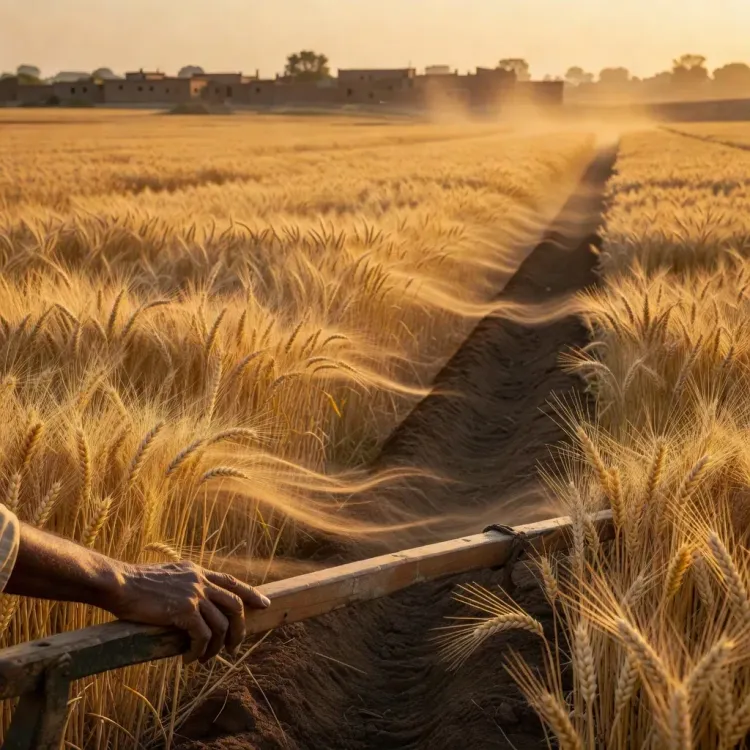
Pilot's sharpest charge at the BJP centres on the farm laws crisis. The Centre had enacted three contentious agricultural laws in September 2020, triggering a year-long agitation — one of the largest sustained protest movements in modern Indian history — led predominantly by farmers from Punjab and Haryana. The laws were eventually repealed in December 2021, but Pilot's framing is pointed: farmers had to fight long and hard for rights that should never have been endangered. 'अन्नदाता को अपने अधिकारों के लिए लंबा संघर्ष करना पड़ा' — 'the food-giver had to wage a long struggle for his own rights.' That grievance, in his telling, still defines BJP's relationship with the state.
AAP's governance gap — from bold pledges to daily reality
AAP swept to power in Punjab in March 2022 after a landslide victory in the state assembly elections, riding a wave of voter frustration and an agenda built around jobs, free electricity, improved public education, healthcare, a drug-free Punjab and corruption-free governance. Big promises. Pilot's critique is that the gap between those pledges and what people actually experience has become impossible to ignore. He does not name specific failures — but the framing itself is the indictment: accountability by contrast between promise and performance.
Punjab's identity and an uncomfortable question
Pilot closes on something deeper than policy arithmetic. He invokes Punjab's character — its hard work, entrepreneurial spirit, brotherhood and courage — before landing the sharper question: has the people of this state received what they were promised? It is a rhetorical device, but a pointed one. By anchoring the critique in identity and aspiration rather than just statistics, he broadens the audience from farmers and policy-watchers to anyone who considers themselves a Punjabi. The question hangs deliberately: 'क्या जनता को वह मिला, जिसकी उसने उम्मीद की थी?' — 'Did the people get what they had hoped for?'
With the next Punjab assembly elections on the horizon, every political actor in the state is now calibrating their narrative — and Congress, through Pilot, is staking out its lane as the party that calls both rivals to account simultaneously.
Point of View
Designed to position Congress as the credible alternative in a state where it was routed in 2022. By invoking the farm-laws episode, he ties the BJP to a wound that remains raw in rural Punjab; by targeting AAP's governance record, he chips at the anti-incumbency that the ruling party now carries. The appeal to Punjabi identity — hard work, enterprise, courage — is a rhetorical frame aimed at converting diffuse voter disappointment into a coherent Congress narrative ahead of the next assembly cycle. Whether Congress has the organisational strength to convert that narrative into votes is the central question the post leaves unanswered.
NationPress
5 Nov 2026
Frequently Asked Questions
What did Sachin Pilot say about Punjab?
On 5 November 2026 , Sachin Pilot stated that promises made to Punjab's people remain unfulfilled, blaming BJP for failing farmers and youth and AAP for not delivering on its pledges of jobs, education, healthcare, drug-free governance and anti-corruption measures.
Why does Sachin Pilot criticise BJP over Punjab farmers?
Pilot points to the 2020–21 farmers' protest , when the BJP-led central government passed three farm laws that triggered a year-long agitation by farmers mainly from Punjab and Haryana. The laws were repealed in December 2021 only after sustained protests, which Pilot frames as proof that farmers had to fight for rights that should have been protected.
What were AAP's promises to Punjab voters?
AAP won the February 2022 Punjab assembly elections on pledges including employment generation, improved public education and healthcare, making Punjab drug-free, and delivering corruption-free governance. Pilot's post alleges a large gap between those promises and on-the-ground reality.
What is Sachin Pilot's role in Congress for Punjab?
Sachin Pilot serves as general secretary of the Indian National Congress and is the party's designated in-charge for Punjab , making him the central figure responsible for Congress's political strategy and organisation in the state.
Is Punjab heading for assembly elections soon?
Punjab's next state assembly election is due after the current AAP government's term concludes. Pilot's pointed accountability narrative — directed at both BJP and AAP — signals that Congress is sharpening its electoral pitch well in advance of that contest.