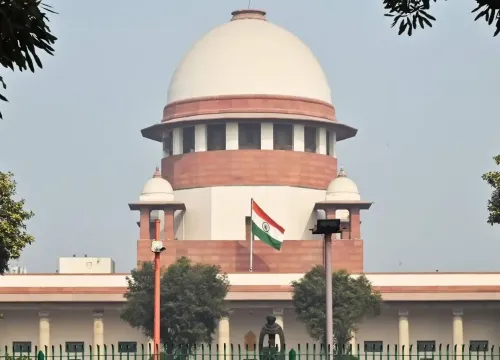
Supreme Court issues notice on PIL seeking barrier-free access in all residential buildings
Synopsis
The Supreme Court has agreed to examine whether India's residential buildings must legally comply with barrier-free accessibility norms under the RPwD Act, 2016 — a question that could reshape construction standards nationwide. With states applying wildly inconsistent rules, the PIL argues that millions of persons with disabilities cannot independently access their own homes, and that the law's housing reservation is meaningless if the homes themselves are inaccessible.
Key Takeaways
The Supreme Court issued notice on 5 November 2026 on a PIL seeking mandatory barrier-free access in all residential buildings under the RPwD Act, 2016 .
Notices were served to the Centre , Ministry of Housing and Urban Affairs , and Ministry of Rural Development , returnable in four weeks .
The case has been tagged with existing Supreme Court proceedings W.P.(C) No.
243 / 2005 to avoid fragmented adjudication.
The PIL, filed by advocate Ashutosh Senger , argues Sections 40, 44, and 2(x) of the RPwD Act make accessibility a mandatory — not aspirational — obligation in housing.
The petition highlights inconsistent state-level implementation, with some states excluding private residential buildings from accessibility norms entirely.
The plea also flags that housing reserved for persons with disabilities under Section 37 of the Act is rendered ineffective when the units themselves are inaccessible.
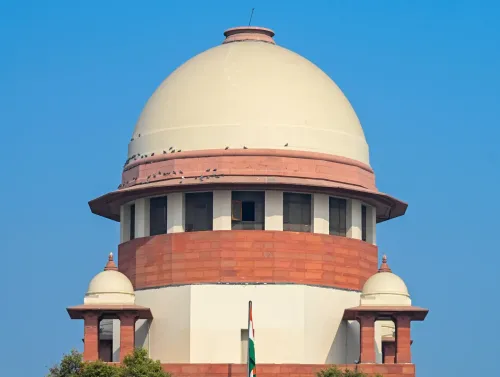
The Supreme Court on Thursday, 5 November 2026, issued notice on a Public Interest Litigation (PIL) seeking mandatory barrier-free accessibility in residential buildings, apartment complexes, and group housing developments across India under the Rights of Persons with Disabilities (RPwD) Act, 2016. The move signals judicial scrutiny of a gap that disability-rights advocates say has persisted for nearly a decade since the law was enacted.
Key Developments in Court
A bench comprising Justice Vikram Nath and Justice Aparesh Kumar Singh issued notice to the Centre, the Ministry of Housing and Urban Affairs (MoHUA), and the Ministry of Rural Development, directing them to respond within four weeks. The bench also agreed to tag the matter with W.P.(C) No. 243 / 2005 — existing Supreme Court proceedings that already examine accessibility-related issues — to prevent fragmented adjudication.
Counsel for the petitioner had urged the court to consolidate the cases, warning that handling them separately risked the issues being 'dealt with in a piecemeal manner.' The Justice Vikram Nath-led bench concurred, ordering the tagging accordingly.
What the PIL Argues
The petition, filed through advocate Ashutosh Senger, contends that barrier-free access is a mandatory statutory obligation under the RPwD Act — not a discretionary or aspirational target. It specifically invokes Sections 40 and 44 of the Act, which require the formulation and enforcement of accessibility standards and prohibit the grant of building permissions, completion certificates, and occupation certificates unless those standards are met.
The plea also relies on Section 2(x) of the RPwD Act, which expressly includes 'housing' within the definition of public facilities and services, to argue that accessibility obligations must extend to residential buildings. It further highlights that Section 37 of the Act — which reserves housing for persons with benchmark disabilities — risks being rendered ineffective if the allotted dwelling units themselves remain inaccessible.
The Ground Reality for Persons with Disabilities
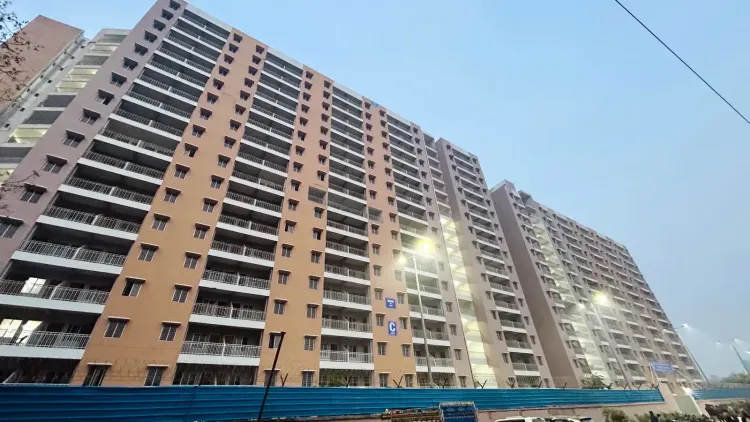
The petition paints a stark picture of the daily barriers faced by persons with disabilities in their own homes. 'Narrow doorways, inaccessible bathrooms and toilets, and inadequate circulation spaces often prevent wheelchair users and other persons with disabilities from independently entering, moving within and using their own homes,' the plea states.
Notably, the petition flags sharp inconsistencies in how states implement accessibility standards. While some states have extended requirements to residential buildings and apartment complexes, others restrict them to group housing projects or exclude private residential buildings altogether — meaning access depends on which state a person with a disability lives in, rather than a uniform national standard.
Policy Gaps and PMAY-U Link
The PIL also references the Pradhan Mantri Awas Yojana-Urban (PMAY-U) 2.0 Operational Guidelines, which require states and Union Territories to make provisions for ramps and other barrier-free facilities in housing projects. The petitioner argues that without mandatory national-level enforcement, these guidelines remain aspirational. The plea urges the court to direct compliance at the planning, design, and construction stages — rather than treating accessibility as an afterthought once buildings are already complete.
With notice now issued and the case linked to long-running disability-access proceedings, the court's eventual ruling could set a binding national benchmark for how residential construction must accommodate persons with disabilities across all states and Union Territories.
Point of View
Yet a decade on, the Centre has not enforced a uniform accessibility standard for residential construction — a gap this PIL now forces into judicial spotlight. The patchwork of state-level rules is not merely an administrative inconvenience; it means a wheelchair user's ability to live independently in their own home is a function of geography rather than rights. The tagging of this case with decade-old accessibility proceedings in the Supreme Court is itself telling: the judiciary has been circling this issue for years without a definitive resolution. The court's ability to mandate pre-construction compliance — rather than retrofitting — will determine whether this case produces structural change or another round of direction without enforcement.
NationPress
5 Nov 2026
Frequently Asked Questions
What is the Supreme Court PIL on barrier-free access in residential buildings?
It is a Public Interest Litigation filed through advocate Ashutosh Senger, seeking Supreme Court directions to make barrier-free accessibility mandatory in all residential buildings, apartment complexes, and group housing projects across India under the RPwD Act, 2016. The court issued notice to the Centre and two ministries on 5 November 2026, with a four-week deadline to respond.
Which law requires barrier-free access in housing for persons with disabilities?
The Rights of Persons with Disabilities (RPwD) Act, 2016 is the primary statute. Sections 40 and 44 mandate accessibility standards and bar the grant of building permissions, completion certificates, and occupation certificates unless those standards are met. Section 2(x) expressly includes 'housing' within the definition of public facilities and services.
Why is barrier-free access in residential buildings an issue despite the 2016 law?
Implementation has been inconsistent across states. Some states extend accessibility requirements to all residential buildings, while others limit them to group housing or exclude private buildings altogether. The PIL argues this creates an unequal patchwork where access depends on a person's state of residence rather than a uniform national standard.
What has the Supreme Court ordered so far?
The bench of Justice Vikram Nath and Justice Aparesh Kumar Singh issued notice to the Centre, the Ministry of Housing and Urban Affairs, and the Ministry of Rural Development, with a four-week return date. The case has also been tagged with existing Supreme Court proceedings W.P.(C) No. 243 / 2005 on broader accessibility issues.
How does this PIL relate to PMAY-U and housing reservations for persons with disabilities?
The petition references PMAY-U 2.0 Operational Guidelines, which require states to provide ramps and barrier-free facilities in housing projects. It also argues that Section 37 of the RPwD Act — which reserves housing for persons with benchmark disabilities — becomes meaningless if the allotted units are themselves inaccessible, making national enforcement essential.