Does Denying a Disabled Candidate's Appointment for 'No Vacancy' Violate the RPwD Act?

Synopsis
The Delhi High Court's recent ruling emphasizes the importance of compassionate appointment for disabled individuals, underlining that rejecting their application due to 'no vacancy' is against the RPwD Act. This landmark decision promotes inclusivity and equality for individuals with disabilities.
Key Takeaways
Delhi High Court emphasizes the importance of compassionate appointments.
Rejecting applications due to 'no vacancy' is against the RPwD Act .
Reasonable accommodation is a fundamental right.
The ruling promotes inclusivity and equality for individuals with disabilities.
Authorities are urged to reconsider applications with compassion.
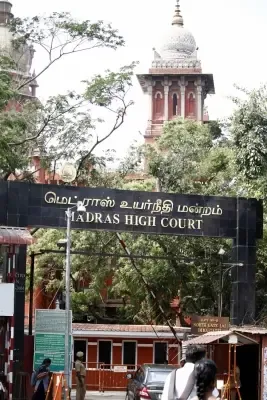
New Delhi, Oct 29 (NationPress) The Delhi High Court has determined that dismissing a physically disabled individual's application for compassionate appointment on the basis of "no vacancy" contradicts the stipulations of the Rights of Persons with Disabilities (RPwD) Act, 2016.
A bench comprising Justices Madhu Jain and Navin Chawla rejected a petition from the Commissioner of Police and others contesting an order from the Central Administrative Tribunal (CAT), which had instructed a reevaluation of a disabled candidate's application for compassionate appointment within the Delhi Police.
The individual in question, Amit Kumar, who is 75 percent physically disabled and comes from a Scheduled Caste community, sought a compassionate appointment after the demise of his father, a Multi-Tasking Staff (MTS) employee, during service in 2013.
The Delhi Police denied his application, citing an absence of vacancies for physically challenged individuals in the MTS cadre.
In its judgment, the Delhi High Court criticized the authorities, noting that continuous rejections for the same reason "defeat the very purpose of the compassionate appointment scheme," which is intended to provide "immediate assistance to the bereaved family."
The bench led by Justice Jain stated: "Rejecting his application solely on the basis of no vacancies for physically disabled individuals demonstrates a lack of awareness and sensitivity towards the principles of reasonable accommodation and inclusion."
It asserted that such an action "cannot withstand the test of fairness" and is "contrary to the principles of justice, equity, and good conscience that underpin our constitutional framework."
The Delhi High Court emphasized that this decision "defeats the provisions of the RPwD Act," highlighting that the Act guarantees equality, dignity, and non-discrimination for individuals with disabilities and obligates the government to provide reasonable accommodations in employment.
Citing Supreme Court rulings, the bench observed that the RPwD Act has attained the status of a "super statute," embodying the elements of a quasi-constitutional law. It ruled that "reasonable accommodation is not a discretionary measure, but a fundamental right essential for achieving substantive equality for persons with disabilities, forming part of the right to dignity as guaranteed under Article 21 of the Constitution of India."
The Delhi High Court established that while the Delhi Police's Standing Orders allowed age relaxation for physically handicapped dependents, "the provisions of the RPwD Act cannot be fulfilled merely by offering this age relaxation."
"The reasonable accommodations referenced must extend to reservations and special considerations for such individuals, particularly concerning compassionate appointments," it stated.
Concluding that the Delhi Police's approach to compassionate appointments was "arbitrary and lacking the compassion mandated by law in such instances," the bench instructed the Screening Committee to reassess Amit Kumar's case and issue the necessary orders within eight weeks.
"The Screening Committee of the petitioners (Delhi Police) is directed to reevaluate the respondent's case for compassionate appointment. Necessary orders in this regard shall be issued by the petitioners within a period of 8 weeks," it ordered.
Point of View
I highlight that the Delhi High Court's ruling is a pivotal moment for the rights of disabled individuals in India. It stresses the need for fairness and inclusivity in employment practices, reinforcing that compassionate appointments are not just a policy but a fundamental right. Our nation must continually strive to uphold these principles to ensure dignity and equality for all citizens.
NationPress
8 Oct 2026
Frequently Asked Questions
What is the RPwD Act?
The Rights of Persons with Disabilities Act, 2016, aims to ensure equality, dignity, and non-discrimination for persons with disabilities in India.
What did the Delhi High Court rule regarding disabled candidates?
The court ruled that rejecting a disabled candidate's application for compassionate appointment due to 'no vacancy' is against the RPwD Act.
What does 'reasonable accommodation' mean?
Reasonable accommodation refers to adjustments or modifications that enable individuals with disabilities to access employment opportunities.
What is the significance of this ruling?
This ruling promotes inclusivity and fairness in employment practices for disabled individuals, ensuring their rights are upheld.