How Does India's Ancient Wisdom Shape Its Strategic Perspective?
Synopsis
Explore how India's ancient wisdom informs its modern diplomatic strategies. From non-aggression to self-reliance, discover the principles shaping India's role on the global stage.
Key Takeaways
India's ancient philosophy shapes its diplomatic strategies.
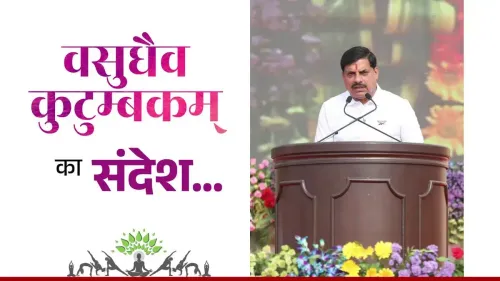
The concept of ‘Vasudhaiva Kutumbakam’ guides India's global outlook.
India promotes self-reliance in defense and economic policies.
Balanced relations with the US and Russia enhance India's geopolitical standing.
India advocates for global peace and conflict resolution.
New Delhi, Dec 21 (NationPress) The principles of non-aggression, synthesis, and unity of existence exemplify the profound ancient Indian philosophy that continues to influence the nation’s global standing today.
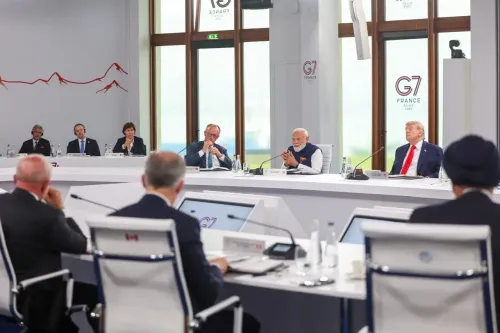
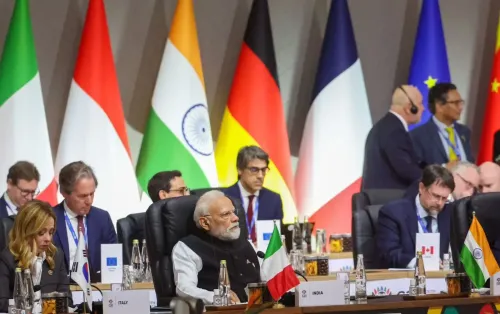
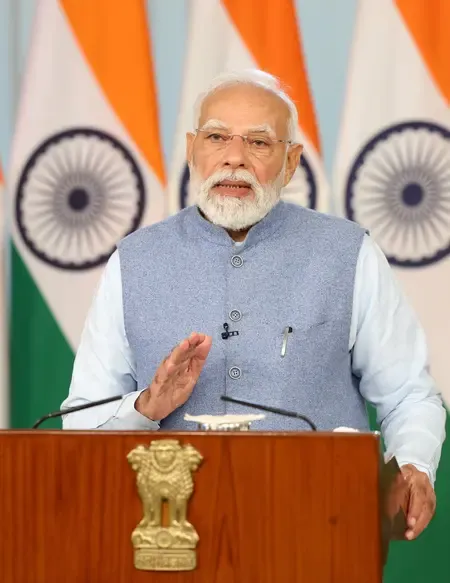
From its independence, India initiated its journey with the ethos of ‘friendship for all, malice towards none’. Fast forward, Prime Minister Narendra Modi echoed this sentiment with the concept of ‘Vasudhaiva Kutumbakam’ or ‘one earth one family one future’ during the G20 summit in Delhi in September 2023. This reflects the essence of India's strategic culture, promoting peaceful coexistence rather than mere pacifism. The Modi administration has clearly indicated that India's self-defense strategy will emphasize self-reliance to effectively deter adversaries.
In parallel, India has engaged in fostering bilateral relations with all nations to promote mutual security and economic interests, striving for peaceful resolutions to military conflicts while advocating for humanitarian causes globally. India firmly believes that in a multipolar world, it can play a significant role in promoting world peace without forming rigid alliances. This diplomatic approach has greatly benefited India.
The effectiveness of India’s international relations is reflected in the recently released US National Security Strategy by President Donald Trump on December 5. While the NSS centered on MAGA-related priorities, Trump recognized India's contributions to Indo-Pacific security through the Quad framework, elevating its significance as a strategic bloc against China. Although Trump has been known to cultivate ties with Pakistan, he acknowledged India’s pivotal role in promoting global peace and development, despite his personal interests.
During fluctuating Indo-US relations under Trump, the visit of President Vladimir Putin to India for the India-Russia summit has significantly enhanced India's geopolitical stability. Putin's visit coincided with US pressure on India to reduce oil imports from Russia due to the ongoing Ukraine-Russia conflict. Prime Minister Modi referred to the India-Russia partnership as a ‘guiding star’, while Putin reaffirmed their status as ‘important partners’ in trade, investment, and technology.
Despite US pressure, Russia committed to uninterrupted fuel supplies for India's burgeoning economy. Putin expressed that Russia is seeking a peaceful resolution to the Ukraine-Russia conflict, hinting at an understanding with Trump regarding territorial issues. The summit proved mutually beneficial, reinforcing geopolitical stability and balance.
India's strategy of avoiding alignment with any superpowers while fostering bilateral relationships has solidified its role as a significant advocate for global peace and development. This approach has allowed India to represent the global South effectively in forums like ASEAN and assist in conflict resolution, including the ongoing military issues in Ukraine and Gaza following recent terrorist attacks.
Nonetheless, India remains vigilant towards adversaries such as Pakistan, which has historically harbored Islamic terrorists, and China, which has formed an alliance with Pakistan aimed at countering India. Active in both BRICS and SCO, India is also enhancing its role within the Quad to counter Chinese assertiveness in the Indo-Pacific and uphold a ‘rules-based order’. Under Modi's leadership, India is advancing towards self-sufficiency in economic and military domains, aligning with its vision of strategic autonomy and positive non-alignment.
The current geopolitical landscape indicates a potential revival of the Cold War dynamics, with a resurgent China aspiring to establish itself as a dominant superpower while Russia plays a secondary role. In regions like Iran and Afghanistan, the US faces off against the China-Russia bloc. Additionally, the competing interests of the US and China in the global South and Trump’s revival of the Monroe Doctrine, which seeks to reinforce American influence, further complicate international relations.
Trump's inclination towards Russia amid the Ukraine crisis reflects a unique relationship with Putin. Despite US tariff pressures, India maintains balanced relations with both the US and Russia. Prime Minister Modi's assertion that ‘this is not an era of wars’ highlights India's commitment to peace while remaining prepared to counter China's hostility. A significant challenge lies in navigating the Trump administration's engagement with Pakistan, especially given its complicity in terrorism, in light of China's collaboration with Pakistan against India.
(The writer is a former Director of the Intelligence Bureau)
Point of View
It is crucial to recognize India's unique approach to international relations, which prioritizes bilateral partnerships over alignments. This strategy not only reinforces India's position on the global stage but also enables it to advocate for peace and development effectively.
NationPress
19 Sept 2026
Frequently Asked Questions
What is India's approach to international relations?
India promotes bilateral relations, emphasizing peaceful coexistence and self-reliance, avoiding rigid alliances with superpowers.
How does India's philosophy influence its strategic decisions?
India's ancient principles of non-aggression and unity guide its diplomatic strategies, fostering stability and cooperation.
What role does India play in global peace?
India advocates for global peace through its contributions to international forums and conflict resolution efforts.
How does India manage its relationships with superpowers?
India maintains balanced relations with both the US and Russia, emphasizing its strategic autonomy while addressing global challenges.
What are the challenges India faces in its strategic landscape?
India navigates complex geopolitical dynamics, including the Sino-Pak alliance and pressures from the US regarding its foreign relations.