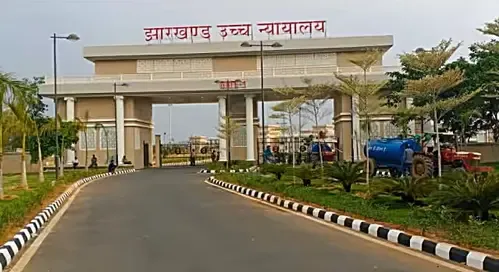
Jharkhand HC orders appointment of PwD candidate rejected over 3-second running test delay
Synopsis
A Jharkhand High Court ruling has exposed a glaring gap in how government recruiters treat differently-abled candidates: a man cleared the written test, ran within three seconds of the cut-off, and was still rejected — because no accommodation was ever offered. The court has now ordered his appointment within eight weeks, underscoring that administrative rules cannot trump parliamentary disability law.
Key Takeaways
The Jharkhand High Court on 4 November 2026 ordered the state government to appoint a PwD candidate rejected over a 3-second overrun in a running test.
The candidate had cleared the written examination for 328 chowkidar posts in Dumka district under Advertisement No.
He was made to run alongside general-category candidates with no disability accommodation provided.
The court held that recruitment rules cannot override the Rights of Persons with Disabilities Act, 2016 , and cited the Supreme Court's Vikash Kumar vs UPSC ruling on reasonable accommodation.
11 of 13 PwD-reserved posts in Dumka district were vacant at the time of the ruling.
Authorities have been directed to issue an appointment letter within eight weeks .
The Jharkhand High Court on Wednesday, 4 November 2026, directed the state government to appoint a differently-abled candidate who had been disqualified from a government job solely because he completed a running test three seconds over the prescribed limit — without being offered any disability-related accommodation. The court ruled that denying appointment on such narrow grounds, absent reasonable accommodation, violates both the letter and spirit of a central parliamentary law.
Background: What Led to the Case
The case stems from a recruitment drive for 328 chowkidar (watchman) posts in Dumka district under Advertisement No. 01/2025. The petitioner, belonging to the Persons with Disabilities (PwD) category, had cleared the written examination and was subsequently called for the physical fitness test.
During the running event, he was made to compete alongside general-category candidates, with no additional time, relaxation, or special assistance provided on account of his disability. He completed the run in 10 minutes and 3 seconds — exceeding the cut-off by just three seconds — and was declared ineligible on that basis alone.
Legal Arguments and the Court's Findings
Advocate Shubham Mishra, appearing for the petitioner, invoked Sections 2(y) and 20 of the Rights of Persons with Disabilities Act, 2016, which impose a statutory obligation on authorities to provide reasonable accommodation to persons with disabilities during recruitment processes. He also cited the Supreme Court's ruling in Vikash Kumar vs Union Public Service Commission, which recognised reasonable accommodation as a fundamental component of disability rights.
The state government defended its position by arguing that the existing recruitment rules made no provision for additional time in the running test. The High Court rejected this contention outright, observing that administrative rules and notifications cannot override a parliamentary statute. Denial of reasonable accommodation, the court held, is contrary to the mandate of the Disabilities Act.
Vacant PwD Seats: A Key Factor
The court also noted a striking factual detail: 11 of the 13 posts reserved for the PwD category in Dumka district remained vacant. This further reinforced the court's view that the disqualification was disproportionate and contrary to the broader legislative intent of ensuring meaningful employment for persons with disabilities.
Court's Directive
Taking these circumstances together, the Jharkhand High Court held that the petitioner is entitled to appointment and directed the authorities to issue an appointment letter within eight weeks. The ruling sets a clear precedent that recruitment rules must be read in harmony with disability rights legislation, and that marginal physical test shortfalls — where accommodation was withheld — cannot be used to deny employment to PwD candidates.
The judgment is likely to have implications for other ongoing and future government recruitment processes across Jharkhand and potentially other states where PwD candidates face similar gaps in accommodation during physical fitness assessments.
Point of View
2016, is unambiguous on reasonable accommodation, yet the state government argued in court that its own administrative rules took precedence over a parliamentary statute. That argument was rightly rejected, but the fact that it was made at all points to deep institutional inertia. With 11 of 13 PwD posts in Dumka lying vacant, the question is not merely legal but administrative: are recruitment processes designed to include or, in practice, to exclude? Other states running similar physical tests for government posts should treat this judgment as a compliance audit prompt, not an isolated Jharkhand story.
NationPress
4 Nov 2026
Frequently Asked Questions
Why did the Jharkhand High Court order the appointment of the PwD candidate?
The court ruled that the candidate, who belongs to the Persons with Disabilities category, was denied reasonable accommodation during the running test and was unfairly disqualified for finishing just three seconds over the prescribed limit. It held that this violated the Rights of Persons with Disabilities Act, 2016, and directed the state government to issue an appointment letter within eight weeks.
What is 'reasonable accommodation' under the Rights of Persons with Disabilities Act, 2016?
Under Sections 2(y) and 20 of the Act, employers and recruiting authorities are legally obligated to make necessary and appropriate modifications or adjustments to enable persons with disabilities to participate on an equal basis in recruitment and employment. Failure to provide such accommodation can render a disqualification legally void, as the Jharkhand High Court's ruling illustrates.
Can state recruitment rules override a central law on disability rights?
No. The Jharkhand High Court explicitly held that administrative rules and recruitment notifications cannot override the provisions of a parliamentary statute. The Rights of Persons with Disabilities Act, 2016, as a central law, takes precedence over state-level recruitment guidelines that do not account for reasonable accommodation.
What was the recruitment drive at the centre of this case?
The case concerned the recruitment of 328 chowkidar (watchman) posts in Dumka district, Jharkhand, under Advertisement No. 01/2025. The petitioner had cleared the written examination before being disqualified at the physical test stage due to the three-second overrun.
How many PwD posts were vacant in Dumka district at the time of the ruling?
Eleven of the thirteen posts reserved for the PwD category in Dumka district were vacant. The court cited this as an additional reason to hold that the petitioner's disqualification was disproportionate and contrary to the legislative intent of ensuring employment for persons with disabilities.