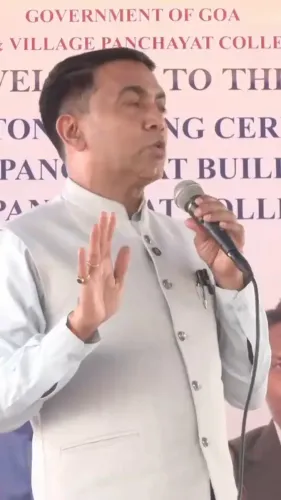
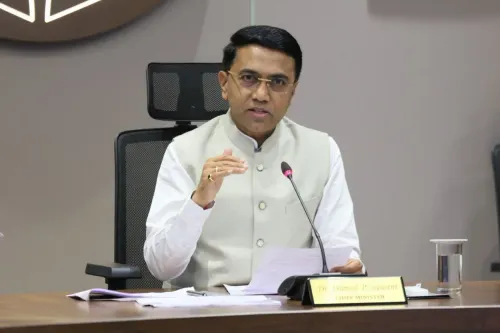
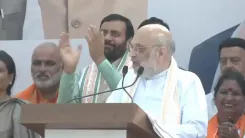
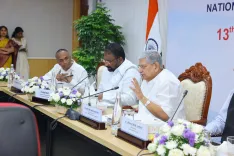
CM Sawant joins live Conference of Mining Ministers on sector reforms

Synopsis
Goa Chief Minister Pramod Sawant joined the live Conference of Mining Ministers on November 5, 2026, as central and state governments coordinated on reforms in the mines and coal sectors under post-MMDR Amendment and Atmanirbhar Bharat frameworks.
Key Takeaways
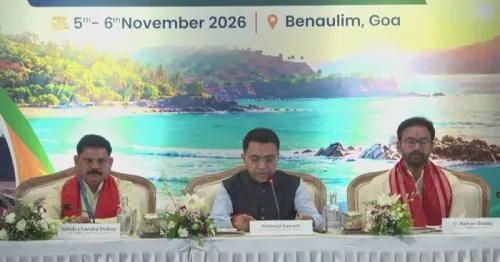
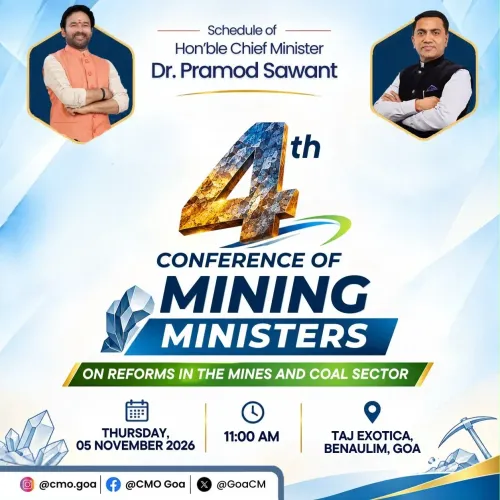
Goa Chief Minister Pramod Sawant participated live in the Conference of Mining Ministers on November 5, 2026 .
The conference is a coordination mechanism between the Ministry of Mines , Ministry of Coal , and state governments that hold mineral rights.
The MMDR Amendment Act, 2021 reformed auction processes and exploration rights to boost domestic mineral output.
Commercial coal mining was opened to private players in 2020 under the Atmanirbhar Bharat initiative to reduce import dependence.
Goa has a history of iron-ore sector disputes, making CM Sawant's engagement with national mining reform forums especially significant.
Key watch-points include new mineral block auction announcements and state-level implementation timelines emerging from the session.
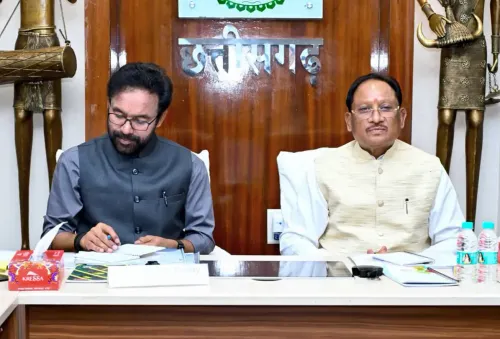
The union of India's mining and coal sectors took centre stage on Thursday, November 5, 2026, as Goa Chief Minister Pramod Sawant tuned in live to the Conference of Mining Ministers, a high-level coordination forum where state governments and central ministries converge to push reforms in the mines and coal sectors.
What the Mining Ministers' Conference means for India's mineral future
The Conference of Mining Ministers is not a ceremonial gathering — it is the principal mechanism through which the Ministry of Mines and the Ministry of Coal align with state governments, which hold the actual mineral rights under India's federal structure. When a Chief Minister joins this forum, it signals active state-level engagement with the Union's reform agenda. For Goa, a state with a layered and often contentious history in iron-ore mining, that engagement carries particular weight.
The policy backdrop shaping these discussions runs deep. The Mines and Minerals (Development and Regulation) Amendment Act, 2021 overhauled auction processes and exploration rights to accelerate domestic mineral output. Before that, 2020 saw the government throw open commercial coal mining to private players under the Atmanirbhar Bharat initiative — a structural break from decades of state-sector dominance aimed at cutting India's costly import dependence.
Goa's stake in a national conversation
Chief Minister Sawant, in office since 2019, has navigated Goa's iron-ore sector through regulatory disputes and auction-based resumptions. His presence at a live national forum on mining reforms underlines that state-level implementation — timelines, local auction readiness, land and environment clearances — remains the chokepoint between well-drafted central legislation and actual mineral output on the ground.
Successive central governments have pursued incremental liberalisation of both sectors, using legislative amendments and competitive auctions to improve ease of doing business and lift domestic production. The Mining Ministers' Conference tests whether that liberalisation is translating into coordinated action across state capitals.
What to watch after the broadcast
The concrete outcomes to track are announcements of new mineral or coal block auctions, possible further amendments to the MMDR Act, and state-level implementation timelines that individual Chief Ministers may commit to after the session. For observers of Goa's mining sector, any signal on iron-ore auction schedules or regulatory simplifications would be particularly significant.
India's mineral ambitions — lithium, rare earths, coking coal — are increasingly tied to whether Union-state coordination forums like this one move from agenda to action.
Point of View
Whose iron-ore sector has repeatedly stalled at the state implementation stage despite central policy shifts, Sawant's visible engagement may be partly about signalling administrative seriousness to both Union ministries and industry. Broader pattern: the MMDR Amendment and commercial coal mining reforms have transferred accountability to states, making these conferences the real test of federal coordination on a sector critical to India's industrial and energy transition ambitions.
NationPress
5 Nov 2026
Frequently Asked Questions
What is the Conference of Mining Ministers in India?
The Conference of Mining Ministers is a high-level forum where the central Ministry of Mines, Ministry of Coal, and state governments coordinate on mining policy, reform implementation, and block auctions, since states hold the actual mineral rights under India's federal structure.
Why did Goa CM Pramod Sawant attend the Mining Ministers' Conference?
Chief Minister Pramod Sawant joined the November 2026 conference as part of Goa's engagement with national mining reforms; Goa has historically been central to iron-ore mining policy discussions given its sector disputes and auction-based mining resumptions.
What is the MMDR Amendment Act 2021?
The Mines and Minerals (Development and Regulation) Amendment Act, 2021 introduced changes to auction processes and mineral exploration rights in India, aiming to accelerate domestic mineral production and improve ease of doing business in the sector.
When was commercial coal mining opened to private companies in India?
In 2020, the Indian government opened commercial coal mining to private players as part of the Atmanirbhar Bharat economic package, breaking from decades of state-sector dominance to reduce India's coal import dependence.
What outcomes should be watched after the November 2026 Mining Ministers' Conference?
Key developments to monitor include announcements of new mineral or coal block auctions, any proposed amendments to the MMDR Act, and state-level implementation timelines committed to by individual Chief Ministers after the session.