CM Sai Partners Chhattisgarh with IISc Bengaluru for Science Push
Synopsis
Chhattisgarh CM Vishnu Deo Sai announced a government partnership with IISc Bengaluru to establish research centres, upgrade science teacher training, and promote medical research — aiming to build a homegrown innovation pipeline for the state's youth.
Key Takeaways
Chhattisgarh CM Vishnu Deo Sai announced a collaboration with IISc Bengaluru on 5 November 2026 to advance science, technology, and research in the state.
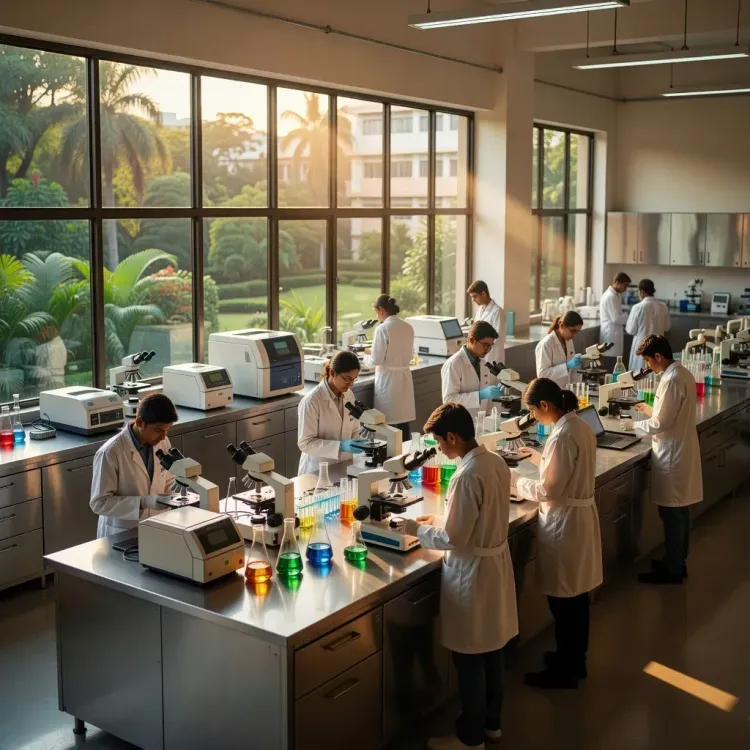
The plan covers three pillars: setting up modern diagnostic and research centres , training science and mathematics teachers , and promoting medical research .
IISc , founded in 1909 , is India's premier public research university — making it one of the most prestigious institutional partners a state government can claim.
The announcement aligns with the National Education Policy 2020 's push for stronger state-national research institution linkages.
Multiple BJP-ruled states have pursued similar IISc and national-lab tie-ups since 2023 , reflecting a wider drive to decentralise India's research capacity.
Formal MoU details, funding figures, and implementation timelines are yet to be announced.
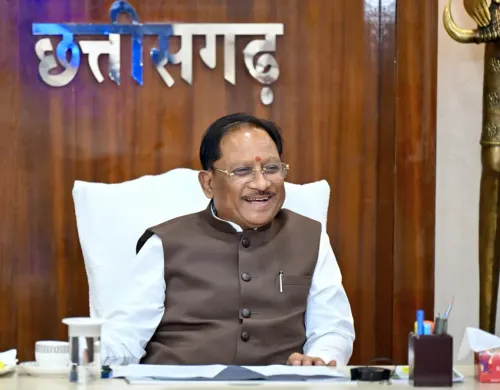
A landlocked state historically associated with forests and mineral wealth is now placing a deliberate bet on laboratories and research centres. Chhattisgarh Chief Minister Vishnu Deo Sai announced on Thursday, 5 November 2026, that his government will partner with the Indian Institute of Science (IISc), Bengaluru — India's premier public research university — to open new doors for the state's youth in science, technology, and research.
Posting on X, CM Sai wrote: 'छत्तीसगढ़ के युवाओं को विज्ञान, तकनीक और अनुसंधान के क्षेत्र में आगे बढ़ाने के लिए हमारी सरकार IISc, बेंगलुरु के साथ मिलकर काम करेगी।' ('Our government will work in collaboration with IISc, Bengaluru, to advance Chhattisgarh's youth in science, technology, and research.') The announcement identifies three concrete pillars: establishing modern diagnostic and research centres in the state, providing stronger training to science and mathematics teachers, and promoting medical research.
What the IISc Tie-Up Is Meant to Deliver
Founded in 1909, IISc Bengaluru ranks among Asia's leading research institutions, with deep expertise in engineering, biological sciences, and interdisciplinary innovation. Anchoring a Chhattisgarh collaboration to that name signals ambition: the state is not reaching for a regional affiliate but for a national standard-bearer. The goal, as CM Sai framed it, is straightforward — 'that Chhattisgarh's youth receive new opportunities and their talent makes a mark across the country and the world.'
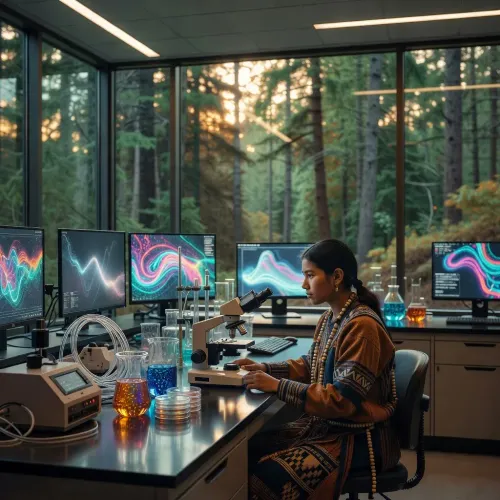
Teacher training sits at the heart of the plan. Science and mathematics instruction at the school level is widely recognised as the pipeline to research careers, and upgrading that pipeline through an IISc partnership could have a multiplier effect that outlasts any single research centre. Medical research as a stated priority also aligns with Chhattisgarh's public-health challenges, where tribal and rural populations remain underserved by advanced diagnostic infrastructure.
A Pattern Bigger Than One State
Chhattisgarh's move fits into a broader national pattern. Since 2023, multiple BJP-ruled states have announced tie-ups with IISc and other national laboratories, part of a deliberate effort to decentralise research capacity away from metros like Bengaluru, Hyderabad, and Mumbai. The National Education Policy 2020 explicitly calls for stronger linkages between state universities and national research institutions — this announcement reads as a state-level implementation of that federal ambition.
CM Sai's government, which came to power after the December 2023 assembly elections, has steadily positioned education and skill development as signature priorities alongside its better-publicised infrastructure and welfare commitments. An IISc partnership, if formalised through a memorandum of understanding, would be one of the most high-profile institutional moves of his tenure so far.
The specifics — funding allocations, timelines, and the exact scope of research centres — remain to be formally announced. What Thursday's post establishes is the political direction: Chhattisgarh is no longer content to send its brightest students elsewhere. The state wants the science to happen here.
Point of View
An IISc-backed diagnostic infrastructure could have genuine impact beyond optics. The pattern of BJP states clustering around IISc partnerships also raises a governance question: whether these ties translate into funded, operational centres or remain at the announcement stage. The proof will be in the MoU and the budget line.
NationPress
5 Nov 2026
Frequently Asked Questions
What did Chhattisgarh CM Vishnu Deo Sai announce about IISc Bengaluru?
CM Vishnu Deo Sai announced on 5 November 2026 that the Chhattisgarh government will collaborate with IISc Bengaluru to set up modern research centres in the state, provide better training to science and mathematics teachers, and promote medical research.
What is IISc Bengaluru and why is this partnership significant?
The Indian Institute of Science (IISc), established in 1909 in Bengaluru, is India's foremost public research university. A formal state-government tie-up with IISc gives Chhattisgarh access to elite research expertise and signals a high-ambition approach to building local science and innovation capacity.
How does this initiative relate to the National Education Policy 2020?
NEP 2020 calls for stronger linkages between state universities and national research institutions. The Chhattisgarh–IISc collaboration is a direct state-level effort to implement that goal by connecting local education infrastructure to a premier national institution.
Which areas does the Chhattisgarh–IISc collaboration focus on?
The announced focus areas are three: establishing modern diagnostic and research centres in Chhattisgarh, upgrading training for science and mathematics teachers across the state, and advancing medical research.
Has the MoU between Chhattisgarh and IISc been signed yet?
As of 5 November 2026, CM Sai's post is a forward-looking announcement. Formal MoU details, funding allocations, and implementation timelines have not yet been made public.