CM Sai Launches Chhattisgarh Startup Policy 2025-30
Synopsis
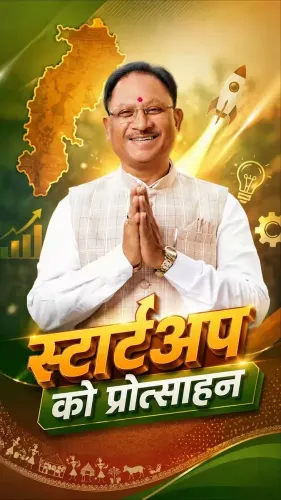
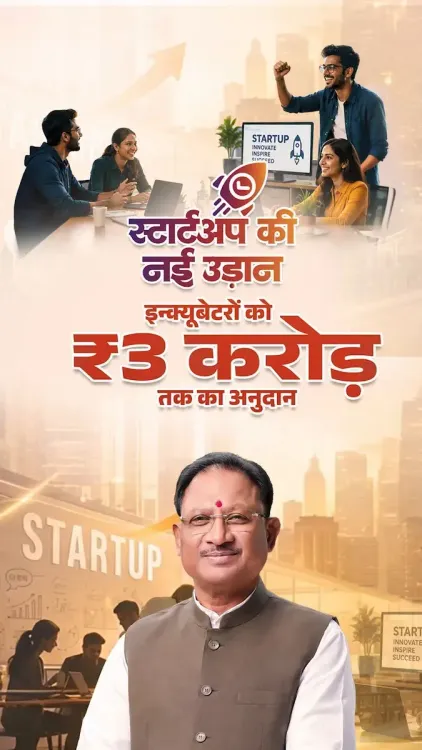
Chhattisgarh CM Vishnu Deo Sai announced the 'Innovation and Startup Promotion Policy 2025-30' on 28 July 2026, aiming to channel youth talent into entrepreneurship and position the state as a leading hub for startups and investment.
Key Takeaways
Chhattisgarh Chief Minister Vishnu Deo Sai announced the 'Chhattisgarh Innovation and Startup Promotion Policy 2025-30' on 28 July 2026 .
The policy targets young entrepreneurs and startup founders as its primary beneficiaries.
The stated goal is to make Chhattisgarh a leading centre for innovation, startups, and investment.
The announcement aligns with the national Startup India framework launched in 2016 , as states compete to build local ecosystems.
Specific provisions, budget allocation, and implementation timelines have not yet been publicly detailed.
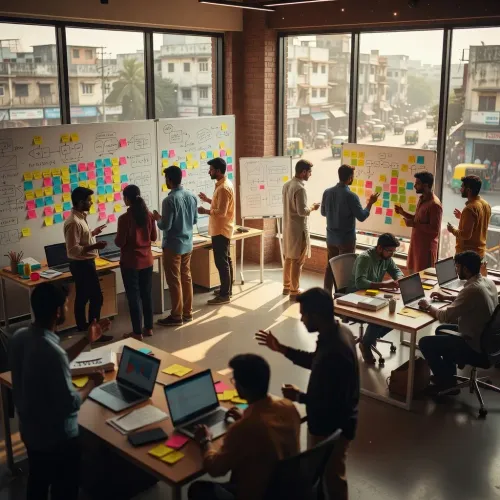
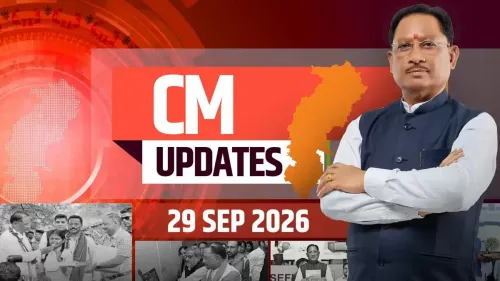
Chhattisgarh is placing a bet on its youth. Chief Minister Vishnu Deo Sai announced the 'Chhattisgarh Innovation and Startup Promotion Policy 2025-30' on Tuesday, 28 July 2026, framing it as the state government's clearest signal yet that entrepreneurship — not just industry — will drive the next phase of Chhattisgarh's economic growth.
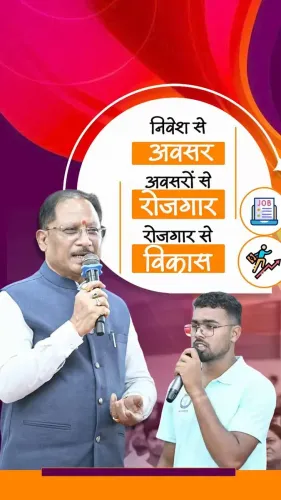
Posting in Hindi, CM Sai wrote: 'सपनों को अवसर और नवाचार को नई पहचान देना ही सुशासन का ध्येय है' — 'Giving dreams an opportunity and innovation a new identity is the very purpose of good governance.' The five-year policy, he said, is designed to give 'new momentum to the talent and entrepreneurship of youth,' with an explicit ambition: make Chhattisgarh a leading centre for innovation, startups, and investment.
A State Staking Its Claim in India's Startup Map
The announcement lands in a well-established national pattern. Since the Startup India initiative was launched in 2016, states across the country have scrambled to build local ecosystems that can compete with the gravitational pull of Bengaluru, Hyderabad, and Delhi-NCR. Chhattisgarh — a resource-rich central Indian state historically associated with steel, coal, and agriculture — is now signalling a deliberate pivot toward knowledge-driven enterprise.
The BJP government in Raipur has been pushing an industrial and entrepreneurial growth agenda since CM Sai took office. A dedicated five-year startup policy, spanning 2025 to 2030, is the most structured expression of that push to date — targeting young entrepreneurs and startup founders as the primary beneficiaries.
What the Policy Promises — and What Remains to Be Seen
The specific provisions, budget allocation, and implementation timeline of the 2025-30 policy have not yet been detailed publicly. The announcement establishes intent and direction; the architecture of incentives, incubation support, and investment facilitation is what young entrepreneurs across the state will be watching for next.
The stakes are real. Chhattisgarh's youth population is large and its startup ecosystem is nascent — which means the runway for growth is significant, provided the policy translates into accessible, on-the-ground support rather than a framework that exists only on paper.
If the implementation matches the ambition, Chhattisgarh could emerge as a genuine case study in how a non-metro state builds a startup culture from the ground up. The clock on the 2025-30 window has already started.
Point of View
However, will come in implementation — whether the policy delivers accessible incentives and measurable startup registrations, or remains an aspirational document. How Chhattisgarh performs on those metrics over the next two years will determine whether this announcement becomes a genuine inflection point or a footnote.
NationPress
27 Oct 2026
Frequently Asked Questions
What is the Chhattisgarh Innovation and Startup Promotion Policy 2025-30?
It is a five-year state policy announced by Chief Minister Vishnu Deo Sai on 28 July 2026, aimed at promoting youth entrepreneurship, innovation, and investment in Chhattisgarh. Specific provisions and budget allocations have not yet been publicly detailed.
Who announced the Chhattisgarh startup policy?
Chhattisgarh Chief Minister Vishnu Deo Sai, a BJP leader, announced the policy via a post on X on 28 July 2026.
What is the goal of the Chhattisgarh startup policy?
The stated goal is to give new momentum to the talent and entrepreneurship of youth and to position Chhattisgarh as a leading centre for innovation, startups, and investment.
How does the Chhattisgarh startup policy relate to Startup India?
The state policy builds on the national Startup India initiative launched in 2016. Like several other Indian states, Chhattisgarh is creating a dedicated framework to develop a local startup ecosystem aligned with national goals.
Who will benefit from the Chhattisgarh Innovation and Startup Promotion Policy?
The policy primarily targets young entrepreneurs and startup founders in Chhattisgarh, aiming to channel their talent into enterprise creation and attract investment to the state.