PM Modi: India's Metro network grew from 248 km to 1,200 km since 2014
Synopsis
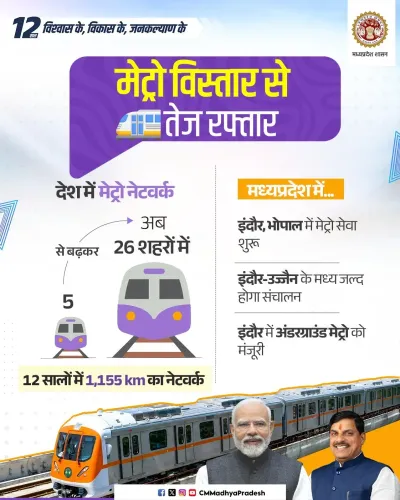
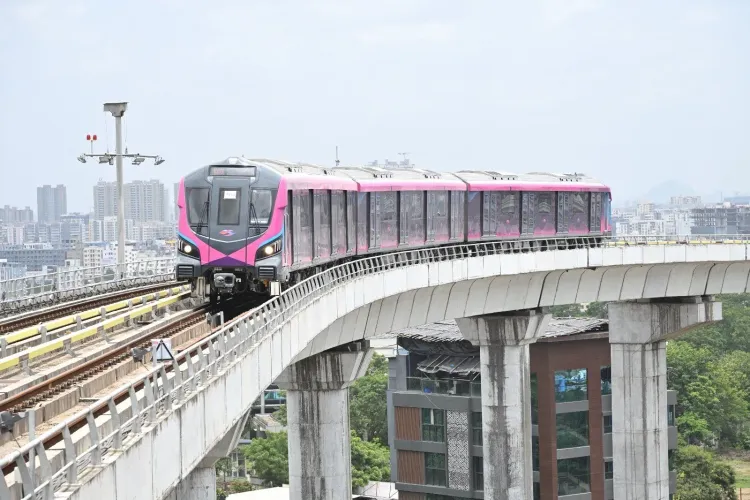
Prime Minister Narendra Modi highlights India's metro rail expansion from 248 km across 5 cities in 2014 to nearly 1,200 km across 26 cities today, with over 1 crore daily commuters — crediting AMRUT and the National Metro Rail Policy as key drivers.
Key Takeaways
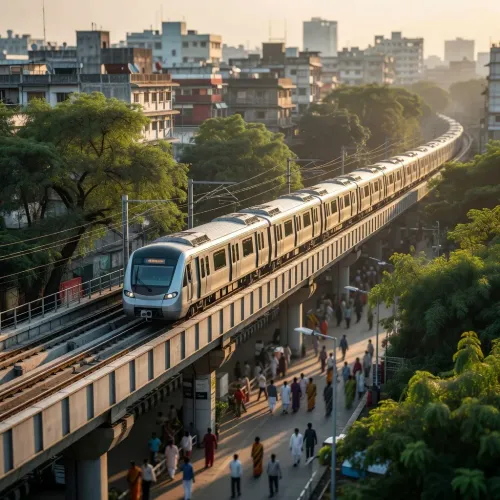
In 2014 , India had 248 km of metro lines across just 5 cities ; today the network spans nearly 1,200 km across 26 cities .
Over 1 crore people travel by metro every day across India, according to PM Modi's post.
Pune was cited as a prime example of a city that could not afford decades more of delay in metro connectivity.
The AMRUT scheme (launched 2015 ) and the National Metro Rail Policy ( 2017 ) provided the policy and funding framework for the expansion.
The Ministry of Housing and Urban Affairs oversees metro project sanctioning and coordination across all cities.
PM Modi framed the expansion's impact in human terms: less commute time, more family time, and greater urban productivity.
From 5 cities to 26, from 248 kilometres of track to nearly 1,200 — India's metro rail story since 2014 is one of the sharpest infrastructure pivots in the country's urban history. Prime Minister Narendra Modi framed that transformation in blunt terms on Thursday, 5 November 2026, asking what would have happened if the pre-2014 pace had simply continued: 'YEARS… no… DECADES perhaps.'
The 248-km baseline that set the challenge
When the Modi government took office in 2014, metro rail in India was essentially a Delhi-centric story, with a handful of other cities — Mumbai, Kolkata, Bengaluru and Chennai — holding the remaining operational lines. Combined, those networks totalled 248 km. By any measure relative to India's exploding urban population, that was a thin safety net for city commuters.
The Prime Minister invoked Pune specifically — a city of several million, home to a booming IT and manufacturing corridor — as the clearest example of a metro that could not wait another decade. It is a pointed choice: Pune's metro ambitions had been discussed and planned for years before work finally accelerated under central government push.
How 26 cities and 1,200 km got built
Two policy instruments gave the expansion its spine. The Atal Mission for Rejuvenation and Urban Transformation (AMRUT), launched in 2015, channelled central funding into urban mobility infrastructure across a wider set of cities. Two years later, the National Metro Rail Policy of 2017, approved by the Union Cabinet, standardised project design, introduced greater private-sector participation, and set a template for faster sanctioning of new corridors — breaking the earlier city-by-city, case-by-case bottleneck.
The Ministry of Housing and Urban Affairs became the operational nerve centre for this rollout, coordinating between state governments, special-purpose vehicles for each city's metro, and central funding windows. The result, as stated by the Prime Minister, is a network that now spans 26 cities and carries over 1 crore passengers every single day.
What 1 crore daily commuters actually means
Modi's framing deliberately moves the argument away from engineering statistics. 'Less time in traffic, more family time, greater productivity and better opportunities' — these are the downstream effects he is pointing at. A commuter in Nagpur, Lucknow, or Kochi who would have been stuck on an overcrowded road is now on a climate-controlled metro car. That shift compresses daily travel time, reduces vehicular pollution, and — over millions of trips — has measurable effects on urban economic output.
India's urban centres are projected to absorb hundreds of millions of additional residents over the coming decades. Metro rail, in that context, is not a convenience — it is load-bearing infrastructure for the country's growth story.
What comes next for India's urban rail map
The corridors already under construction in several cities, plus any new project approvals expected in forthcoming Union Budget cycles and future AMRUT phases, will determine whether the momentum sustains. Operational start dates for partially complete lines — including stretches in Pune itself — are the near-term milestones that will test whether the political promise converts into daily commuter reality.
India added roughly 950 km of metro network in roughly 12 years. The next phase will reveal whether that pace can be held, or bettered — city by city, corridor by corridor.
Point of View
But the numbers it rests on reflect a genuine and significant policy shift. The pre-2014 metro rollout was essentially confined to a handful of large metros; the post-2014 expansion into tier-2 cities represents a structural change in how central government funds and sanctions urban transport projects. By anchoring the message on AMRUT and the National Metro Rail Policy, the BJP is building a durable electoral narrative around urban governance — a voter segment that has grown rapidly as India urbanises. The real test, however, is whether project timelines and ridership quality in newer cities will match the ambition of the headline figures.
NationPress
5 Nov 2026
Frequently Asked Questions
How many km of metro does India have in 2026?
According to Prime Minister Narendra Modi's post, India now has nearly 1,200 km of metro lines across 26 cities as of November 2026, up from 248 km across 5 cities in 2014.
How many people travel by metro in India every day?
PM Modi stated that over 1 crore (10 million) people travel by metro every day across India's urban rail network.
What was India's metro network length before 2014?
Before 2014, India had 248 km of metro lines spread across just 5 cities, according to PM Modi's statement on 5 November 2026.
What is the National Metro Rail Policy of India?
The National Metro Rail Policy was approved by the Union Cabinet in 2017 to standardise metro project design across cities, encourage private-sector participation, and speed up the sanctioning of new metro corridors nationwide.
When will Pune Metro be fully operational?
Pune Metro has been expanding in phases; specific operational start dates for all corridors depend on ongoing construction timelines and central government approvals. PM Modi referenced Pune as a city that could not afford decades more of delay under the old expansion pace.