Carney admits Canada planned for 'extreme tail risk' of US invasion
Synopsis
Canadian Prime Minister Mark Carney has confirmed his government ran contingency plans for a US invasion — not as a likely scenario, but as responsible risk management in response to Trump's persistent '51st state' rhetoric. Combined with Canada's push for EU ties and a retaliatory tariff standoff, this marks a profound rupture in one of the world's most stable bilateral relationships.
Key Takeaways
Canadian PM Mark Carney confirmed his government assessed the 'extreme tail risk' of a US military invasion , telling The New York Times it was standard risk management.
President Donald Trump has repeatedly suggested Canada should become America's 51st state , prompting the contingency review.
Carney stressed a US invasion was not a base case — but that examining it was 'irresponsible not to' do.
Trade tensions have escalated with the Trump administration imposing higher tariffs on Canadian goods and Ottawa responding with retaliatory measures.
Reports of Canada potentially becoming an EU associate member drew a threat from Trump of 'very serious tariffs' on Europe.
Carney has framed the dispute as proof that Canada's 40-year model of deep US economic integration is no longer viable.
Canadian Prime Minister Mark Carney has revealed that his government formally assessed the 'extreme tail risk' of a United States military invasion of Canada, after President Donald Trump repeatedly floated the idea of absorbing Canada as America's 51st state. The disclosure, made in an interview with The New York Times, represents the most candid official acknowledgement yet that Trump's rhetoric prompted real contingency planning at the highest levels of the Canadian government.
What Carney Said
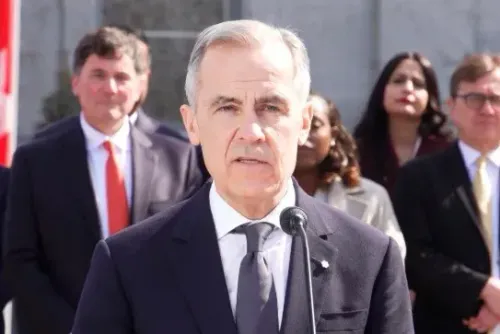
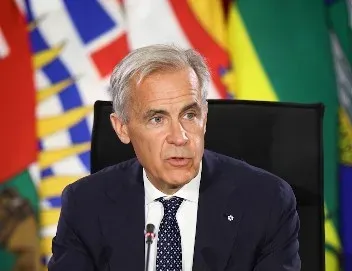
Carney was direct about the reasoning behind the contingency exercise. 'I think you have a responsibility in these roles to look at extreme tail risk. That's just risk management. That's not a base case,' he told The New York Times, adding that 'it would be irresponsible not to.' The prime minister was careful to stress that a US invasion was not considered a likely outcome — but that examining even remote worst-case scenarios was standard practice for a head of government.
The remarks were subsequently highlighted by Fox News on Thursday, as relations between Washington and Ottawa faced fresh strains over tariffs and Canada's accelerating push to reduce its economic dependence on the United States.
The Tariff War Behind the Tensions
Trade friction between the two neighbours has intensified sharply over the past year. The Trump administration has imposed elevated tariffs on Canadian products, and Ottawa has responded with retaliatory measures of its own. Carney has framed the dispute as a wake-up call for Canada's economic model, arguing it exposed the danger of over-reliance on a single partner.
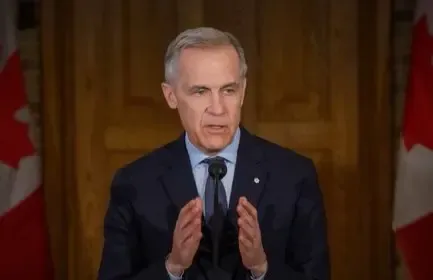
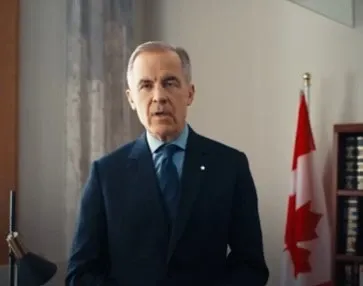
'The past 40 years has been a period of deeper economic integration with the United States. Truth is, it was easy business, but it meant we relied too much on one economic partner. It's clear that time is over,' Carney said in a video statement earlier this month. He added: 'This is why our plan, since I came into office, has been development and diversification, not denial, waiting to go back to some good old days and not continued dependence.'
Canada Eyes EU Partnership, Trump Threatens Tariffs
In pursuit of diversification, Canada has actively sought to expand commercial relationships beyond the United States. Reports that Ottawa could become an associate member of the European Union drew a sharp public response from Trump. 'I think it's laughable,' he said when asked about the possibility, warning: 'If they do that, if I think it's at all a hostile act, I will put very serious tariffs or stop trading with Europe on many things.'
Trump qualified his response by suggesting intent would determine his reaction. 'If Europe does that with a bad intention, if it's a good intention, that's fine, if it's a bad intention, we'll put very heavy tariffs on Europe,' he said. The remarks illustrated how what began as a bilateral tariff dispute has widened into a broader contest over Canadian sovereignty and strategic realignment.
Wider Implications
Carney has consistently rejected any suggestion that Canada might become part of the United States, maintaining that position publicly even as Trump's comments on the subject have persisted. Analysts note that the prime minister's willingness to discuss invasion-risk contingency planning — however improbable the scenario — signals a fundamental shift in how Ottawa perceives its relationship with Washington. This is not merely a trade spat; it is, according to Canadian officials, a recalibration of the country's long-term geopolitical posture.
With Canada pursuing EU ties and broader economic diversification, the coming months will likely determine whether Ottawa can credibly reduce its dependence on the US market — and how Washington responds to that pivot.
Point of View
But Carney's admission shows Ottawa took them seriously enough to war-game outcomes. The deeper story here is Canada's strategic exposure: four decades of deep US integration have left it with limited short-term options, and the EU associate-membership signal, however nascent, is as much a political message to Washington as an economic pivot. Trump's threat to penalise Europe for accommodating Canada suggests the pressure campaign is widening. The rules-based bilateral order that has underpinned NAFTA and USMCA is under genuine strain — and this time, the tension is about sovereignty, not just trade schedules.
NationPress
25 Sept 2026
Frequently Asked Questions
Why did Canada plan for the risk of a US invasion?
Canadian PM Mark Carney said his government assessed a US invasion as an 'extreme tail risk' after President Trump repeatedly suggested Canada should become the 51st state. Carney stressed it was not a likely scenario but was part of responsible risk management given the deteriorating state of bilateral relations.
What did Mark Carney say in The New York Times interview?
Carney told The New York Times that examining even unlikely worst-case scenarios was part of his responsibility as prime minister. He said 'it would be irresponsible not to' consider extreme tail risks, while making clear that a US invasion was not considered a probable outcome.
What is the current state of Canada-US trade relations?
Relations have sharply deteriorated over the past year, with the Trump administration imposing elevated tariffs on Canadian products and Ottawa responding with retaliatory measures. Carney has argued the dispute exposed Canada's dangerous over-reliance on a single economic partner.
What is Canada's plan to reduce dependence on the US?
Canada is actively pursuing economic diversification, including exploring an associate membership arrangement with the European Union. Carney has framed this as a shift from 40 years of deep US integration toward a broader commercial strategy.
How did Trump respond to Canada's EU overtures?
Trump called the idea of Canada becoming an EU associate member 'laughable' and threatened to impose 'very serious tariffs' on Europe or halt trade if he deemed the move hostile. He said his response would depend on whether Canada's action was made with hostile intent.