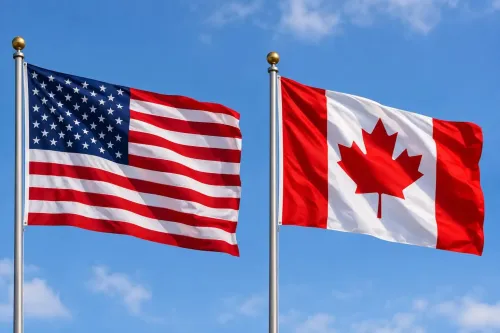
Canada vows 'whatever it takes' as US imposes 50% tariffs on key goods
Synopsis
With the US set to impose a 50% tariff on Canadian dairy, autos, and alcohol from 19 August, Prime Minister Mark Carney has drawn a line in Charlottetown — vowing to do ‘whatever it takes’ while simultaneously opening a negotiating back-channel with Trump. Canada is one of only two countries, alongside China, that Washington says chose retaliation over a deal.
Key Takeaways
Canadian PM Mark Carney pledged on 24 July to do ‘whatever it takes’ to defend national interests against US tariff pressure.
US President Donald Trump signed three proclamations imposing an additional 50% ad valorem tariff on select Canadian goods, effective 19 August .
Targeted sectors include dairy products , alcoholic beverages , and motor vehicles .
Carney called the move a ‘direct violation’ of the Canada-United States-Mexico Agreement (CUSMA) .
Canada and the US agreed to intensify trade negotiations after a direct Carney-Trump phone call on Tuesday .
The White House claims it has secured 18 trade deals with other nations, citing Canada and China as the only countries to have chosen retaliation.
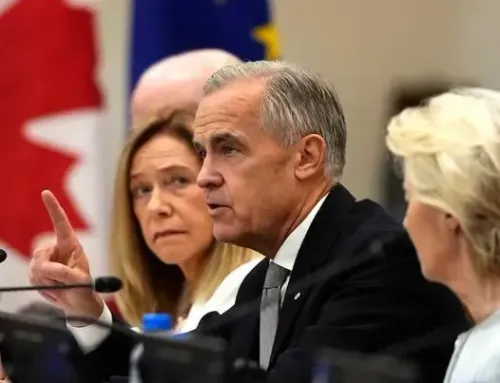
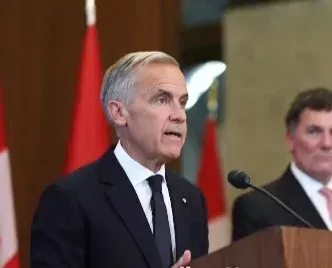
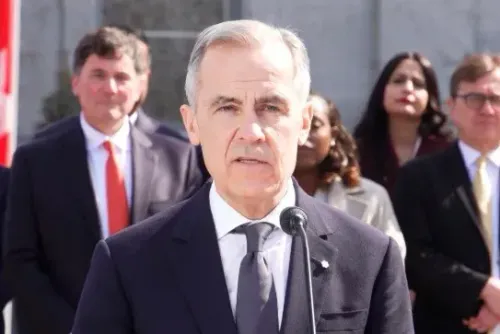
Canadian Prime Minister Mark Carney declared on Thursday, 24 July that his government will do “whatever it takes” to defend Canada’s national interests as the United States escalates its tariff offensive, imposing an additional 50 per cent duty on select Canadian goods. Carney made the remarks at a meeting of provincial and territorial leaders in Charlottetown, Prince Edward Island, framing the moment as a test of Canadian resolve.
What Carney Said in Charlottetown
Addressing premiers at the inter-governmental summit, Carney stressed that Canada would protect its workers, farmers, businesses, and families from mounting trade pressure out of Washington. “We are in a stronger position than we were when this trade war started 18 months ago,” he said. “We’re in a stronger position because of the determination of Canadians themselves, and the focus of the premiers around this table.”
The New US Tariffs and Their Scope
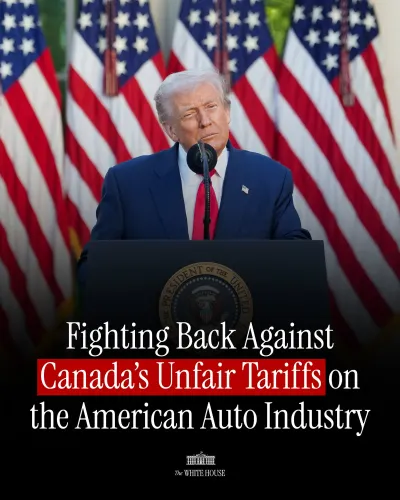
US President Donald Trump on Monday signed three separate proclamations invoking Section 338 of the Tariff Act of 1930, imposing the additional 50 per cent ad valorem duties on certain Canadian imports. The targeted categories include dairy products, alcoholic beverages, motor vehicles, and related goods. According to documents posted on the White House website, the new duties are set to take effect on 19 August.
The White House said the action was aimed at offsetting what it described as “the burden and disadvantage on US commerce from Canada’s discriminatory treatment of US commerce” and “levelling the playing field” for American exports, particularly in cars, alcohol, and dairy sectors.
Canada’s Position and Diplomatic Response
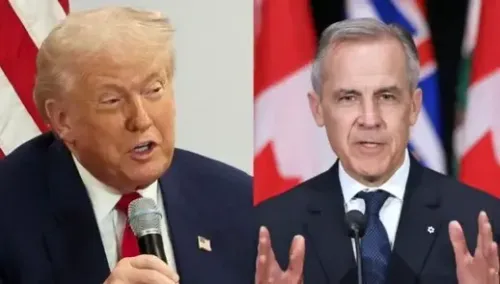
Carney, responding on Monday, called the new tariffs “the latest in a series of unilateral US trade actions in direct violation of the Canada-United States-Mexico Agreement (CUSMA).” By Tuesday, he confirmed he had spoken directly with Trump, with both sides agreeing to intensify trade negotiations — a signal that diplomatic channels remain open even as economic pressure mounts.
Notably, the White House argued that over the past year and a half, only two countries — China and Canada — had chosen to retaliate against Trump’s tariffs rather than negotiate trade agreements. Washington claimed it had secured 18 trade deals with other nations during this period, framing Canada’s posture as an outlier.
Broader Context: America First and the Trade War Timeline
The latest escalation is part of a sustained pattern under the Trump administration’s America First economic agenda, which has used tariff proclamations as both a negotiating lever and a punitive tool. The 18-month trade standoff between Ottawa and Washington has already disrupted supply chains in the auto sector and agri-food industries on both sides of the border.
This comes amid broader uncertainty over the future of CUSMA, the trilateral trade framework that replaced NAFTA, which is due for a formal review in 2026. Analysts warn that continued unilateral US actions could undermine the treaty’s dispute-resolution mechanisms before that review even begins.
With tariffs on Canadian goods set to deepen in August and negotiations reportedly intensifying, the coming weeks will test whether Ottawa’s defiant posture translates into a durable trade shield or forces a compromise on terms set in Washington.
Point of View
And the White House’s framing — that 17 other countries negotiated rather than retaliated — is designed to isolate Ottawa diplomatically. The simultaneous agreement to intensify talks suggests Carney knows the defiant rhetoric must eventually yield to the negotiating table. The real risk is that Canada enters those talks weakened by sector-specific pain in autos and dairy while the US enters with 18 completed deals as proof of concept.
NationPress
22 Oct 2026
Frequently Asked Questions
Why is the US imposing 50% tariffs on Canadian goods?
The US imposed an additional 50% tariff on select Canadian goods, citing what it called Canada’s discriminatory treatment of US commerce, particularly in cars, alcohol, and dairy. President Trump invoked Section 338 of the Tariff Act of 1930 and signed three separate proclamations to authorise the duties.
Which Canadian goods are affected by the new US tariffs?
The new 50% ad valorem duties apply to certain dairy products, alcoholic beverages, motor vehicles, and related goods. These tariffs are scheduled to take effect on 19 August, according to White House documents.
What has Canadian PM Mark Carney said in response?
Carney vowed on 24 July to do ‘whatever it takes’ to protect Canadian workers, farmers, businesses, and families. He called the tariffs a direct violation of the Canada-United States-Mexico Agreement and confirmed he had spoken with Trump, with both sides agreeing to intensify negotiations.
How long has the Canada-US trade dispute been going on?
The current trade standoff has been ongoing for approximately 18 months, according to Carney’s own remarks. It has involved successive rounds of US tariff actions and Canadian retaliatory measures, disrupting sectors including autos and agri-food.
What is the Canada-United States-Mexico Agreement and why does it matter here?
The Canada-United States-Mexico Agreement (CUSMA) is the trilateral trade framework that replaced NAFTA, governing trade rules between the three countries. Canada argues the new US tariffs violate its provisions; the agreement is also due for a formal review in 2026, making the current dispute a critical test of its durability.