Canada's Carney vows dollar-for-dollar tariffs on $20bn US goods from Sept 8
Synopsis
Canada's PM Mark Carney has drawn a hard line: dollar-for-dollar tariffs on $20 billion of American goods from 8 September, after the US imposed 50% duties and blew up last-minute trade talks. With CUSMA renewal stalled and Washington already in talks with Mexico alone, the Canada-US trade relationship is entering its most fractured phase since NAFTA.
Key Takeaways
Canadian PM Mark Carney announced 'dollar-for-dollar' retaliatory tariffs on $20 billion of US goods, effective 8 September .
The US imposed a 50 per cent tariff on $20 billion of Canadian goods on Saturday , taking effect just after midnight 0400 GMT .
Sectors targeted by Ottawa's counter-tariffs include dairy, steel, appliances, pulp and paper , and electronics .
Carney said US last-minute demands were 'unfair, uneconomic' and undermined deal reliability.
The US formally declined CUSMA renewal on 1 July 2026 , triggering annual reviews until the pact expires in 2036 .
Canada's foreign direct investment has reached a 20-year high , according to Carney.
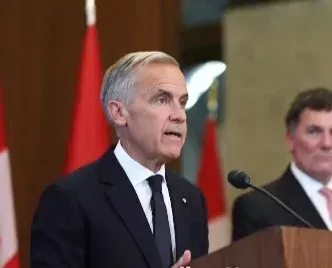
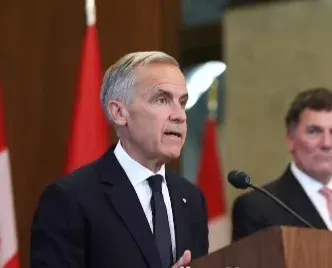
Canadian Prime Minister Mark Carney delivered a nationally televised address on 23 August, announcing that Ottawa's retaliatory 'dollar-for-dollar' tariffs targeting $20 billion worth of American goods would take effect on 8 September, following the collapse of trade negotiations with the United States. The move marks a sharp escalation in the bilateral trade standoff between two of the world's largest trading partners.
What the Counter-Tariffs Cover
Ottawa's retaliatory measures will span a broad range of sectors, including dairy, steel, appliances, pulp and paper, and electronics. The announcement came in direct response to Washington imposing a 50 per cent tariff on $20 billion worth of Canadian goods on Saturday, which came into force just after midnight (0400 GMT).
Why Talks Broke Down
Carney said both sides had been close to a mutually beneficial agreement earlier in the week, but the US side introduced last-minute changes that were, in his words, 'unfair, uneconomic and called into question the reliability of any deal.' He warned that Washington's repeated disregard for existing free trade commitments sends a damaging signal to international investors and is 'certainly not good news' for any future renewal of trade agreements.
The CUSMA Fault Line
The dispute unfolds against the backdrop of efforts to renew the Canada-United States-Mexico Agreement (CUSMA) — the trilateral trade pact that replaced the North American Free Trade Agreement (NAFTA) when it came into force on 1 July 2020. On 1 July 2026, the United States formally declined to renew the agreement for another 16-year term, triggering an annual review process that runs until the pact expires in 2036. Washington has begun formal talks with Mexico to revamp the agreement, but equivalent discussions with Canada have not yet commenced.
Carney's Message to Canadians
When asked why Canada was entering a trade dispute, Carney was unambiguous: 'Because we were attacked.' He sought to project confidence in Canada's economic fundamentals, citing job creation at four times the rate of the United States and foreign direct investment reaching a 20-year high. 'Canada is becoming stronger and less dependent on America,' he said, framing the standoff as a long-term structural shift rather than a short-term political dispute.
What Comes Next
The 8 September deadline gives both governments roughly two weeks to resume dialogue before Ottawa's counter-tariffs bite. Analysts note that a prolonged stand-off risks disrupting deeply integrated North American supply chains, particularly in the automotive, energy, and agricultural sectors. With CUSMA renewal talks stalled and annual review triggers now active, the trade relationship between the two countries faces its most serious stress test in decades.
Point of View
Not an aggressor, which matters for domestic politics and international optics alike. But the harder question is structural: with the US already in bilateral talks with Mexico and CUSMA's annual review clock now running, Canada risks being negotiated around rather than with. Ottawa's 20-year FDI high and job creation numbers are real, but they were built on integrated North American supply chains that a prolonged tariff war would corrode. The dollar-for-dollar symmetry sounds resolute; the test is whether Canada can sustain it without inflicting comparable pain on its own consumers and manufacturers.
NationPress
7 Oct 2026
Frequently Asked Questions
What are Canada's retaliatory tariffs against the US?
Canada has announced 'dollar-for-dollar' counter-tariffs on $20 billion worth of American goods, set to take effect on 8 September 2026. The measures cover sectors including dairy, steel, appliances, pulp and paper, and electronics, matching the scale of US tariffs imposed on Canadian goods.
Why did Canada-US trade talks collapse?
According to Prime Minister Mark Carney, both sides were close to an agreement but the US introduced last-minute changes he described as 'unfair, uneconomic' and damaging to deal reliability. The breakdown followed the US imposing a 50 per cent tariff on $20 billion of Canadian goods on Saturday.
What is CUSMA and how does it affect this dispute?
CUSMA — the Canada-United States-Mexico Agreement — is the trilateral trade pact that replaced NAFTA on 1 July 2020. On 1 July 2026, the US declined to renew it for another 16-year term, triggering annual reviews until 2036. The collapse of Canada-US trade talks has further complicated prospects for renewal.
How has Canada responded to the US tariffs?
Prime Minister Carney announced retaliatory 'dollar-for-dollar' tariffs effective 8 September, publicly stating Canada entered the dispute 'because we were attacked.' He also highlighted Canada's economic resilience, pointing to job creation running at four times the US rate and FDI at a 20-year high.
What happens if no deal is reached before 8 September?
Ottawa's counter-tariffs on $20 billion of American goods will come into force on 8 September 2026, escalating the trade standoff. A prolonged dispute risks disrupting North American supply chains in automotive, energy, and agricultural sectors, with CUSMA renewal talks already stalled.