Canada-US tariff war: Carney, Ford sharpen tone as 50% duties bite
Synopsis
Canada’s political class — from the sitting PM to a former one to a provincial premier — is speaking with rare, unified anger as 50 per cent US tariffs on $20 billion in Canadian goods take hold. With retaliatory duties set for 8 September and threats to cut electricity and mineral exports on the table, this is no longer posturing: it is the opening of a full-scale trade war between two of the world’s closest neighbours.
Key Takeaways
50 per cent US tariffs on $20 billion worth of Canadian goods took effect just after midnight on Saturday, 25 August , after trade talks collapsed.
Prime Minister Mark Carney said Canada would negotiate only if the US came to the table ‘with the right attitude’ and as a true partner.
Finance Minister Francois-Philippe Champagne signalled federal support is coming for businesses hit by the duties.
Former prime minister Jean Chrétien called for export taxes on energy, oil, natural gas, and potash to make Americans bear the cost.
Ontario Premier Doug Ford threatened to cut off electricity and critical mineral exports to the US if the situation worsens.
Canada’s retaliatory tariffs are set to take effect on 8 September .
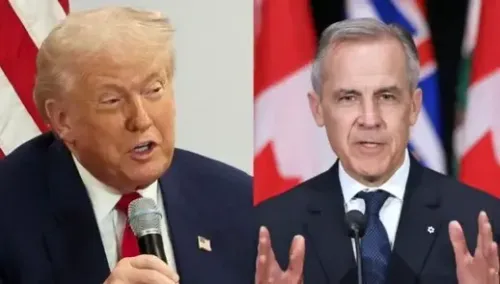
Canadian political leaders on 25 August significantly escalated their rhetoric against the United States, as 50 per cent US tariffs on $20 billion worth of Canadian goods came into force just after midnight on Saturday, following the collapse of extended bilateral trade negotiations. Prime Minister Mark Carney, Finance Minister Francois-Philippe Champagne, former prime minister Jean Chrétien, and Ontario Premier Doug Ford each staked out firm positions, signalling that Ottawa is preparing for a prolonged trade confrontation.
Carney Sets Conditions for Talks
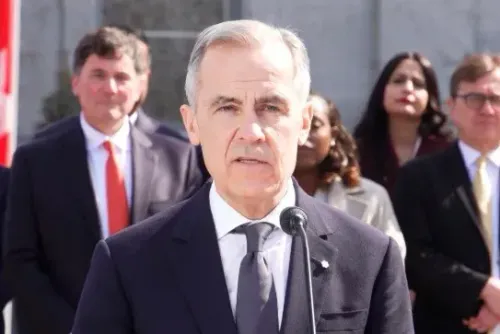
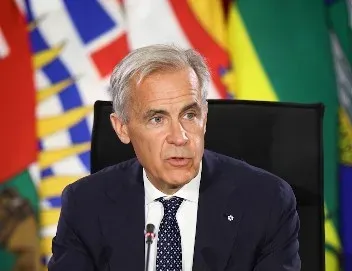
Speaking in Quebec, Prime Minister Carney left the door open to negotiations — but on Canada's terms. “When the Americans go to the negotiating table first, with the right attitude toward our industries and in a true partnership, of course we’ll come to the negotiating table,” he said. Carney made clear he would not accept any framing that treats Canada as subordinate to its southern neighbour, stating he refused to accept the notion that “Canada is a subsidiary of the United States.” He had earlier confirmed that Canadian retaliatory tariffs would take effect starting 8 September.
Finance Minister Signals Business Relief
Finance Minister Francois-Philippe Champagne, speaking during consultations in Montreal, urged a harder line. “At some point you have to say enough is enough,” he said, indicating that federal support for businesses hit by the 50 per cent duties is forthcoming. Champagne framed the crisis as an opportunity to restructure the Canadian economy, saying the government’s long-term plan has always been “to build a strong Canadian economy, to remove interprovincial trade barriers, to diversify our economy and to do big things in our country.”
Chrétien Calls for Export Taxes on Energy and Potash
Former prime minister Jean Chrétien went further, calling on Ottawa to deploy export taxes on critical commodities including energy, oil, natural gas, and potash. “If we want to stay upright, we have to hit where it hurts,” Chrétien said. He argued the strategic advantage of export taxes is that the cost falls on American consumers and industries, not Canadians: “The advantage of an export tax is it’s not us who pays, it’s the Americans.”
Ford Threatens to Cut Electricity and Mineral Exports
Ontario Premier Doug Ford adopted the most confrontational posture, calling for all available countermeasures to be activated and warning that Canada must be prepared to cut off electricity and critical mineral exports to the United States if trade relations deteriorate further. “I’ll cut them off,” Ford said of mineral shipments, adding: “You won’t get a grain of sand out of Ontario.”
What Comes Next
The imposition of 50 per cent tariffs on $20 billion in Canadian goods marks a sharp escalation in a dispute that has been building for months. Canada’s retaliatory measures, due 8 September, are expected to target comparable US goods. Notably, the rare alignment of federal leaders from multiple parties and a provincial premier signals unusual political consensus in Ottawa — a dynamic that could harden Canada’s negotiating position. Whether Washington responds to this unified front or digs in further will define the next phase of the dispute.
Point of View
His finance minister, a former PM, and a Conservative provincial premier all demanding retaliation — is itself the story. Canada rarely speaks with one voice on trade, and Washington will have noticed. Yet rhetoric and action are different things: export taxes on energy and cutting mineral shipments carry real economic pain for Canadian producers too, which is why they have historically been threatened but never deployed. The 8 September retaliation deadline is the first hard test of whether this unity holds when the costs become concrete.
NationPress
9 Oct 2026
Frequently Asked Questions
What triggered the latest Canada-US tariff escalation?
The US imposed 50 per cent tariffs on $20 billion worth of Canadian goods, which took effect just after midnight on Saturday, 25 August, after extended bilateral trade negotiations collapsed. Canada has announced retaliatory tariffs set to begin on 8 September.
What has Prime Minister Mark Carney said about negotiations?
Carney said Canada is willing to negotiate, but only if the US comes to the table first with the right attitude and treats Canada as a true partner — not as a subsidiary. He has rejected any framework that disadvantages Canada relative to the United States.
What countermeasures are Canadian leaders proposing?
Proposals range from federal support for affected businesses (Finance Minister Champagne) to export taxes on energy, oil, natural gas, and potash (former PM Chrétien) and cutting off electricity and critical mineral exports to the US (Ontario Premier Ford). Formal retaliatory tariffs are due on 8 September.
Why is Doug Ford threatening to cut mineral and electricity exports?
Ontario Premier Doug Ford argues Canada must be ready to deploy all available countermeasures if trade relations worsen further. He said he would cut off mineral shipments from Ontario, warning the US: ‘You won’t get a grain of sand out of Ontario.’
When do Canada’s retaliatory tariffs take effect?
Prime Minister Carney has confirmed that Canadian retaliatory tariffs will take effect starting 8 September, following the breakdown of trade negotiations and the US imposition of 50 per cent duties on $20 billion in Canadian goods.