Canada slaps 50% counter-tariffs on $27.6 bn US goods from Sept 8
Synopsis
Canada has gone dollar-for-dollar with Washington — matching US tariffs rate-for-rate on $27.6 billion of American goods and backing it with a $7.5 billion domestic relief package. With trade talks suspended and the 8 September deadline looming, this is the sharpest rupture in one of the world’s most integrated bilateral trading relationships.
Key Takeaways
Canada announced retaliatory tariffs of up to 50 per cent on $27.6 billion of US goods on 25 August .
Counter-tariffs take effect 8 September , mirroring US Section 338 and Section 232 rates at 15, 25, and 50 per cent tiers.
A $7.5 billion support package covers SMEs, worker income assistance, and a $500 million liquidity facility for cash-strapped businesses.
Trade talks were suspended after Washington proposed terms Ottawa said were against Canada’s national interest.
The move directly mirrors a US tariff of 50 per cent on Canadian goods imposed from 22 August .
Existing Canadian counter-tariffs on US automobiles and other goods remain in place alongside the new measures.
Canada announced retaliatory tariffs of up to 50 per cent on $27.6 billion worth of American goods on Tuesday, 25 August, after suspending trade negotiations with Washington and accusing the United States of demanding too much while offering too little. The counter-tariffs take effect on 8 September and span steel, dairy, appliances, agricultural equipment, pulp and paper, and electronics.
What the Counter-Tariffs Cover
The Canadian government structured the retaliatory duties across three tiers — 15, 25, and 50 per cent — mirroring the corresponding US rate for each targeted product under American Section 338 and Section 232 tariffs. Goods facing the steepest 50 per cent levy include steel and aluminium products previously subject to a 25 per cent counter-tariff, as well as furniture, clothing, and apparel.
The 25 per cent tier covers appliances, dairy products such as cheese, fish and seafood, and select steel and aluminium derivatives. Existing Canadian counter-tariffs on other US goods — including automobiles — remain in place.
The $7.5 Billion Support Package
Ottawa simultaneously unveiled a $7.5 billion assistance package for workers and businesses caught in the crossfire. The package includes $1.5 billion for small and medium-sized enterprises through the Regional Tariff Response Initiative and a new $500 million liquidity facility for businesses facing immediate cash-flow pressures.
A further $2 billion will flow to the Canada Strong Diversification Fund for tariff-affected businesses with projects ready to begin. The remaining $3.5 billion is earmarked for rapid-response support for workers and employers, covering income assistance, training, and measures to help companies retain staff. Eligibility for programmes run by the Business Development Bank of Canada will also be broadened, with the minimum revenue threshold for applicants lowered to $1 million.
Why Negotiations Broke Down
Canada said it suspended intensive talks after the United States proposed new terms that were not in its national interest. Accepting those terms, the government argued, would have harmed Canadian workers, businesses, and strategic sectors. The action is a direct response to a US decision to impose a 50 per cent tariff on $27.6 billion of Canadian goods effective 22 August.
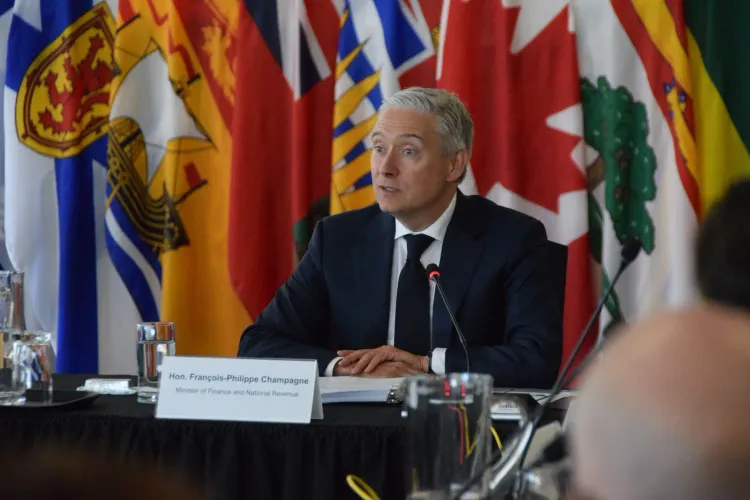
Finance and National Revenue Minister Francois-Philippe Champagne framed the response in pointed terms. “When the United States asked too much and offered too little, we chose to stand up for Canadians,” he said. “Our dollar-for-dollar, rate-for-rate counter-tariffs as well as a multi-billion dollar support package will protect workers, farmers, families, and businesses as we build a stronger, more resilient, and more diversified Canadian economy,” he added.
What Officials Said
Industry Minister Melanie Joly struck a similarly assertive tone. “In a more uncertain world, Canada will continue to invest in our greatest strengths: our workers, our businesses, and our capacity to compete,” she said. “Today’s new measures will protect jobs, strengthen the industries that drive our economy, and secure the supply chains that underpin our prosperity,” she added.
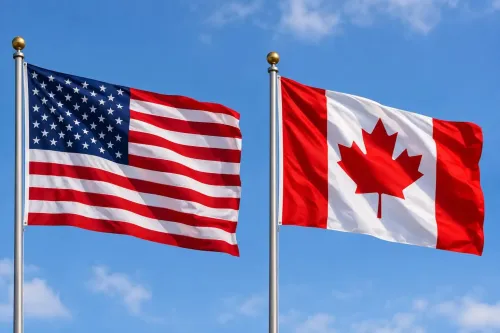
The US and Canada share one of the world’s largest bilateral trading relationships, underpinned for decades by tightly integrated supply chains in automobiles, agriculture, energy, steel, and aluminium. The escalating dispute risks ripple effects for manufacturers and consumers on both sides of the border.
What Comes Next
With negotiations suspended and counter-tariffs set to kick in on 8 September, the immediate question is whether either side blinks before the deadline. Canada has signalled it is prepared to hold its position, but the economic cost of a prolonged standoff — particularly in auto and agriculture supply chains — could accelerate pressure for a return to the table.
Point of View
Not a negotiating feint — suspending talks while announcing a $7.5 billion domestic shield signals Ottawa is prepared for a prolonged standoff. The real vulnerability lies in auto and agriculture supply chains, which are so deeply intertwined that tariff pain is structurally bilateral, regardless of who fires first. Washington’s Section 232 framing also sets a dangerous precedent: treating a treaty ally as a national security threat erodes the institutional trust that underpinned decades of integrated North American production. If this hardens into a durable trade rupture, the cost will not be measured in tariff revenue but in supply-chain rewiring that neither economy can absorb quickly.
NationPress
10 Oct 2026
Frequently Asked Questions
What tariffs has Canada announced on US goods?
Canada announced retaliatory tariffs of up to 50 per cent on $27.6 billion worth of US goods, structured across three tiers — 15, 25, and 50 per cent — matching the corresponding US rate for each targeted product. The measures take effect on 8 September and cover steel, dairy, appliances, agricultural equipment, electronics, furniture, and apparel.
Why did Canada suspend trade negotiations with the US?
Canada said it suspended intensive talks after the United States proposed new terms it deemed contrary to its national interest. The government argued that accepting those terms would have harmed Canadian workers, businesses, and strategic sectors, leaving it no choice but to respond with counter-measures.
What is the $7.5 billion support package Canada announced?
The $7.5 billion package is a domestic relief fund for workers and businesses affected by the trade dispute. It includes $1.5 billion for SMEs via the Regional Tariff Response Initiative, a $500 million liquidity facility, $2 billion through the Canada Strong Diversification Fund, and $3.5 billion in rapid-response support covering income assistance and worker retention measures.
What triggered Canada’s counter-tariffs?
The immediate trigger was a US decision to impose a 50 per cent tariff on $27.6 billion of Canadian goods effective 22 August. Canada responded by matching those duties ‘dollar for dollar, rate for rate,’ as Finance Minister Francois-Philippe Champagne stated.
Which US goods are affected by Canada’s new tariffs?
Goods facing the 50 per cent tier include steel, aluminium, furniture, clothing, and apparel. The 25 per cent tier covers appliances, dairy products such as cheese, fish and seafood, and select steel and aluminium derivatives. Existing counter-tariffs on US automobiles and other goods remain separately in place.