CM Yogi Flags India's Push to Become a Chip Exporter
Synopsis
CM Yogi Adityanath declared on 7 October 2026 that India is advancing toward the self-reliance needed to export semiconductors globally, framing the chip ambition as a landmark of his 25-year record in public service.
Key Takeaways
CM Yogi Adityanath posted on 7 October 2026 that India is moving toward becoming a global chip exporter.
The statement was made under the hashtag #25YearsOfSeva , marking a milestone of twenty-five years in public life.
The post frames semiconductor self-reliance ('aatmanirbharta') as a national ambition, not merely a domestic goal.
Chip exports require fabrication capacity, design talent, equipment access, and export-grade quality — the full industrial stack.
The framing positions technological sovereignty alongside infrastructure and governance as pillars of CM Yogi's record.
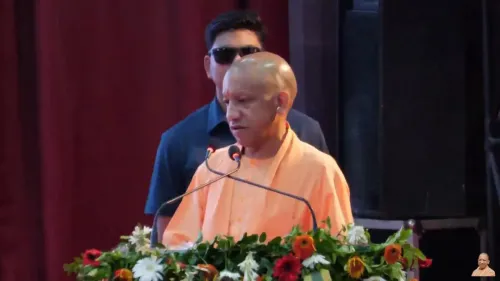
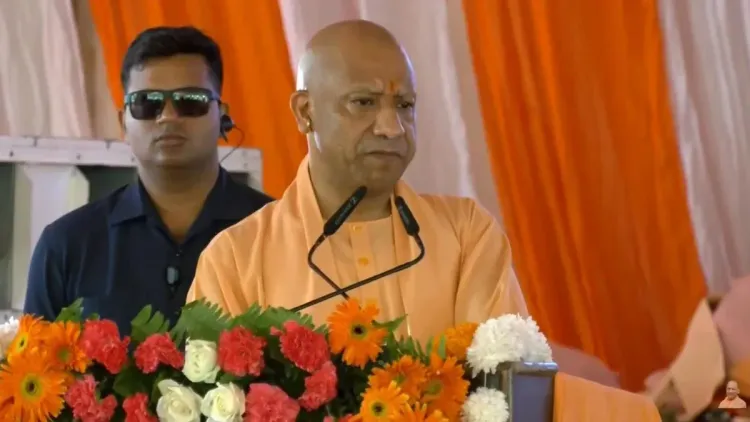
India is no longer content to be a buyer in the global semiconductor race — it wants to be a seller. Uttar Pradesh Chief Minister Yogi Adityanath marked this ambition on Wednesday, 7 October 2026, declaring that the country is moving steadily toward the aatmanirbharta (self-reliance) required to export chips to the world.
Posting under the hashtag #25YearsOfSeva, CM Yogi wrote: 'Bharat ab duniya ko chip niryaat karne ki aatmanirbharta ki taraf aage badh raha hai' — 'India is now moving toward the self-reliance of exporting chips to the world.' The statement connects the semiconductor ambition to what appears to be a milestone of twenty-five years of public service, framing chip manufacturing as a defining achievement of that journey.
Why Semiconductor Self-Reliance Is a National Stakes Moment
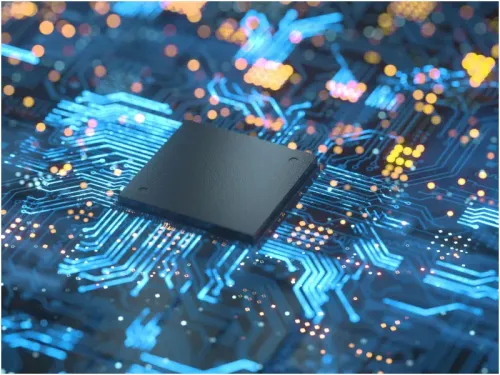
Semiconductors are the foundational layer of the modern economy — inside every smartphone, automobile, defence system, and data centre. For decades, a handful of nations and companies controlled this supply chain, a vulnerability that the global chip shortage of the early 2020s exposed with painful clarity. India's pivot toward domestic chip manufacturing is an attempt to exit that dependency permanently.
The aspiration to move from importer to exporter is the steeper half of that climb. It requires not just fabrication capacity but design talent, equipment access, raw-material security, and export-grade quality standards. CM Yogi's framing positions India as already in motion on that upward curve — a signal aimed as much at global investors and partner governments as at a domestic audience.
The #25YearsOfSeva Backdrop
The hashtag #25YearsOfSeva anchors the post to a milestone of twenty-five years in public life — a moment political leaders typically use to survey what has been built and project what remains ahead. By choosing semiconductor exports as his marker in this reflection, CM Yogi signals that technological sovereignty sits alongside temples, law-and-order, and infrastructure as pillars of the vision he associates with that record of service.
It is a pointed choice: chips are not soft symbolism. They are hard industrial policy, supply-chain geopolitics, and economic futures compressed into silicon wafers the width of a human hair.
If India's chip-export ambition moves from declaration to delivery, the country will not merely have achieved self-reliance — it will have reshaped the very map of who the world depends on.
Point of View
Not just chip manufacturing, as the ambition raises the rhetorical stakes considerably: exports require global competitiveness, not just domestic capacity. Whether the post reflects concrete UP-level semiconductor investments or a broader national aspiration the CM is amplifying will determine how seriously analysts receive it.
NationPress
7 Oct 2026
Frequently Asked Questions
What did CM Yogi Adityanath say about chips and India?
CM Yogi Adityanath posted on 7 October 2026 that India is moving toward the self-reliance of exporting chips to the world, framing it as a key ambition under the hashtag #25YearsOfSeva.
What is #25YearsOfSeva associated with?
#25YearsOfSeva marks a twenty-five-year milestone in public service, used by CM Yogi Adityanath to reflect on achievements and future goals, including India's semiconductor export ambitions.
Why is semiconductor self-reliance important for India?
Semiconductors power smartphones, vehicles, defence systems, and data centres. India has historically been an importer, making it vulnerable to global supply chain disruptions; moving toward export-grade production would fundamentally change that equation.
What does 'aatmanirbharta' mean in the context of chip exports?
'Aatmanirbharta' means self-reliance in Hindi. In this context, it refers to India developing sufficient domestic semiconductor capability not just to meet its own needs but to supply chips to other countries.
What is required for India to export chips globally?
Chip exports require a full industrial stack: fabrication facilities, semiconductor design talent, access to specialised equipment, secure raw-material supply chains, and the ability to meet international quality and standards requirements.