CM Bhajan Lal flags semiconductors as key to Rajasthan's future
Synopsis
Chief Minister Bhajan Lal Sharma has declared semiconductors indispensable across every sector — from SIM cards to space and mobiles to missiles — asserting that Rajasthan's future depends on building strong chip-sector capacity, in alignment with India's Rs 76,000 crore national semiconductor mission.
Key Takeaways
CM Bhajan Lal Sharma publicly identified semiconductor chips as critical to every major sector, from telecommunications and space to defence.
He stated that only countries and states that build strong semiconductor capability will lead the future.
The statement was posted by the Chief Minister's Office of Rajasthan on 24 May 2026 under the hashtag #आपणो_अग्रणी_राजस्थान .
India's India Semiconductor Mission , launched in 2021 with a Rs 76,000 crore outlay, forms the national policy backdrop for this state-level push.
The statement signals Rajasthan's intent to compete with other states in attracting semiconductor investment, manufacturing, and skill development.
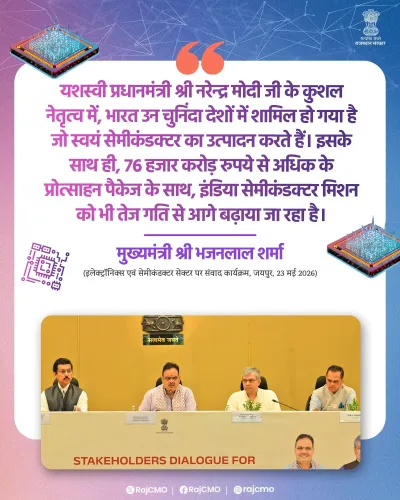
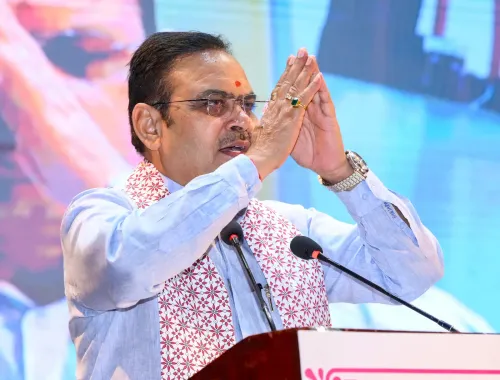
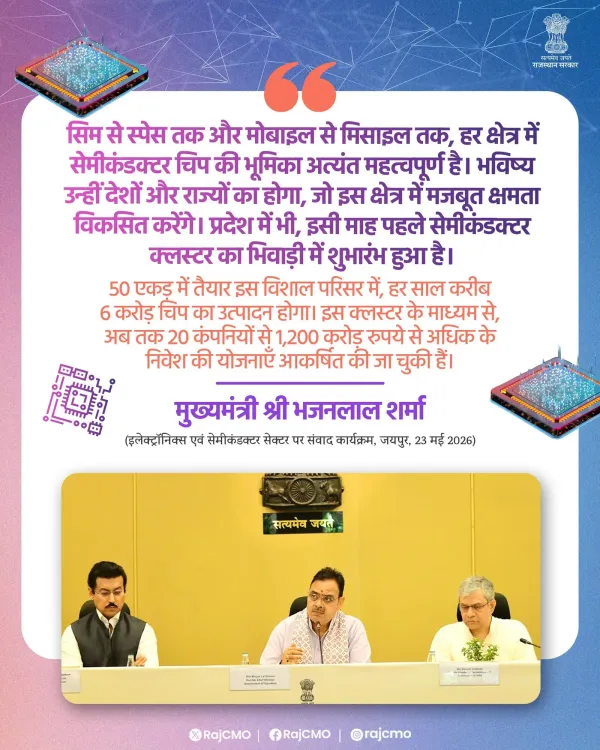
The Chief Minister's Office of Rajasthan on Sunday, 24 May 2026 shared a statement by Chief Minister Bhajan Lal Sharma asserting that semiconductor chips are critical to every sector of the modern economy — from telecommunications to space and from mobile devices to missiles — and that only states and nations that build strong capacity in this domain will shape the future.
Context
The post, shared under the hashtag #आपणो_अग्रणी_राजस्थान ('Our Leading Rajasthan'), quotes CM Bhajan Lal Sharma making a sweeping case for semiconductor self-reliance. In his words: 'From SIM to space and from mobile to missile, the role of the semiconductor chip is extremely important in every sector. The future will belong to those countries and states that develop strong capability in this field.'
The statement positions Rajasthan as a state conscious of the strategic importance of chip technology at a moment when global supply chain vulnerabilities have made semiconductor access a matter of national security and economic competitiveness.
Policy Backdrop
India's push for semiconductor self-reliance gained formal shape in 2021 when the central government launched the India Semiconductor Mission with an outlay of Rs 76,000 crore under the Production Linked Incentive framework. The mission targets chip fabrication, assembly, testing, marking, and packaging units, aiming to build an end-to-end domestic ecosystem.
Multiple Indian states have since moved to align their industrial and investment policies with this national agenda, competing to attract chip design centres, assembly plants, and semiconductor-adjacent manufacturing. CM Sharma's statement signals that Rajasthan intends to be counted among the serious contenders in this race, consistent with the broader Atmanirbhar Bharat framework championed by the central government.
Stakeholders and Impact
The semiconductor value chain touches a wide range of stakeholders in Rajasthan and beyond. Electronics manufacturers, defence-sector suppliers, and technology startups all depend on reliable chip supply — making state-level policy in this area consequential for industrial investment decisions.
For Rajasthan, building semiconductor capacity could mean attracting high-value manufacturing investment, generating skilled employment, and integrating the state's workforce into a globally significant supply chain. The defence dimension — explicitly referenced in the SIM-to-space, mobile-to-missile framing — also underscores the strategic, not merely economic, stakes of the sector.
What's Next
Observers will watch for concrete follow-through: state budget allocations for semiconductor parks or skill development programmes, dedicated industrial policy notifications, and potential memoranda of understanding with domestic or global chip firms at upcoming investor summits in Rajasthan.
If the state translates this articulated ambition into policy architecture, it could meaningfully strengthen Rajasthan's pitch as a destination for technology manufacturing investment — a sector that rewards early movers with long-term industrial anchors.
Point of View
The CM connects a niche industrial sector to national security, a framing that resonates with both central government priorities and a patriotic voter base. The statement follows a pattern seen across BJP-governed states of publicly aligning with central flagship missions to signal administrative seriousness and attract Union government support. Whether this rhetoric translates into a dedicated semiconductor policy or investor-ready infrastructure will determine whether Rajasthan becomes a genuine player or remains on the sidelines of India's chip ambitions.
NationPress
7 Oct 2026
Frequently Asked Questions
What did Rajasthan CM Bhajan Lal Sharma say about semiconductors?
CM Bhajan Lal Sharma stated that semiconductor chips are critically important in every sector — from SIM cards to space and from mobile phones to missiles — and that the future will belong to countries and states that develop strong capability in this field.
What is India's semiconductor mission and how much has been allocated?
The India Semiconductor Mission was launched by the central government in 2021 with an outlay of Rs 76,000 crore under the Production Linked Incentive framework to build a domestic chip fabrication, assembly, and testing ecosystem.
Is Rajasthan planning a semiconductor park or chip manufacturing facility?
No specific semiconductor park or investment figure has been officially announced for Rajasthan as of this statement. The CM's remarks signal intent, and concrete policy steps — such as budget allocations or MoUs — are what analysts will watch for next.
Why are semiconductors important for India's defence sector?
Semiconductors are embedded in virtually all modern defence systems, from guided missiles and radar to communication equipment and satellites. Domestic chip capacity reduces dependence on imports and strengthens supply chain security for India's defence industry.
Which Indian states are competing to attract semiconductor investments?
Several states have introduced policies to attract chip design centres and assembly units in alignment with the India Semiconductor Mission. Rajasthan, through CM Bhajan Lal Sharma's statement, has signalled its intent to join this competition, though specific projects are yet to be publicly announced.