Rajasthan's first semiconductor cluster launched in Bhiwadi, 2,500 jobs targeted
Synopsis
Rajasthan has entered India's semiconductor map. The ₹1,200 crore Electronic Manufacturing Cluster in Bhiwadi — projected to produce 60 million chips a year — is the state's clearest signal yet that it is pivoting from a welfare-led economy to an industry-first growth model, backed by 35 new policies in two years and a Union government that has already cleared 75 projects under the Electronics Components Manufacturing Scheme.
Key Takeaways
Rajasthan CM Bhajanlal Sharma inaugurated the state's first semiconductor cluster in Bhiwadi on 15 May 2025 .
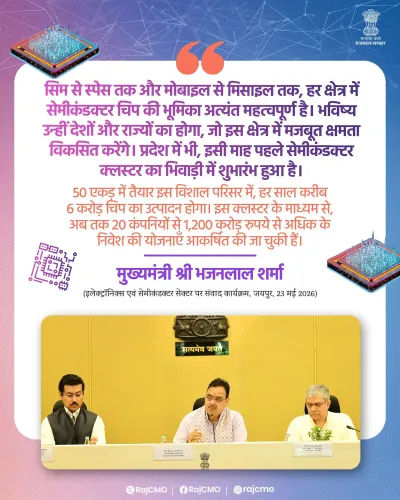
The Electronic Manufacturing Cluster involves an investment of ₹1,200 crore and is projected to produce 60 million chips annually .
The cluster is expected to generate approximately 2,500 jobs .
A 34 MLD Sewage Treatment Plant was also inaugurated at a cost of ₹61 crore , with a treated water pipeline foundation laid at over ₹52 crore .
India's electronics manufacturing value has reached ₹13 lakh crore — a six-fold increase — with mobile phones now the country's top export commodity .
Rajasthan has implemented 35 industrial policies in two years; the government has employed over 1.25 lakh youths with 1.35 lakh more appointments underway.
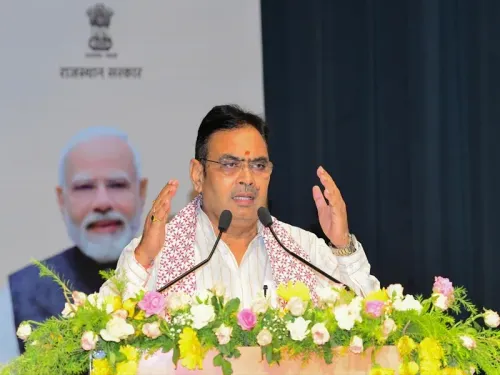
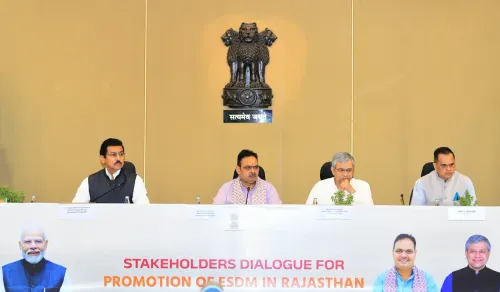
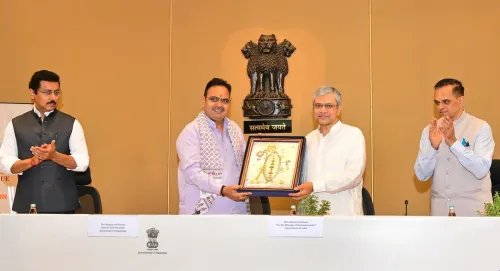
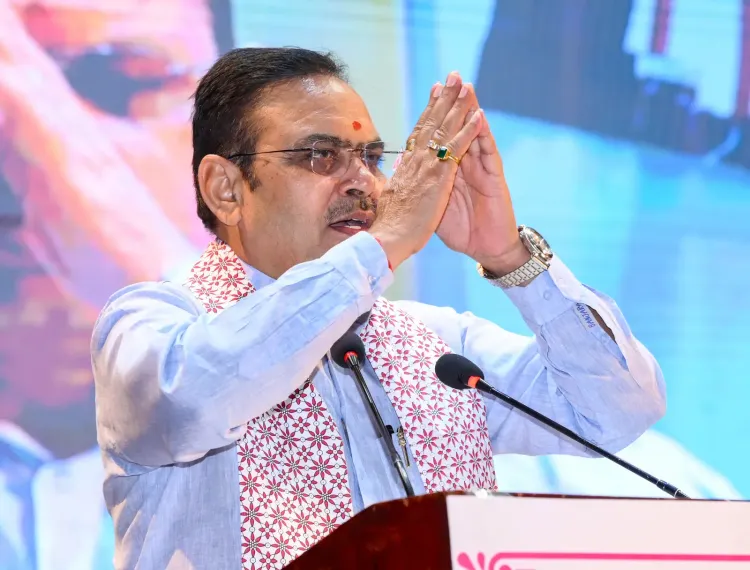
Rajasthan Chief Minister Bhajanlal Sharma on Friday, 15 May inaugurated the state's first semiconductor cluster in Bhiwadi, marking a significant milestone in Rajasthan's push to establish itself as a major electronics manufacturing destination. The Electronic Manufacturing Cluster involves a total investment of ₹1,200 crore and is projected to manufacture 60 million chips annually while generating approximately 2,500 jobs.
Key Developments at the Bhiwadi Event
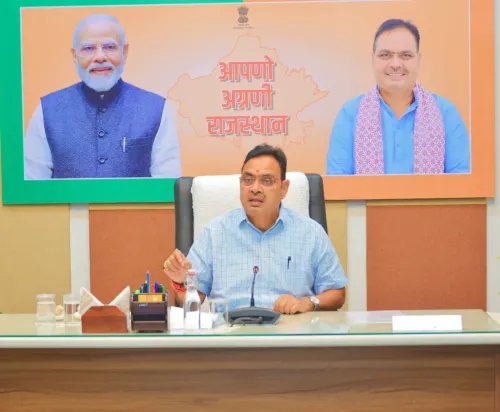
Sharma addressed the inauguration via video conferencing from his official residence, presiding over the laying of foundation stones and dedication of multiple projects. These included the Alcina Electronics Complex and a 34 MLD (Million Litres per Day) Sewage Treatment Plant (STP) in Bhiwadi, as well as various development works in the Khairthal-Tijara district. The STP was constructed at a cost of ₹61 crore, while the foundation stone for an associated treated water pipeline was laid with an investment exceeding ₹52 crore.
What the Government Said
Chief Minister Sharma stated that the state government has implemented 35 policies over the past two years to foster a conducive industrial environment, describing this as a stride towards the vision of 'Developed India, Developed Rajasthan by 2047'. He added that work on the Regional Rapid Transit System (RRTS) — connecting Rajasthan to Delhi via Haryana — and the implementation of the Yamuna Water Agreement are both progressing rapidly.
Sharma further noted that the government has fulfilled its pledge to generate employment, having provided jobs to over 1.25 lakh youths and released a recruitment calendar for an additional 1.25 lakh positions. The appointment process for over 1.35 lakh posts is currently underway. Farmers across 24 districts are now receiving electricity during daytime hours, he added.
Union Ministers Weigh In
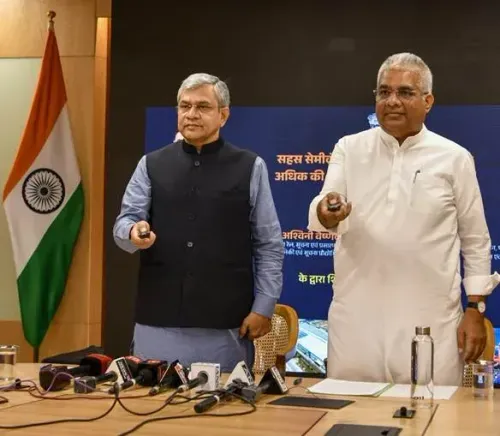
Union Minister for Railways and Electronics Ashwini Vaishnaw underscored the strategic importance of the semiconductor sector, noting that India now has 12 semiconductor plants manufacturing chips for various electronic devices. He stated that India's electronics manufacturing value has reached ₹13 lakh crore — a six-fold increase — and that mobile phones have emerged as India's number one export commodity. He also noted that 75 projects have been approved under the Electronics Components Manufacturing Scheme.
Union Minister for Environment, Forest, and Climate Change Bhupender Yadav affirmed the Centre's commitment to establishing Bhiwadi as a prominent manufacturing hub, highlighting the town's existing strengths in the automobile sector alongside its emerging role in semiconductors and electronics.
Broader Industrial and Infrastructure Push
Alongside the semiconductor cluster, the government announced plans to establish a major industrial zone in Bandikui, near Alwar. Under the Atal Mission for Rejuvenation and Urban Transformation (AMRUT) scheme, 85 railway stations are being constructed across Rajasthan, with 15 already completed. The upcoming Alwar railway station is set to feature state-of-the-art amenities.
The government is also formulating a rural development blueprint integrating cultural heritage, environmental considerations, and local requirements, and has decided to establish 'Atal Gyan Kendras' (Atal Knowledge Centres) at the panchayat level to support rural youth. With Bhiwadi now positioned at the intersection of auto manufacturing, electronics, and semiconductor production, Rajasthan's industrial identity is undergoing a visible shift — and the pace of policy execution in the coming months will determine whether that shift holds.
Point of View
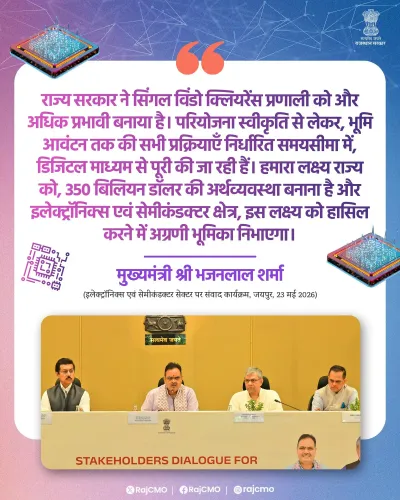
But the real test is execution at scale. A single cluster producing 60 million chips annually is a credible start, yet India's broader semiconductor ambition — 12 plants nationwide — remains modest against Taiwan or South Korea's output. The ₹1,200 crore Bhiwadi investment is also dwarfed by the capital intensity that cutting-edge chip fabrication demands. Rajasthan's comparative advantage may lie in assembly and testing rather than advanced fabrication, and the government would do well to be precise about where in the chip value chain this cluster actually sits. The 35-policy sprint in two years is notable, but policy volume is not the same as policy quality — investor sentiment will be shaped by how quickly single-window clearances and land acquisition move on the ground.
NationPress
30 Sept 2026
Frequently Asked Questions
What is the semiconductor cluster inaugurated in Bhiwadi, Rajasthan?
It is Rajasthan's first Electronic Manufacturing Cluster, inaugurated on 15 May 2025 in Bhiwadi with a total investment of ₹1,200 crore. The facility is projected to manufacture 60 million chips annually and create approximately 2,500 jobs.
Who inaugurated the Bhiwadi semiconductor cluster?
Rajasthan Chief Minister Bhajanlal Sharma inaugurated the cluster via video conferencing on 15 May 2025. Union Ministers Ashwini Vaishnaw and Bhupender Yadav also addressed the event.
How many jobs will the Bhiwadi semiconductor cluster create?
The Electronic Manufacturing Cluster in Bhiwadi is expected to generate approximately 2,500 jobs. It is part of a broader state employment drive that has already placed over 1.25 lakh youths in government positions.
What other projects were launched alongside the semiconductor cluster?
A 34 MLD Sewage Treatment Plant costing ₹61 crore was inaugurated, and the foundation stone for a treated water pipeline worth over ₹52 crore was laid. Development works in Khairthal-Tijara district and the Alcina Electronics Complex were also part of the event.
How does Bhiwadi's semiconductor cluster fit into India's broader electronics ambitions?
India currently has 12 semiconductor plants, and electronics manufacturing has reached ₹13 lakh crore in value — a six-fold increase. The Centre has approved 75 projects under the Electronics Components Manufacturing Scheme, of which Bhiwadi's cluster is one, positioning Rajasthan within a national push to make India a global electronics hub.