CM Bhajanlal Sets $350 Bn Target, Bets on Electronics
Synopsis
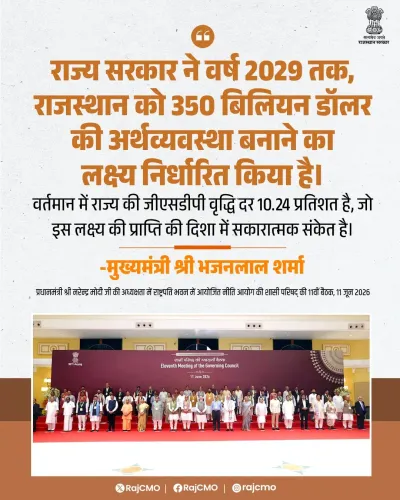
Rajasthan's Chief Minister's Office on 24 May 2026 announced a $350 billion economy target, with CM Bhajanlal Sharma identifying electronics and semiconductors as the sector that will lead the state's economic transformation under the 'Aapno Agrani Rajasthan' vision.
Key Takeaways
Rajasthan has set a stated target of becoming a $350 billion economy , as declared by the Chief Minister's Office on 24 May 2026 .
CM Bhajanlal Sharma has identified the electronics and semiconductor sector as the primary driver of this economic goal.
The announcement aligns with the central government's India Semiconductor Mission (launched 2021) and the PLI scheme for semiconductors and IT hardware.
Rajasthan joins a competitive field of Indian states vying to host semiconductor parks and electronics clusters under the Atmanirbhar Bharat framework.
Key milestones to watch include MoUs with investors , semiconductor park proposals, and dedicated budget allocations in upcoming industrial policy updates.
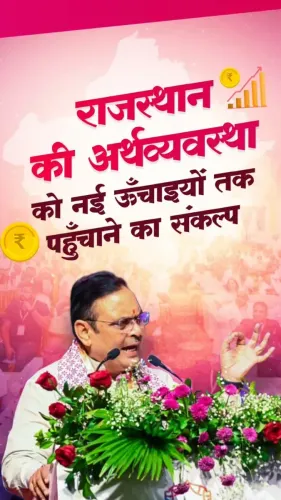
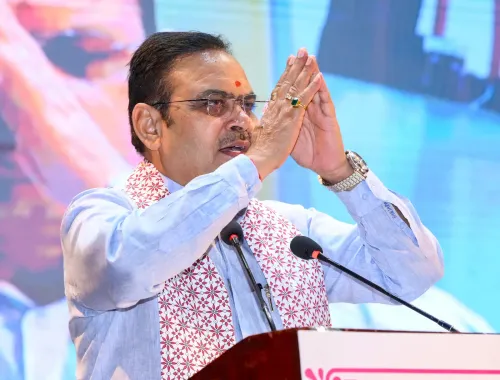
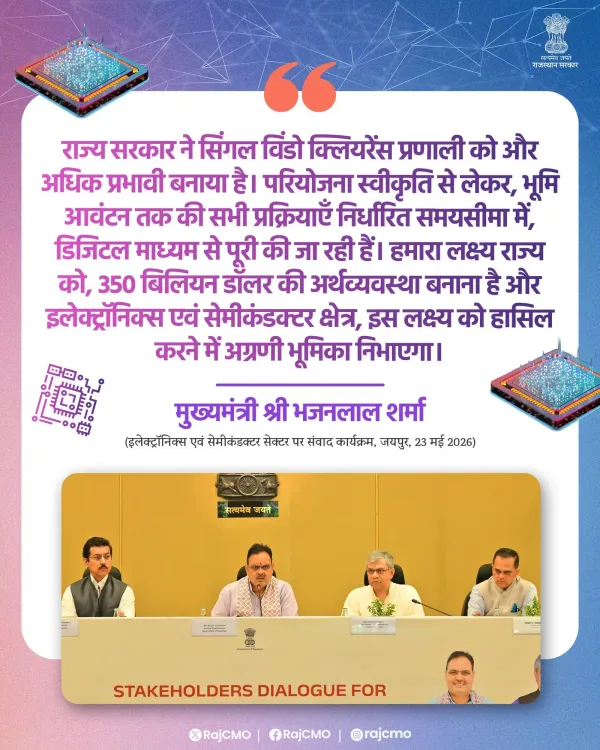
The Chief Minister's Office of Rajasthan on Sunday, 24 May 2026 declared that the state aims to become a $350 billion economy, with the electronics and semiconductor sector identified as the primary driver of that ambition. The post, attributed to Chief Minister Bhajanlal Sharma, signals a strategic pivot toward high-technology manufacturing as the engine of Rajasthan's economic transformation.
The post, shared under the hashtag #आपणो_अग्रणी_राजस्थान ('Our Leading Rajasthan'), quotes the Chief Minister directly: 'Our goal is to make the state a $350 billion economy, and the electronics and semiconductor sector will play a leading role in achieving this target.'
Context
Bhajanlal Sharma has led Rajasthan since December 2023, when the BJP returned to power in the state after a five-year gap. Since assuming office, his administration has consistently positioned industrial growth and large-scale investment attraction as its defining economic agenda. The $350 billion GDP target represents an ambitious scale-up from the state's current economic base, placing electronics and semiconductors at the centre of that roadmap.
Rajasthan, historically associated with mining, textiles, and tourism, is now actively seeking to diversify into technology-intensive manufacturing. This shift aligns with a broader national push to reduce import dependence on electronic goods and semiconductor components, which remain among India's largest import categories by value.
Policy Backdrop
The announcement resonates strongly with the India Semiconductor Mission, a central government initiative launched in 2021 to build a domestic ecosystem spanning chip design, fabrication, and assembly. Complementing it is the Production Linked Incentive (PLI) scheme for semiconductors and IT hardware, which offers financial incentives to attract global chipmakers and electronics manufacturers to set up operations in India.
Rajasthan's positioning fits a recognisable pattern: Indian states competing to host semiconductor parks and electronics manufacturing clusters under the Atmanirbhar Bharat framework, as global companies actively diversify supply chains away from single-country dependence — particularly following disruptions exposed during the 2020–21 global chip shortage.
Stakeholders and Impact
The primary beneficiaries of such a push would be electronics manufacturers and semiconductor investors — both domestic and foreign — who are scouting for states offering land, infrastructure, skilled labour, and policy stability. A credible semiconductor or electronics manufacturing hub in Rajasthan could generate significant employment, particularly in the semi-skilled and skilled engineering workforce segments.
For the state's residents, the downstream impact would depend on whether investment commitments translate into operational units. Ancillary industries — logistics, construction, component supply chains — would also stand to benefit if large-scale electronics parks are established.
What's Next
Observers will watch for concrete follow-through: memoranda of understanding (MoUs) with electronics or semiconductor firms, proposals for dedicated semiconductor parks, and specific budget allocations in Rajasthan's upcoming industrial policy revisions or investor summits. The hashtag campaign suggests the government is building a public narrative around Rajasthan as a leading investment destination, which typically precedes formal policy announcements or investor conclaves.
Whether the $350 billion target is backed by a detailed roadmap with sector-wise milestones will be the critical test of this ambition — and the electronics sector's share of that target will be scrutinised by investors and analysts alike.
Point of View
Not just a one-off post, around technology-led growth. However, the credibility of the target will hinge on whether the state can convert political messaging into binding investment commitments and operational infrastructure. For the BJP government in Jaipur, landing even one marquee semiconductor or electronics anchor investor would carry outsized political and economic dividends ahead of future electoral cycles.
NationPress
7 Oct 2026
Frequently Asked Questions
What is Rajasthan's $350 billion economy target?
Rajasthan's Chief Minister's Office announced on 24 May 2026 that the state aims to grow its economy to $350 billion, with the electronics and semiconductor sector designated as the key growth driver under CM Bhajanlal Sharma's leadership.
What role will semiconductors play in Rajasthan's economy?
CM Bhajanlal Sharma has stated that the electronics and semiconductor sector will play a 'leading role' in achieving Rajasthan's $350 billion economy target, signalling plans to attract chip-related manufacturing and investment to the state.
How does Rajasthan's plan connect to the India Semiconductor Mission?
The India Semiconductor Mission, launched by the central government in 2021, aims to build a domestic chip design and fabrication ecosystem. Rajasthan's push to attract electronics and semiconductor investment is aligned with this national framework and the associated PLI incentives.
What is 'Aapno Agrani Rajasthan'?
'Aapno Agrani Rajasthan' translates to 'Our Leading Rajasthan' and is the hashtag campaign used by the Rajasthan government to promote the state as a front-runner in investment and industrial development under CM Bhajanlal Sharma.
Who is Bhajanlal Sharma?
Bhajanlal Sharma is the BJP Chief Minister of Rajasthan, in office since December 2023. His administration has prioritised industrial growth, investment attraction, and positioning Rajasthan as a major manufacturing destination in western India.