PM Modi champions Atmanirbhar Bharat, flags 3 semiconductor plants now exporting
Synopsis
For the first time from the Red Fort, a Prime Minister cited live semiconductor exports as proof of self-reliance — not a promise, but a stated fact. With three plants already shipping chips abroad and five to eight more in the pipeline, Modi's 80th Independence Day address marked a shift from aspiration to operational milestone in India's most strategically critical industrial bet.
Key Takeaways
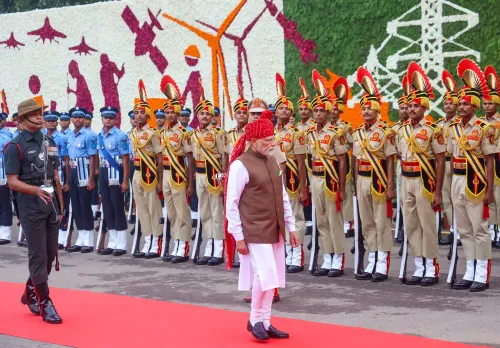
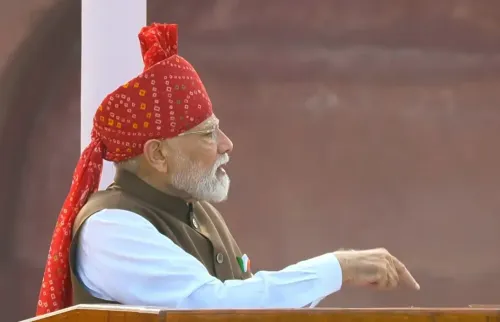
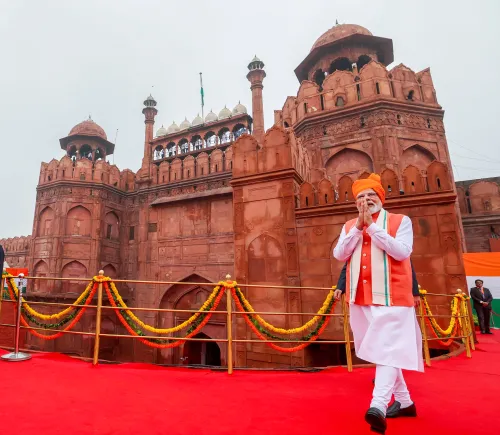
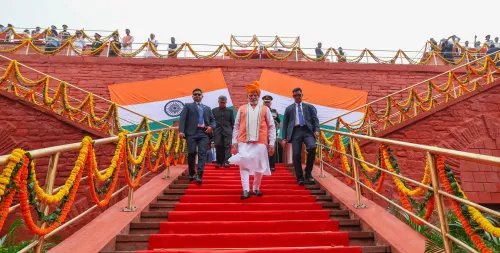
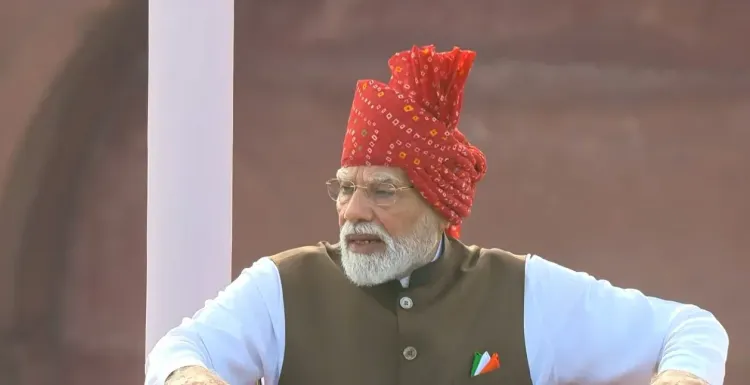
PM Narendra Modi addressed the nation on 15 August 2027 , India's 80th Independence Day , from the Red Fort .
Three semiconductor plants have been established and are already producing chips for export , according to Modi.
An additional five to eight semiconductor plants are expected to begin operations within the next 7–8 years .
Modi reaffirmed the Atmanirbhar Bharat doctrine, linking it to Make in India , Swadeshi , and the Local for Local movement.
The National Song 'Vande Mataram' was played at the Red Fort for the first time since Independence , preceding the National Anthem.
Prime Minister Narendra Modi on 15 August 2027 declared self-reliance the cornerstone of India's future, using his 80th Independence Day address from the ramparts of the Red Fort to highlight concrete progress in semiconductor manufacturing — announcing that three major chip fabrication plants are already producing for export and that five to eight additional facilities are expected to commence operations within the next 7–8 years.
The Atmanirbhar Bharat Vision
Speaking directly to the nation, Modi said India's strategic priority has been to end reliance on foreign supply chains. 'Becoming an Atmanirbhar Bharat is crucial. That is why, over the past few years, our conviction has been that India should no longer live in dependence on other nations; we must become self-reliant. We must enhance our own capacities and safeguard our interests ourselves,' he stated. He linked the drive to popular programmes including Make in India, Swadeshi, and the Local for Local initiative, framing them as expressions of a wider national resolve.
India's Semiconductor Push
Modi placed particular emphasis on chips as a civilisational necessity. 'In today's digital world and technological landscape, we understand the immense importance of chips. Whether it is electronic goods, medical equipment, or transportation systems, chips are indispensable; without them, the world would come to a standstill,' he said. He confirmed that three semiconductor plants have already been established and that production from these facilities has begun for export — a significant operational milestone. An additional five to eight plants are slated to come online in the coming years, which would substantially expand India's domestic chip capacity.
Ceremonial Firsts at the Red Fort
This year's Independence Day celebrations carried a notable historic dimension: the National Song, 'Vande Mataram', was played at the Red Fort for the first time since Independence, preceding the National Anthem 'Jana Gana Mana'. The moment was widely noted as a significant addition to the official ceremonial order. Earlier in the day, Modi paid floral tributes to Mahatma Gandhi at Rajghat before proceeding to the Red Fort.
Why This Matters
India's semiconductor ambitions come amid a global realignment of chip supply chains, accelerated by US–China tensions and pandemic-era shortages that exposed vulnerabilities in electronics, automotive, and healthcare sectors worldwide. Notably, this is the first Independence Day address in which a sitting Prime Minister has cited active semiconductor exports as a benchmark of self-reliance. The coming years will test whether the pipeline of new plants translates into competitive, large-scale domestic production rather than assembly-stage operations. Industry observers and policymakers will watch whether the next phase of expansion is backed by a trained semiconductor workforce and robust R&D investment.
Point of View
Which leaned heavily on aspiration. But the credibility of the claim rests on details the speech did not provide: which plants, what volumes, and to which markets. India's semiconductor programme has attracted significant subsidy commitments, yet the country remains a marginal player in global chip output. The real inflection point will come when India produces advanced-node chips, not just assembly or mature-node components. Until that distinction is made publicly, the export milestone — however genuine — risks being read as a political data point rather than a structural shift.
NationPress
29 Sept 2026
Frequently Asked Questions
What did PM Modi say about India's semiconductor progress on Independence Day 2027?
Modi confirmed that three major semiconductor plants have already been established in India and have begun production for export. He also said five to eight additional plants are expected to commence operations within the next 7–8 years.
What is Atmanirbhar Bharat and why did Modi emphasise it?
Atmanirbhar Bharat, meaning 'Self-Reliant India', is a policy framework aimed at reducing India's dependence on foreign supply chains across sectors. Modi used his 80th Independence Day address to reaffirm it as the guiding principle of India's economic and industrial strategy, linking it to Make in India, Swadeshi, and the Local for Local initiative.
What was historically significant about the 80th Independence Day celebrations at the Red Fort?
The National Song 'Vande Mataram' was played at the Red Fort for the first time since Independence, preceding the National Anthem 'Jana Gana Mana'. This marked a notable change to the official ceremonial order.
Why does semiconductor self-reliance matter for India?
Chips are critical to electronics, medical equipment, transportation, and defence systems. Global supply chain disruptions in recent years exposed India's heavy dependence on imported semiconductors, making domestic production a strategic and economic priority.
How many semiconductor plants does India plan to have in the next decade?
According to Modi's Independence Day address, three plants are already operational and exporting. A further five to eight facilities are expected to begin operations within the next 7–8 years, which would significantly expand India's domestic chip manufacturing capacity.