PM Modi: India's Semiconductor Push Powers Viksit Bharat Vision
Synopsis
On Independence Day 2026, PM Modi declared India's semiconductor manufacturing ecosystem is taking shape — plants operational, chip exports begun — framing self-reliance in silicon and critical minerals as the foundation of a developed India.
Key Takeaways
PM Modi posted on Independence Day, August 15, 2026 , linking Viksit Bharat directly to Aatmanirbhar Bharat as a single unified goal.
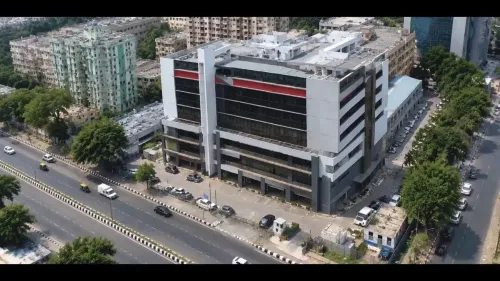
He stated that semiconductor plants have started operations and chip exports have begun , with more production capacity expected in coming years.
Make in India (launched September 2014 ) and the India Semiconductor Mission form the policy backbone behind the semiconductor push.
Production Linked Incentive schemes for electronics and semiconductors, rolled out from 2020 , seeded the investment pipeline now producing results.
The Aatmanirbhar Bharat package of Rs 20 lakh crore (announced May 2020 ) accelerated the self-reliance drive after pandemic-era supply chain shocks.
Modi also flagged a parallel strengthening of India's critical minerals capabilities — the upstream layer for chips, batteries, and defence electronics.
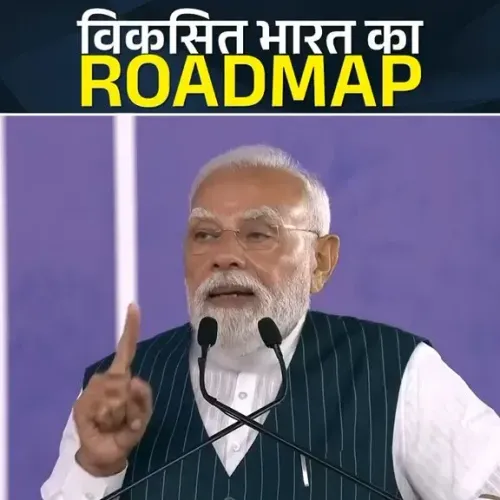
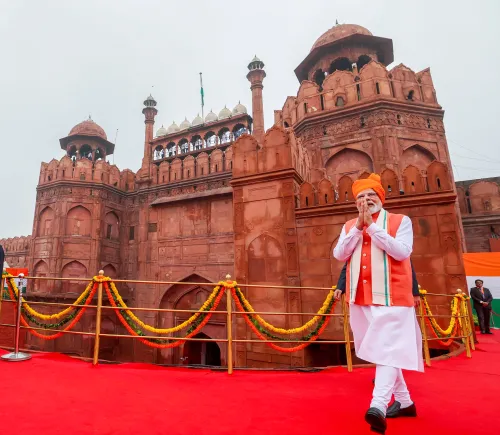
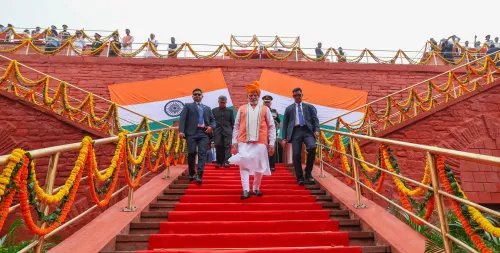
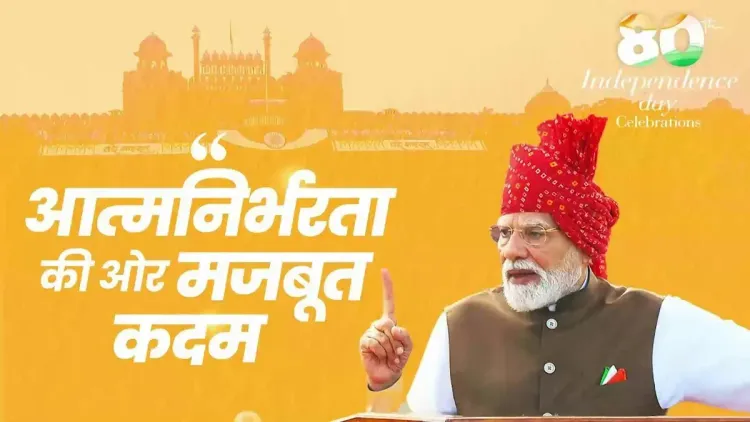
On Independence Day, August 15, 2026, Prime Minister Narendra Modi drew a direct line between India's self-reliance ambitions and the silicon at the heart of the modern economy — declaring that a developed India and an self-sufficient India are not two goals, but one.
In a post marking the occasion, PM Modi wrote: 'A Viksit Bharat must also be an Aatmanirbhar Bharat. Lasting strength comes from building our own capabilities.' He pointed to semiconductor manufacturing as the sharpest proof point: plants have started, chip exports have begun, and more production capacity is expected in the years ahead. He also flagged a parallel push in critical minerals — the raw material layer beneath every battery, every chip, every electric motor.
From Slogan to Silicon: What 'Make in India' Now Means
Make in India, launched in September 2014, began as a broad invitation to global manufacturers. Over a decade later, its most consequential test is playing out in one of the world's most strategically sensitive industries. The India Semiconductor Mission — the government programme designed to build domestic fabrication, design, and assembly capabilities — represents the policy infrastructure behind Modi's claim. Production Linked Incentive (PLI) schemes for electronics and semiconductors, rolled out from 2020 onward, seeded the investment pipeline that is now, the Prime Minister says, bearing fruit. Aatmanirbhar Bharat, announced in May 2020 alongside a Rs 20 lakh crore economic package, sharpened the self-reliance argument at precisely the moment global supply chains were fracturing. The pandemic had exposed just how exposed India was — in pharmaceuticals, in electronics, in components. Semiconductors became the emblematic vulnerability. A country that imports nearly all its chips cannot call its supply chain secure. That logic drove the policy intensity that followed.Chips, Minerals, and the Supply Chain India Is Building
The semiconductor push does not exist in isolation. Critical minerals — lithium, cobalt, rare earths — are the upstream chokepoint for every downstream technology ambition, from electric vehicles to defence electronics. Modi's mention of strengthening capabilities in this space signals that the government is thinking in full supply-chain terms: not just fabrication plants, but the geological and processing infrastructure that feeds them. The strategic logic is hard to argue with. Global powers are racing to secure semiconductor supply chains precisely because the geopolitics of chips has become as consequential as the geopolitics of oil. India's window to build domestic capacity — while global customers are actively seeking alternatives to concentrated supply — will not stay open indefinitely. The commissioning timelines for approved fabrication units, and the pace of new critical minerals policy, will determine whether today's conviction becomes tomorrow's competitive edge.Point of View
He converts a long-term aspiration into a measurable industrial programme, with semiconductors as the headline proof point. The move reflects a decade-long strategic arc — from broad manufacturing slogans in 2014 to targeted supply-chain sovereignty by 2026 — that has grown sharper as geopolitical competition over chips has intensified globally. Anchoring the claim on Independence Day maximises symbolic resonance, tying national pride to industrial capability in a single rhetorical move. The critical variable going forward is execution: commissioning timelines for fabrication units and the depth of the critical minerals policy will either validate or complicate the narrative.
NationPress
30 Sept 2026
Frequently Asked Questions
What is Viksit Bharat and how does it relate to Aatmanirbhar Bharat?
'Viksit Bharat' means 'Developed India' and is PM Modi's vision for India to become a fully developed nation. 'Aatmanirbhar Bharat' means 'Self-Reliant India' and is the policy programme to reduce import dependence. Modi argues the two are inseparable — lasting development requires building domestic capabilities rather than relying on foreign supply chains.
What is the India Semiconductor Mission?
The India Semiconductor Mission is a government programme launched to build end-to-end semiconductor capabilities in India, covering chip design, fabrication, and assembly. It is backed by production-linked incentives and aims to reduce India's near-total dependence on imported chips.
Has India actually started exporting chips?
PM Modi stated on Independence Day 2026 that semiconductor plants have started and chip exports have begun. The India Semiconductor Mission has been operational for several years, with multiple fabrication and assembly units approved under PLI schemes for electronics and semiconductors.
What are critical minerals and why does India need them?
Critical minerals — such as lithium, cobalt, and rare earth elements — are essential raw materials for semiconductors, electric vehicle batteries, and defence electronics. India is working to secure domestic exploration and processing capabilities so it is not dependent on foreign sources for these strategically vital inputs.
What is Make in India and when was it launched?
Make in India was launched by PM Modi in September 2014 to encourage domestic manufacturing, attract foreign investment, and raise the share of manufacturing in India's GDP. It has since expanded to cover high-technology sectors including semiconductors and defence equipment.