Shekhawat marks 12 years of Atmanirbhar Bharat push
Synopsis
Union Minister Gajendra Singh Shekhawat marked 12 years of the BJP-led government on 19 June 2026, crediting Atmanirbhar Bharat and Make in India policies for India's shift to domestic microchip production, advanced drones, and indigenous defence weapons.
Key Takeaways
Gajendra Singh Shekhawat posted on 19 June 2026 marking 12 years of the BJP-led government under the hashtag #12YearsOfIndiaFirst .
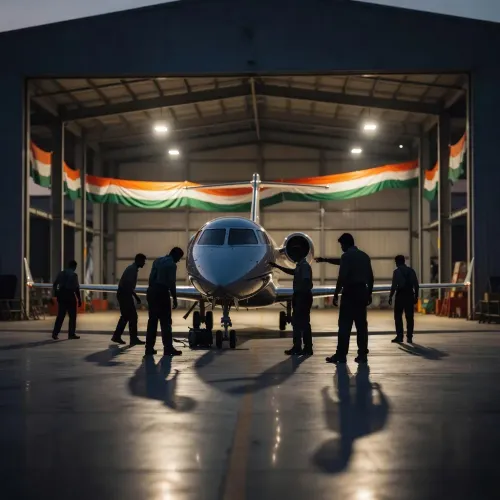
He cited domestic microchip manufacturing, advanced drone deployment, and indigenous weapons as evidence of India's self-reliance drive.
The Make in India campaign was launched in September 2014 ; the Atmanirbhar Bharat package followed in May 2020 .
The Ministry of Defence issued its first negative import list in August 2020 , banning imports of 101 weapons and systems .
The India Semiconductor Mission , approved in 2021 , aims to build domestic chip fabrication capacity to reduce technology import dependence.
Shekhawat specifically highlighted Indian youth as central to the self-reliance story, calling 'Made in India' a source of national pride.
Union Culture and Tourism Minister Gajendra Singh Shekhawat on Friday, 19 June 2026, marked 12 years of the BJP-led government by highlighting India's transformation into a self-reliant manufacturing and defence power, citing homegrown microchips, advanced drones, and indigenous weapons as proof of the country's changed trajectory.
Posting under the hashtag #12YearsOfIndiaFirst, Shekhawat wrote in Hindi: 'बीते 12 वर्षों में भारत ने स्वदेशी को एक नया और आधुनिक आयाम दिया है' ('In the last 12 years, India has given a new and modern dimension to the idea of self-reliance'). He added that a country once dependent on others for technology is today manufacturing its own microchips, flying cutting-edge drones, and securing its borders with indigenous weapons.
Context
The post marks 12 years since the National Democratic Alliance government took office in May 2014. Shekhawat frames the anniversary not as a political milestone alone but as a civilisational shift — arguing that 'Made in India' has moved from being a label to becoming, in his words, 'the pride of every Indian.' The accompanying video underscores the government's preferred narrative of strategic and economic resurgence.
The minister's remarks tie together two flagship programmes: the Make in India campaign launched in September 2014, and the Atmanirbhar Bharat package announced in May 2020, both designed to reduce import dependence across manufacturing, electronics, and defence.
Policy Backdrop
India's indigenisation drive in defence gained structural momentum in August 2020, when the Ministry of Defence issued its first negative import list, banning imports of 101 weapons and systems to compel domestic production. Successive lists have expanded the scope of this embargo, covering platforms from artillery guns to light combat helicopters.
On the technology side, the India Semiconductor Mission — approved in 2021 under the Ministry of Electronics and Information Technology — set out to build domestic chip fabrication and design capacity, directly addressing the import dependency Shekhawat references. Production Linked Incentive schemes for electronics and mobile manufacturing, rolled out from 2020 onward, have sought to build the component ecosystems needed for that goal. Higher foreign direct investment caps in defence have run in parallel, attracting private-sector participation in platforms previously dominated by state-owned enterprises.
Stakeholders and Impact
Shekhawat specifically singles out Indian youth as the primary beneficiaries of this shift, describing the change as 'the story of growing confidence of every citizen, especially the young.' The defence manufacturing sector and electronics firms are the immediate industrial stakeholders, with domestic companies now competing for contracts that were once routed to foreign original equipment manufacturers.
Strategic border pressures — particularly after 2020 — accelerated procurement decisions favouring indigenous systems, giving domestic defence manufacturers a more predictable order pipeline. For the broader economy, the indigenisation push is positioned as a bridge between employment generation and strategic autonomy in critical technologies.
What's Next
Observers will watch for progress on approved semiconductor fabrication units whose timelines have been closely tracked since the Mission's approval, as well as any revisions to the defence negative import list that could open further categories to domestic suppliers. Parliamentary debates on defence R&D budget allocations are also expected to reflect the degree to which indigenisation targets are being met on schedule. The government's ability to translate policy intent into verifiable production milestones will determine whether the 12-year narrative holds up to legislative scrutiny.
Point of View
Using the 12-year government anniversary to reinforce the BJP's core 'India First' brand by anchoring abstract self-reliance rhetoric to tangible technology and defence milestones. The choice of microchips and drones — sectors with high youth visibility — signals an attempt to consolidate support among a demographic the party has consistently courted. The post also reflects a broader pattern in which cultural and tourism ministers are deployed as amplifiers of economic-nationalist messaging, blurring ministerial portfolio lines in service of party communication. The durability of this narrative will depend on whether semiconductor and defence indigenisation targets translate into independently verifiable outcomes in the near term.
NationPress
19 Sept 2026
Frequently Asked Questions
What is Atmanirbhar Bharat and when was it launched?
Atmanirbhar Bharat is a government initiative launched in May 2020 to promote self-reliance in manufacturing, technology, and defence production through structural reforms and financial incentives, building on the earlier Make in India campaign of 2014 .
What did Gajendra Singh Shekhawat post about on 19 June 2026?
Gajendra Singh Shekhawat posted on X to mark 12 years of the BJP-led government, highlighting India's progress in domestic microchip production, advanced drones, and indigenous defence weapons under the #12YearsOfIndiaFirst hashtag.
What is India's defence negative import list?
The Ministry of Defence issued its first negative import list in August 2020 , banning the import of 101 weapons and systems to compel domestic production; subsequent lists have expanded the categories covered to accelerate defence indigenisation.
What is the India Semiconductor Mission?
The India Semiconductor Mission is an initiative approved in 2021 under the Ministry of Electronics and Information Technology to establish domestic chip fabrication and design capabilities, directly targeting India's historical dependence on imported semiconductors.
What is Make in India and how does it relate to Atmanirbhar Bharat?
Make in India was launched in September 2014 to boost domestic manufacturing and attract foreign investment; Atmanirbhar Bharat , announced in May 2020 , deepened this agenda with a sharper focus on strategic self-reliance in defence and critical technology sectors.