Shekhawat Marks 12 Years of Secure Borders Under Modi Govt

Synopsis
Union Culture and Tourism Minister Gajendra Singh Shekhawat on 17 June 2026 posted on X celebrating twelve years of the Modi government's national security record, framing secure borders and an empowered India as the nation's defining identity under the #12YearsOfSurakshitBharat campaign.
Key Takeaways
Gajendra Singh Shekhawat , Union Minister of Culture and Tourism and Lok Sabha MP from Jodhpur , posted the message on 17 June 2026 .
The Hindi post translates as: 'In the new era of national security, secure borders and an empowered India are our greatest identity.' The hashtag #12YearsOfSurakshitBharat marks roughly twelve years since the Modi government assumed office in May 2014 .
The BJP's national security narrative centres on border infrastructure, force modernisation and a shift to a proactive security posture along the Line of Control and Line of Actual Control .
The Border Security Force (BSF) has undergone successive modernisation rounds under the NDA government since 2014.
Upcoming Union Budget defence allocations and new border-infrastructure announcements will be key indicators of the campaign's policy substance.
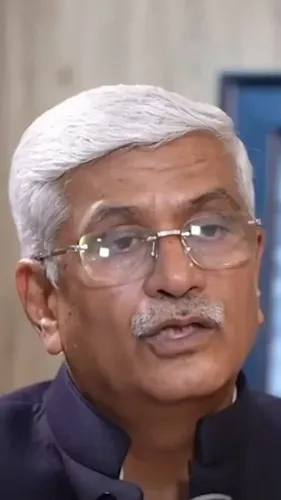
Union Culture and Tourism Minister Gajendra Singh Shekhawat on Wednesday, 17 June 2026 invoked India's national security credentials, posting a message on X that framed secure borders and a strengthened nation as the country's foremost identity under the ruling dispensation.
Posting in Hindi under the hashtag #12YearsOfSurakshitBharat, Shekhawat wrote: 'राष्ट्रीय सुरक्षा के नए युग में, सुरक्षित सीमाएं और सशक्त भारत हमारी सबसे बड़ी पहचान हैं' ('In the new era of national security, secure borders and a empowered India are our greatest identity'). The post is part of a broader BJP campaign marking twelve years of the Narendra Modi-led NDA government at the Centre.
Context
The hashtag #12YearsOfSurakshitBharat signals a party-wide effort to consolidate the ruling alliance's national security narrative ahead of a significant political milestone. June 2026 marks roughly twelve years since the Modi government first assumed office in May 2014, and BJP leaders across portfolios have been amplifying messaging around governance achievements. Shekhawat, a senior BJP leader and Lok Sabha MP from Jodhpur, Rajasthan, has consistently been among the party's prominent voices on national interest themes.
Policy Backdrop
Since 2014, the NDA government has emphasised border security as a central pillar of its national security doctrine. Investments in border infrastructure — including roads, fencing, surveillance systems and forward outposts — have been pursued along both the Line of Control with Pakistan and the Line of Actual Control with China. The Border Security Force (BSF), which guards India's land borders with Pakistan and Bangladesh, has seen successive rounds of modernisation and expansion of its operational mandate during this period.
The government has also described its posture as a shift from reactive to proactive — a framing reflected in Shekhawat's reference to a 'new era of national security.' This language has been a consistent thread in BJP political communication since high-profile cross-border military actions drew public attention in the years following 2016.
Stakeholders and Impact
The communities most directly affected by border security policy are those living along India's frontiers — in states such as Jammu and Kashmir, Punjab, Rajasthan, West Bengal and Arunachal Pradesh — where improved infrastructure and reduced infiltration have tangible quality-of-life implications. Defence forces, including the Army, BSF and the Indo-Tibetan Border Police, are the primary institutional stakeholders whose operational capacity is shaped by the government's security investments. The political messaging also targets a broader urban and semi-urban electorate for whom national security has emerged as a salient voting issue.
What's Next
The #12YearsOfSurakshitBharat campaign is expected to continue through the anniversary window, with senior BJP leaders likely to highlight specific milestones in border infrastructure, defence procurement and internal security. Analysts will watch the next Union Budget's defence allocation and any announced border-road or fencing projects as concrete policy markers that give substance to the political narrative being built around this campaign.
Point of View
Keeping the 2014 watershed alive as an electoral reference point. For the BJP, border security has proven to be a durable, cross-caste mobilisation theme that transcends regional differences, making it a natural anchor for anniversary communication. The campaign's traction will ultimately depend on whether it is backed by verifiable policy announcements in the coming weeks.
NationPress
19 Sept 2026
Frequently Asked Questions
What is the #12YearsOfSurakshitBharat hashtag about?
#12YearsOfSurakshitBharat is a BJP campaign hashtag marking approximately twelve years since the Narendra Modi-led NDA government came to power in May 2014, highlighting the government's national security and border management record.
What did Gajendra Singh Shekhawat post on X on 17 June 2026?
Shekhawat posted in Hindi stating that in the new era of national security, secure borders and an empowered India are the country's greatest identity, using the hashtag #12YearsOfSurakshitBharat.
Who is Gajendra Singh Shekhawat?
Gajendra Singh Shekhawat is the Union Minister of Culture and Tourism, a senior BJP leader, and a Lok Sabha MP representing Jodhpur constituency in Rajasthan.
What has the Modi government done for border security since 2014?
Since 2014, the NDA government has invested in border roads, fencing, surveillance infrastructure and force modernisation along the Line of Control with Pakistan and the Line of Actual Control with China, and has expanded the operational mandate of the Border Security Force.
Why is a Culture Minister posting about national security?
The post reflects a BJP party-wide communication drive around the twelve-year governance anniversary, with ministers across portfolios amplifying a unified national security and development narrative rather than restricting messaging to their own portfolios.